
Set up a self-custody wallet
Trading perpetual stocks on a decentralized exchange (DEX) requires a non-custodial wallet that operates on the specific blockchain hosting the protocol. Unlike centralized exchanges, DEXs do not hold your funds; you must retain full control of your private keys to execute trades. This structure eliminates the need for identity verification (KYC) during onboarding, but it places the entire burden of security and transaction management on you.
The first step is selecting a wallet compatible with the DEX’s underlying chain. Most prominent perpetual futures protocols, such as Drift, operate on high-throughput networks like Solana, while others may utilize Ethereum or Layer 2 solutions. Ensure your chosen wallet supports the native token of that network for gas fees and the specific token standards (e.g., SPL for Solana, ERC-20 for Ethereum) required by the protocol. MetaMask and Phantom are widely used examples, but always verify compatibility with the specific DEX you intend to use.
Install a wallet application or browser extension from the official source. Avoid third-party mirrors or unofficial app stores. For Ethereum-based protocols, MetaMask is a standard choice. For Solana-based protocols like Drift, Phantom is the primary interface. These tools generate your private keys locally, ensuring no central authority holds your data.
Upon creation, the wallet will display a 12 or 24-word recovery phrase. Write this down on paper and store it in a secure, offline location. Never digitalize this phrase, do not screenshot it, and never share it with anyone. Anyone with access to this phrase has absolute control over your funds. This is the only way to recover your wallet if you lose access to your device.
DEXs require native tokens (e.g., ETH, SOL) to pay for transaction fees, not the assets you are trading. Transfer a small amount of the native token from a centralized exchange to your wallet’s public address. Ensure you are sending the correct token to the correct network; sending ETH to a Solana address will result in permanent loss of funds.
Once your wallet is funded and secured, you are technically ready to connect to a perpetual DEX. However, remember that while the onboarding process is anonymous, the blockchain is public. All transactions are immutable and visible. Always double-check the contract address of the DEX you are connecting to, as phishing sites often mimic legitimate interfaces to drain wallets.
Choose a compliant perpetual DEX platform
Selecting a decentralized exchange for synthetic stock derivatives requires rigorous due diligence. Unlike centralized brokers, these platforms operate through smart contracts, meaning your safety depends entirely on code integrity and legal jurisdiction. If the underlying protocol is unvetted or the entity behind it lacks regulatory clarity, your capital is exposed to total loss with no recourse.
Start by verifying the platform’s legal structure. Does the protocol have a registered entity in a favorable jurisdiction? If the team is anonymous or the legal entity is a shell in a regulatory gray zone, avoid it. Next, demand proof of security. Check if the smart contracts have been audited by reputable firms like OpenZeppelin or Trail of Bits. An unaudited contract is a gambling tool, not a trading platform.
Finally, assess the available synthetic assets and leverage limits. Ensure the platform supports the specific stock indices or equities you intend to trade, such as TSLA or AAPL, and that the leverage offered aligns with your risk tolerance. High leverage amplifies gains but accelerates liquidation.
| Platform | Primary Chain | Max Leverage | Audit Status |
|---|---|---|---|
| Drift Protocol | Solana | Up to 20x | Open-source; multiple audits |
| dYdX | Cosmos/ETH L2 | Up to 20x | Extensive; institutional grade |
| GMX | Arbitrum/Avalanche | Up to 50x | Open-source; Audited |
The table above provides a baseline comparison. However, features change. Always verify current audit reports and terms of service directly on the provider’s official site before depositing funds.
Fund your account with stablecoins
Before trading perpetual stocks, you must move capital from a centralized exchange to a decentralized exchange (DEX). This process typically involves converting fiat currency into a stablecoin like USDC or USDT on a centralized platform, then bridging those assets to the blockchain network where your target DEX operates.
The bridge between fiat and DeFi requires careful navigation. You will likely start by purchasing stablecoins on a major exchange such as Coinbase or Binance. Once acquired, you must transfer these assets to your personal wallet. This step is critical because perpetual DEXs require direct wallet connectivity rather than account-based logins.
To preserve privacy and avoid unnecessary data collection, consider using decentralized swap aggregators or cross-chain bridges that do not require identity verification. However, be aware that most reputable bridges enforce some form of compliance checks to prevent illicit flows. Always verify the bridge’s security history and audit reports before committing significant funds.
Use a regulated exchange to buy USDC or USDT with fiat currency. Ensure you complete any required identity verification on this centralized platform, as it is the primary point of regulatory compliance for fiat on-ramps. Withdraw the stablecoins to your personal non-custodial wallet address.
If your stablecoins are on a different blockchain than the DEX (e.g., USDC on Ethereum when trading on an Arbitrum DEX), you need a bridge. Research bridges like Stargate, Across, or official chain bridges. Check their total value locked (TVL) and security audits to minimize risk of smart contract failure.
Connect your wallet to the bridge interface. Confirm the source network, destination network, and token amount. Pay attention to gas fees on both networks, as bridging can be costly during high network congestion. Double-check the destination address and network selection to prevent permanent loss of funds.
Execute a synthetic stock trade
Placing a trade on a decentralized exchange (DEX) for synthetic equities requires precise execution. Unlike traditional brokerages, these platforms do not hold your funds; you trade directly from your wallet using smart contracts. The interface typically mirrors professional trading terminals, offering leverage and order types that amplify both gains and losses. Proceed with caution, as technical errors or market volatility can result in immediate liquidation.
Begin by connecting your non-custodial wallet to a reputable platform like Drift or dYdX. Once connected, navigate to the markets section and locate the synthetic stock pair you wish to trade, such as TSLA or AAPL. Ensure you are on the correct network (e.g., Solana for Drift, Cosmos for dYdX) to avoid transaction failures. Verify the contract address if available to prevent interacting with spoofed interfaces.
Before entering an order, configure your leverage ratio. Synthetic perpetuals allow high leverage, often up to 10x or 50x, depending on the asset and platform rules. Higher leverage reduces the capital required but increases the risk of liquidation. Select between isolated margin (risking only the allocated amount) or cross margin (risking the entire wallet balance). For most traders, isolated margin is safer as it contains potential losses to the specific position.
Decide between a market order for immediate execution at the current best price or a limit order to specify your entry point. Market orders incur slippage and higher fees but guarantee entry. Limit orders provide price control but may not fill if the market moves away. Enter your size in USD or token terms, review the estimated liquidation price, and submit the transaction. Confirm the gas fees and network fees in your wallet prompt before signing.
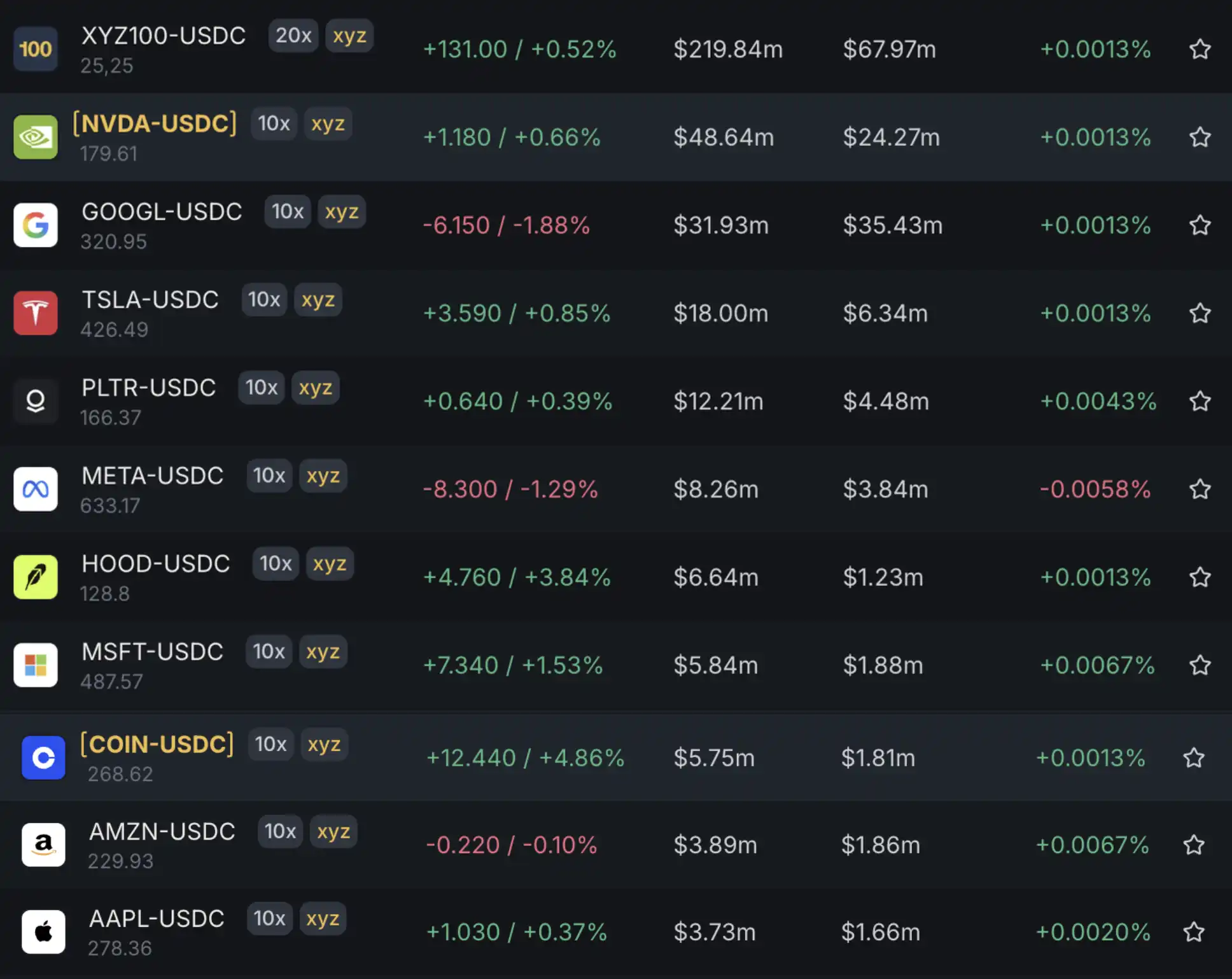
Once the trade is open, monitor your position closely. Synthetic stocks track the underlying asset’s price but may experience deviations due to oracle latency or funding rate adjustments. Set a stop-loss order immediately to cap potential losses. Perpetual contracts also require periodic funding payments; long positions pay shorts (or vice versa) every 8 hours. Failure to manage these costs can erode profits over time.
Synthetic perpetual futures carry a high risk of loss. If the market moves against your position, your collateral may be liquidated instantly, resulting in the total loss of deposited funds. Ensure you understand the liquidation mechanics before trading.
Manage liquidation and exit risks
Perpetual futures carry a high risk of loss, including the total loss of deposited collateral, and are not suitable for all users [src-serp-8]. Trading with leverage amplifies both gains and losses, meaning a small adverse price movement can wipe out your entire position. To survive in this environment, you must treat risk management as a non-negotiable protocol rather than an afterthought.
Set Hard Stop-Loss Orders
Never enter a leveraged trade without a pre-defined exit point. A stop-loss order automatically closes your position when the price reaches a specific level, capping your downside. Without this safety net, you are gambling on market direction rather than trading it. Most decentralized exchanges allow you to set these orders directly at the time of entry, ensuring that emotional hesitation cannot prevent you from exiting a losing trade.
Monitor Oracle Prices Closely
Liquidations on decentralized exchanges are triggered by oracle prices, not necessarily the spot price you see on a public ticker. Oracles aggregate data from multiple sources to prevent manipulation, but they can still lag during extreme volatility. If the oracle price deviates significantly from the market price, your position may be liquidated prematurely or, conversely, allowed to run deeper into debt than expected. Always check the specific oracle delay settings of the DEX you are using before opening a position [src-serp-4].
Maintain Adequate Margin
Your collateral must be sufficient to absorb normal market fluctuations. If your margin balance drops below the maintenance threshold, the protocol will liquidate your position to protect the lending pool. To avoid this, keep your margin ratio well above the minimum requirement. This buffer gives the market room to breathe without triggering an automatic sale of your assets.
Perpetual futures are highly risky. Potential rewards come with substantial risks, and it's crucial to understand that you can lose your entire deposited collateral.
Review Exit Liquidity
Before you close a position, ensure there is sufficient liquidity in the pool to absorb your order. In thin markets, large exits can slip significantly, resulting in a worse price than expected. Use limit orders instead of market orders when possible to control your exit price and minimize slippage.
Navigate regulatory and tax obligations
Trading perpetual stocks on a decentralized exchange without KYC does not exempt you from legal compliance. The absence of identity verification on the platform shifts the burden of regulatory adherence entirely to you. You remain personally liable for reporting capital gains, adhering to local securities laws, and ensuring your participation in synthetic asset trading is legal in your jurisdiction.
Step 1: Verify local securities classification
Before executing any trades, determine how your local financial authority classifies perpetual futures and synthetic stocks. Many jurisdictions treat these instruments as securities or derivatives, subjecting them to strict registration and trading rules. If your region bans or restricts synthetic equity products, accessing them via a DEX may constitute a violation of local financial regulations, regardless of the platform's decentralized nature.
Step 2: Establish tax reporting protocols
Most tax authorities, including the IRS in the United States, treat cryptocurrency and DeFi transactions as taxable events. Each trade on a DEX can trigger a capital gains or loss calculation. You must maintain detailed records of every transaction, including timestamps, asset pairs, and fair market values at the time of the trade. Relying on the anonymity of a non-KYC platform is not a valid defense against tax audits.
Step 3: Assess personal risk exposure
Perpetual futures carry a high risk of loss, including the total loss of deposited collateral. This financial risk is compounded by the lack of investor protections found in traditional regulated markets. Ensure you understand the mechanics of liquidation and funding rates before allocating capital. Treat this activity as high-stakes speculation, not a passive investment vehicle.
-
Confirm synthetic assets are legal in your jurisdiction
-
Set up automated tax tracking for all DEX transactions
-
Calculate potential liquidation risks before opening positions
No comments yet. Be the first to share your thoughts!