
Defining the 2026 perpetual DEX landscape
Perpetual decentralized exchanges (perpetual DEXs 2026) have transitioned from experimental DeFi protocols to high-volume liquidity layers that directly compete with centralized exchanges. These platforms allow traders to execute leveraged futures contracts through smart contracts rather than relying on off-chain order books or centralized custodians. By removing the need for a central intermediary, perpetual DEXs provide non-custodial trading environments where users retain full control of their funds via their wallets.
The 2026 landscape is defined by a shift toward on-chain transparency and institutional-grade infrastructure. Platforms like Hyperliquid, Aster, and Lighter are driving this evolution by offering low-latency execution and deep liquidity pools that mimic the speed of centralized counterparts. This convergence of DeFi principles with centralized exchange performance metrics has established perpetual DEXs as a critical component of the modern crypto market, balancing regulatory scrutiny with the demand for self-custody and open access.
Liquidity and volume: On-chain vs. traditional
The scale of perpetual DEXs 2026 has shifted from niche experimentation to a significant competitor in global derivatives markets. While traditional perpetual futures stocks and regulated equity futures dominate in absolute dollar terms, the velocity and accessibility of on-chain liquidity have narrowed the gap considerably. Understanding this divergence is essential for assessing where capital is flowing and how leverage is structured across different venues.
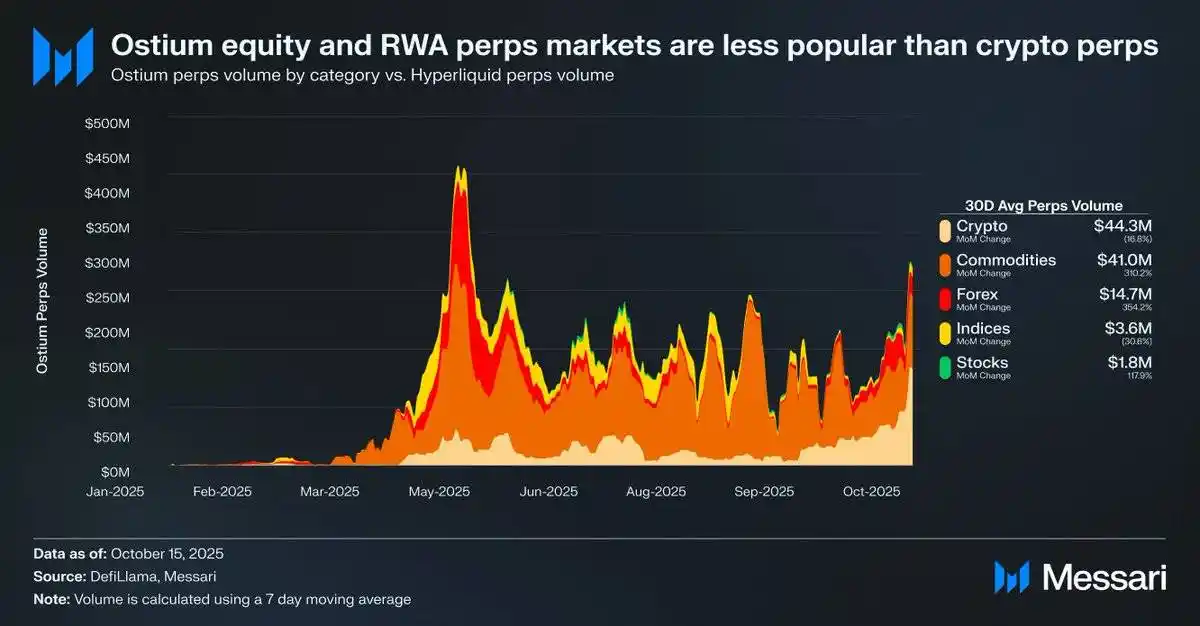
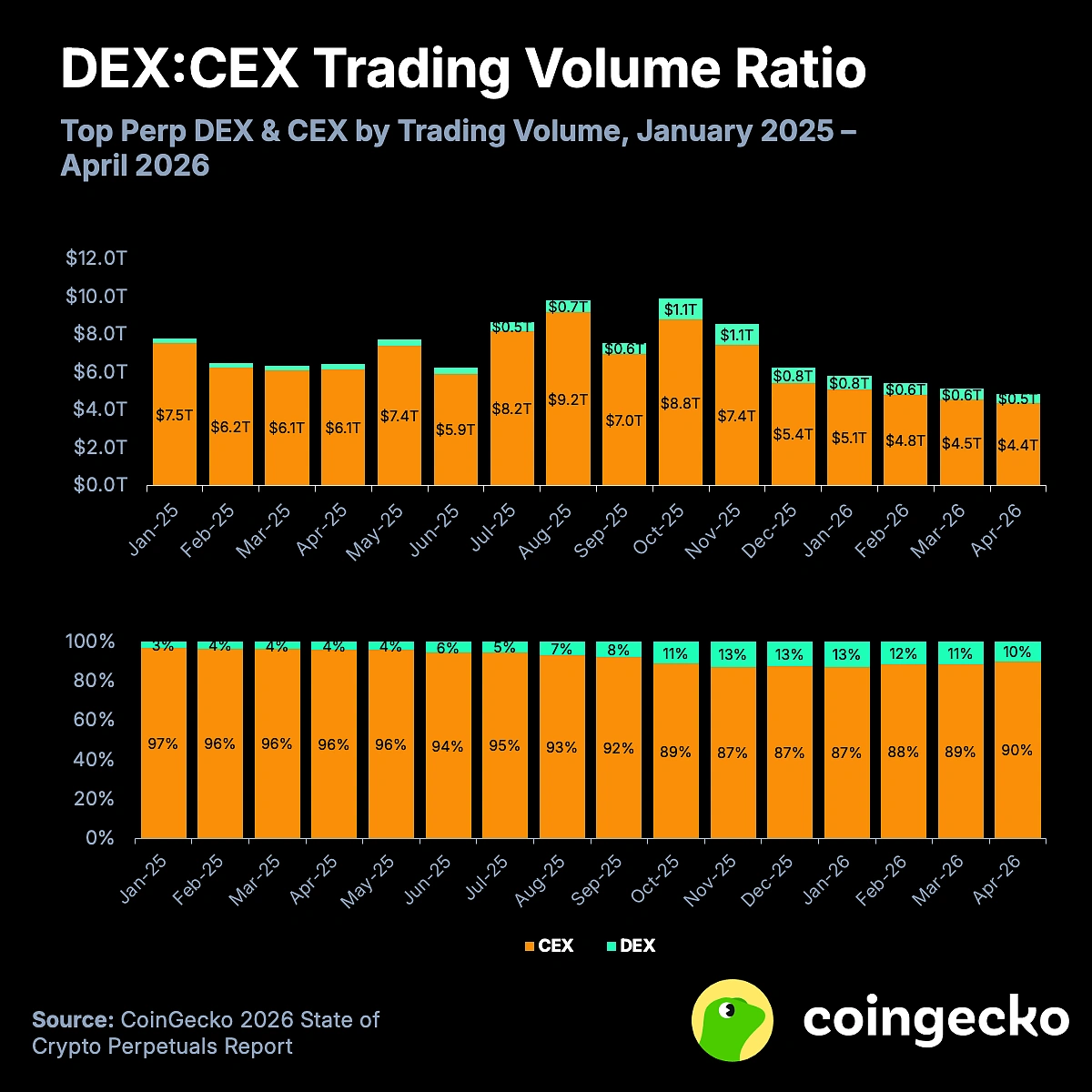
Historically, centralized exchanges (CEXs) and traditional equity markets held a monopoly on high-frequency leverage. However, data from early 2026 reveals a stark contrast in volume dynamics. On-chain platforms like Hyperliquid have demonstrated the ability to clear hundreds of billions in volume within single months, challenging the steady, institutional flow of traditional markets. This surge is not uniform; on-chain perp volume experienced a correction from its October peak, settling at $699 billion in March 2026 according to DefiLlama, yet it remains a formidable force in the crypto ecosystem.
To contextualize the raw numbers, the following comparison highlights the disparity in scale between the top on-chain perpetual DEXs and the broader traditional perpetual futures landscape.
| Metric | Top Perp DEXs (e.g., Hyperliquid) | Traditional Perp Stocks / Futures |
|---|---|---|
| Avg. Monthly Volume (March 2026) | $432B+ (Hyperliquid alone) | $10T+ (Global Equity Futures) |
| Open Interest (OI) | ~$2.5B - $3.5B | $50B+ (Top US Equity Perps) |
| Custody Model | Non-custodial (User holds keys) | Custodial (Exchange/Broker holds) |
| Regulatory Status | Unregulated / Code-is-law | Highly regulated (SEC/CFTC) |
| Market Access | Global, 24/7, KYC-light | Restricted hours, KYC/AML required |
The data underscores that while traditional perpetual stocks still command a larger total addressable market, the growth rate and user density in perpetual DEXs 2026 are outpacing legacy systems. The $432 billion cleared by Hyperliquid in March 2026 alone, as reported by Eco, illustrates the sheer intensity of on-chain trading activity. This volume is not just speculative; it represents a structural shift where traders prioritize speed, self-custody, and permissionless access over the regulatory protections offered by traditional brokers.
Regulatory clarity and custody risks
The regulatory landscape for perpetual DEXs 2026 remains fragmented, creating a distinct legal dichotomy between decentralized and centralized trading venues. While centralized exchanges operate under explicit financial licenses, perpetual DEXs function in a gray area where code often supersedes jurisdiction. This uncertainty is the primary risk factor for institutional capital, yet it is also the feature that drives retail adoption among privacy-focused traders.
Self-Custody vs. Regulated Custody
The most immediate difference lies in who holds the keys. Centralized perpetual stock platforms require users to deposit funds into corporate wallets, effectively turning the trader into an unsecured creditor. If the exchange fails or faces a regulatory seizure, users have little recourse. In contrast, perpetual DEXs utilize non-custodial smart contracts. You connect your wallet, and the protocol interacts directly with your assets without ever taking possession. This model eliminates counterparty risk regarding solvency, provided the smart contract code is secure and audited.
The Legal Safety Trade-off
This autonomy comes with a significant caveat: the absence of consumer protections. Centralized entities are often subject to Know Your Customer (KYC) and Anti-Money Laundering (AML) regulations, which can offer a layer of legal accountability. If a dispute arises, users may have access to customer support or legal channels. Perpetual DEXs operate on a "code is law" basis. There is no customer support to reverse a mistaken transaction or recover funds lost to a smart contract exploit. The legal safety of a DEX is entirely dependent on the robustness of its underlying architecture and the anonymity of its developers.
Regulatory Outlook
As 2026 progresses, regulators are increasingly targeting the on-ramps and off-ramps of decentralized finance rather than the protocols themselves. This shift means that while the DEX itself may remain accessible, interacting with it through regulated fiat channels could become more difficult. Traders must weigh the security of self-custody against the convenience and legal clarity of regulated centralized platforms.
| Feature | Perpetual DEX | Centralized Exchange |
|---|---|---|
| Asset Control | Self-custody (wallet) | Platform custody |
| Regulatory Status | Unregulated/Gray area | Licensed/Regulated |
| Dispute Resolution | None (Code-based) | Customer support/Legal |
| KYC Requirements | Typically none | Mandatory |
Trading Mechanics and User Experience
The operational difference between perpetual DEXs 2026 and traditional brokerage accounts is defined by custody and infrastructure. On decentralized exchanges, users connect a non-custodial wallet, such as MetaMask or a hardware wallet, to interact directly with smart contracts. This requires the user to hold the native asset of the chain for gas fees and to manually manage private keys. In contrast, centralized platforms for perpetual stocks rely on traditional brokerage accounts. Users deposit fiat currency through bank transfers or cards, and the platform holds custody of the assets while managing the backend settlement.
Gas fees on perpetual DEXs create a distinct cost structure compared to the commission models of centralized brokers. On-chain trading requires paying network transaction fees, which can fluctuate significantly based on blockchain congestion. While Layer 2 solutions have reduced these costs, they remain a variable expense that does not exist in traditional finance. Centralized exchanges typically charge fixed trading fees or maker-taker spreads, offering predictable costs that are easier to model for high-frequency traders.
The user experience also diverges in how positions are managed. Perpetual DEXs often require users to monitor their margin ratios directly through the interface, as liquidation is triggered automatically by oracle prices. Centralized platforms provide more integrated risk management tools, including margin calls and automatic liquidations handled by the platform’s internal engine. This difference affects the trader’s attention requirements and the speed of response to market volatility.
| Feature | Perpetual DEX | Centralized Broker |
|---|---|---|
| Custody | Non-custodial (User holds keys) | Custodial (Platform holds funds) |
| Funding | Crypto wallet connection | Bank transfer or card |
| Fees | Trading fee + Variable gas | Commission or spread |
| Liquidation | Automated via smart contract | Platform-managed margin call |
Choosing the right venue for 2026
The choice between a perpetual DEX and a centralized exchange is no longer about technology alone; it is a decision between operational control and regulatory safety. In 2026, the market has bifurcated into distinct use cases. Understanding where your capital and risk tolerance fit is essential before executing a trade.
When to use perpetual DEXs
Perpetual DEXs are the appropriate venue when self-custody and censorship resistance are non-negotiable. Because these platforms are non-custodial, you retain control of your private keys, eliminating the risk of a centralized exchange insolvency or withdrawal freeze. This structure is vital for traders who prioritize asset sovereignty over convenience. However, this comes with higher complexity. You must manage gas fees, wallet security, and smart contract risk independently. If you are trading on a platform like Hyperliquid, you are trading against an on-chain order book, which offers speed but requires you to be your own bank.
When to use regulated centralized platforms
Regulated centralized platforms are the correct choice for traders who need legal recourse, fiat on-ramps, and simplified user interfaces. These venues operate under traditional financial oversight, offering deposit insurance and customer support that decentralized protocols cannot match. They are ideal for institutional investors or retail traders who prefer a familiar, streamlined experience. The trade-off is custodial risk: you must trust the exchange with your funds. If the platform faces regulatory action or technical failure, your assets may be inaccessible. Use this venue when you prioritize ease of use and legal protection over direct control.
Decision framework
Your decision should hinge on three factors: custody preference, regulatory exposure, and technical proficiency. If you are comfortable with blockchain mechanics and want to avoid counterparty risk, a perpetual DEX is the superior option. If you require fiat integration, tax reporting assistance, and legal safeguards, a regulated centralized exchange is the safer path. There is no universal winner; the right venue depends entirely on your specific risk profile and operational needs.
Frequently asked questions about perp trading
What is a perpetual DEX in crypto?
A Perpetual Decentralized Exchange (Perp DEX) is a blockchain-based platform for trading perpetual futures contracts with no expiry date. Unlike centralized exchanges, Perp DEXs are non-custodial, allowing users to keep full control of their funds via their own wallets while interacting with smart contracts. This structure eliminates the need for a central intermediary to hold collateral, shifting counterparty risk to the protocol's liquidity mechanisms and on-chain oracle systems.
How do perpetual DEXs compare to centralized exchanges?
The primary distinction lies in custody and transparency. Centralized exchanges (CEXs) require users to deposit funds into corporate wallets, creating counterparty risk if the platform is compromised or insolvent. Perpetual DEXs operate on-chain, meaning trades are settled directly between users or liquidity pools. While CEXs often offer higher liquidity for major pairs, Perp DEXs provide greater auditability and self-custody, though they may face higher transaction fees and slower execution during network congestion.
What is the road ahead for crypto markets in 2026?
As crypto heads into 2026, the market is balancing macro uncertainty with accelerating onchain innovation. Bitcoin remains the primary lens through which risk sentiment is expressed, but it no longer operates in isolation. The rise of sophisticated on-chain derivatives like perpetual DEXs reflects a maturing infrastructure where institutional-grade leverage becomes accessible without traditional custodial hurdles. This shift suggests a move toward more transparent, programmable financial markets.
Are perpetual DEXs safe for high-stakes trading?
Safety in perpetual DEXs depends on protocol design rather than corporate solvency. Users must manage their own private keys and understand smart contract risks, such as oracle manipulation or liquidation engine flaws. While non-custodial structures remove the risk of exchange insolvency, they introduce technical complexity. Traders should prioritize protocols with audited code, robust insurance funds, and proven track records before deploying significant capital.
Why are perpetual DEXs gaining popularity in 2026?
The growth of perpetual DEXs in 2026 is driven by demand for self-custody and regulatory clarity. As governments scrutinize centralized custodians, traders seek alternatives that minimize reliance on trusted third parties. Additionally, advancements in Layer 2 scaling solutions have reduced the cost and speed penalties previously associated with on-chain trading, making perpetual DEXs a viable competitor to traditional centralized platforms.
No comments yet. Be the first to share your thoughts!