
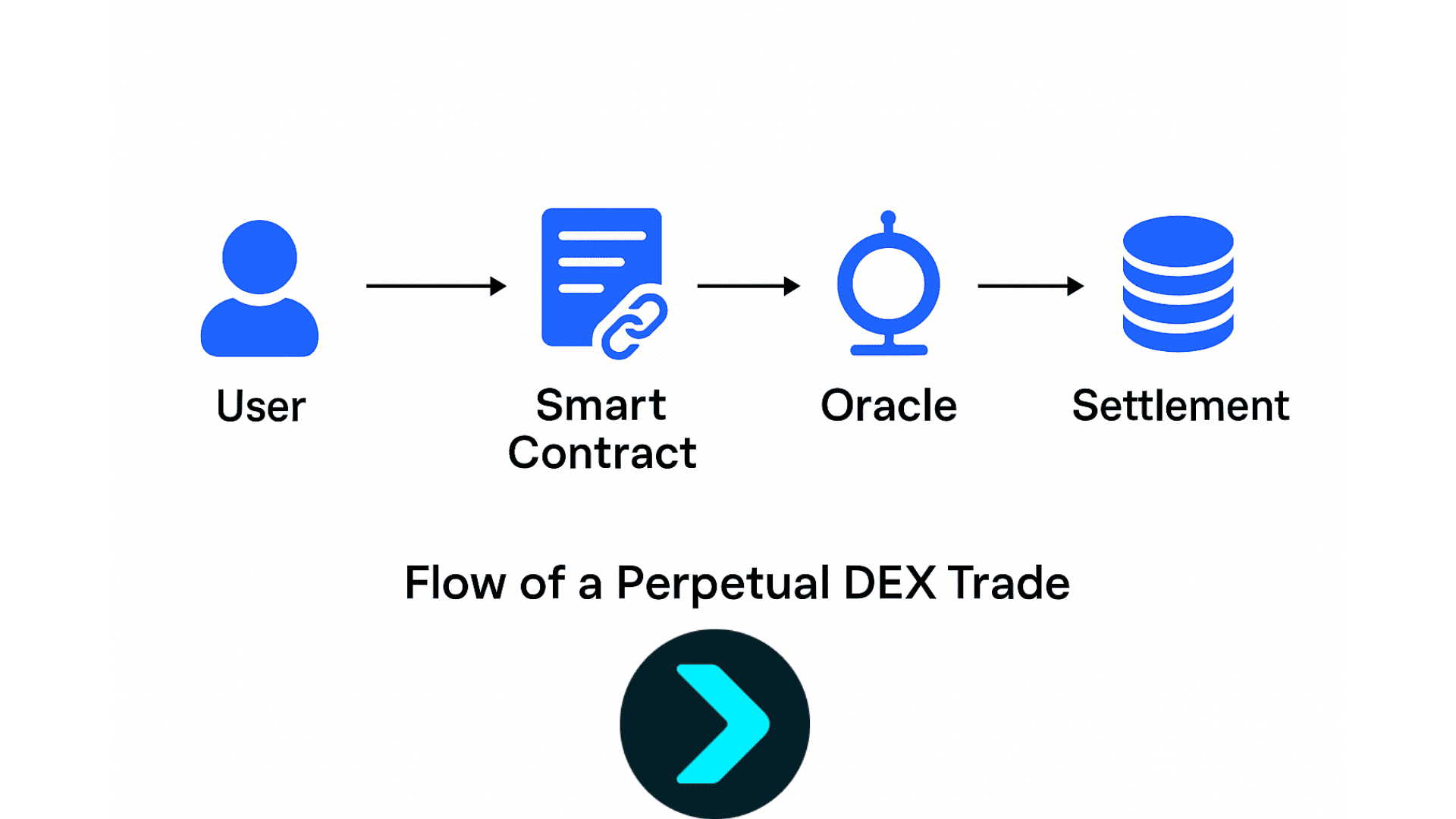
Market volume and platform dominance
The perpetual DEX market has matured into a significant liquidity layer, with total 24-hour trading volume reaching $23.3 billion. This scale, tracked by major aggregators like DeFiLlama, underscores the shift of leveraged trading from centralized exchanges to decentralized infrastructure. The market is no longer a niche experiment but a competitive arena where volume and open interest dictate platform hierarchy.
Hyperliquid currently leads the sector by open interest, acting as the primary liquidity hub for sophisticated traders. Its dominance is driven by high throughput and deep order books, particularly for Ethereum and Bitcoin derivatives. While newer entrants like Aster and Lighter are gaining traction by targeting specific user experiences, Hyperliquid remains the benchmark for institutional-grade activity on-chain.
To understand the liquidity depth available to traders, it is useful to examine the price action and order flow on these leading platforms. The following chart illustrates the volatility and volume trends of ETH/USDC on a major perp DEX, reflecting the broader market sentiment.
The concentration of volume in a few top protocols creates a clear hierarchy. Traders must navigate this landscape by balancing the deep liquidity of established leaders against the innovative features of emerging competitors. As the market evolves, the gap between the top platforms and the rest is likely to widen based on execution speed and capital efficiency.
How perpetual contracts stay aligned
Traditional futures contracts have expiration dates. Traders must close or roll their positions before that date, creating a natural mechanism that keeps the contract price tethered to the underlying spot asset. Perpetual DEXs remove this expiration date. Without a deadline to force convergence, a separate mechanism is required to prevent the futures price from drifting infinitely away from the spot market.
That mechanism is the funding rate. It is a periodic payment exchanged directly between long and short traders, rather than with an exchange or clearinghouse. This design keeps perpetual futures aligned with spot prices without ever needing to expire.
The funding rate mechanic
The funding rate acts as a feedback loop. When the perpetual contract trades at a premium above the spot price, longs are paying shorts. This incentive encourages traders to sell the contract (short) and buy the spot asset, pushing the contract price back down toward parity. Conversely, when the contract trades at a discount, shorts pay longs. This encourages buying the contract and selling spot, lifting the price back up.
Payments typically occur every eight hours, though some protocols adjust this frequency based on volatility. The rate is calculated based on the difference between the perpetual price and a reference spot price, often derived from a major centralized exchange index. If the deviation is small, the payment is minimal; if the divergence is large, the payment becomes significant, forcing market correction.
Why this matters for traders
This system allows traders to hold leveraged positions indefinitely. You are not fighting an expiration clock, but you are constantly monitoring the funding rate. In strong bull markets, longs often pay high funding rates to shorts, which can erode profits over time. In bear markets, the reverse is true.
Understanding this dynamic is essential for managing risk in perpetual DEXs. Unlike traditional futures, where the cost of carry is embedded in the contract price, here it is a visible, recurring cash flow. Traders must account for these payments when calculating potential returns on leveraged strategies.
Top Platforms for On-Chain Leverage
The perpetual DEX landscape has shifted from experimental protocols to high-throughput venues competing on speed and capital efficiency. Traders now choose venues based on three factors: the underlying chain architecture, the depth of liquidity, and the fee structure. Hyperliquid, Drift, and Aster dominate current open interest rankings, each offering a distinct trade-off between performance and decentralization.
| Platform | Chain | Max Leverage | Fee Model | Best For |
|---|---|---|---|---|
| Hyperliquid | Hyperspace L1 | 50x | Maker/Taker + Rebate | High-frequency trading |
| Drift | Solana | 25x | Maker/Taker | Solana ecosystem users |
| Aster | Base | 25x | Tiered Maker/Taker | Base L2 accessibility |
Hyperliquid operates on its own dedicated L1, Hyperspace, bypassing the congestion of general-purpose chains. This architecture allows for sub-second finality and minimal slippage, making it the preferred venue for traders prioritizing execution speed. The platform’s native token, HLP, acts as the counterparty to many positions, aligning liquidity provider incentives with market volume. For traders managing tight margins, this direct chain integration reduces the latency risks inherent in cross-chain bridging.
Drift Protocol stands out as the largest open-sourced perpetual futures exchange on Solana. Its integration with the Solana ecosystem allows users to leverage assets like SOL and JUP directly without complex bridging. The platform’s open-source nature provides transparency in its risk engine, appealing to institutional participants who require auditability. While Solana’s throughput is high, Drift’s reliance on the base layer means users must still contend with occasional network congestion during peak volatility.
Aster represents the newer wave of perpetual DEXs built on Base, Coinbase’s L2. By leveraging Base’s low fees and growing user base, Aster captures traders who prefer Ethereum security without the high gas costs of the mainnet. Its interface is designed for simplicity, lowering the barrier to entry for retail traders new to leveraged trading. The platform’s fee structure is competitive, often offering rebates to makers to deepen liquidity on less volatile pairs.
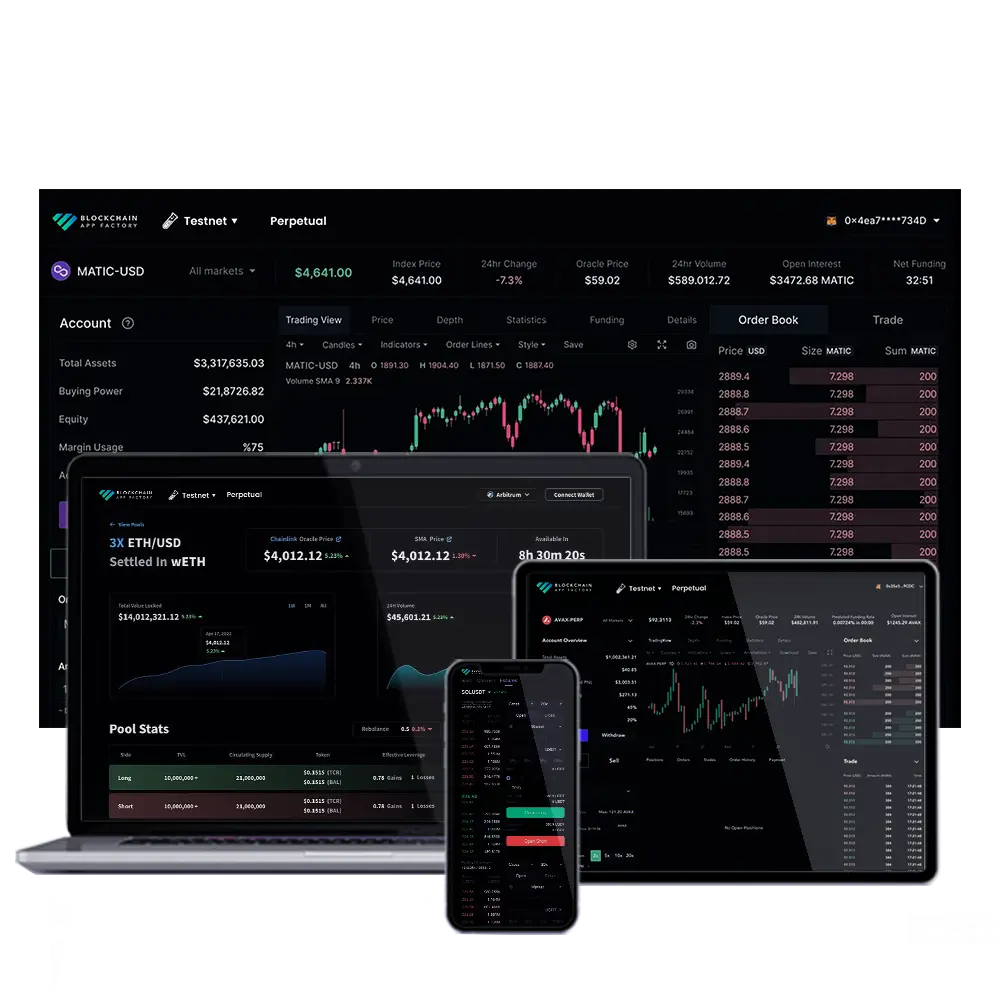
When selecting a venue, consider the funding rate mechanism. Perpetual futures use a funding rate to anchor the contract price to the spot market. On Hyperliquid, this rate updates every 10 seconds, providing frequent price discovery. Drift and Aster update less frequently, which can lead to larger basis deviations during rapid market moves. Traders should monitor these rates to avoid unexpected funding costs, especially when holding positions over multiple days.
Liquidity depth is the final critical metric. A platform may offer high leverage, but if the order book is thin, large positions will suffer significant slippage. Hyperliquid consistently ranks among the top perp DEXs by open interest, indicating deep liquidity across major pairs. Drift maintains strong liquidity on Solana-based assets, while Aster is rapidly growing its depth on Base. Always check the current open interest and 24-hour volume before entering large positions to ensure sufficient market depth.
The choice between these platforms depends on your trading style and asset preferences. High-frequency traders may prefer Hyperliquid’s speed, while Solana enthusiasts might find Drift’s ecosystem integration more convenient. Newcomers to leveraged trading may appreciate Aster’s user-friendly interface on Base. Regardless of the platform, always start with small positions to understand the specific mechanics and risks of each venue.
Risks in decentralized leverage trading
Trading perpetual DEXs offers direct onchain access to leveraged positions, but it removes the protective buffers found in traditional finance. You are not just betting on price direction; you are managing complex code and financial mechanics that can erase capital in seconds. Understanding these specific risks is essential before deploying capital.
Smart Contract Vulnerabilities
When you trade on a perp DEX, your funds are locked in smart contracts rather than held by a regulated broker. If the code contains a bug or is exploited, there is no FDIC insurance or customer support to recover your losses. The 2022 Poly Network hack, which resulted in over $600 million in losses, serves as a stark reminder that code is law—and code can fail. Always review the audit history and insurance coverage of the protocol before trading.
Liquidation Cascades
Leverage amplifies both gains and losses, but it also introduces the risk of forced liquidation. If your position moves against you and your margin falls below the maintenance level, the protocol automatically closes your trade. In volatile markets, this can trigger a cascade of liquidations across the order book, causing prices to plummet or spike violently—a "long squeeze" or "short squeeze." Unlike centralized exchanges, these events happen on-chain, meaning you cannot always cancel orders or adjust margin in time to stop the bleed.
Private Key Management
Decentralized trading means you are your own bank. You hold your private keys, which grants you full control but also full responsibility. If you lose access to your wallet or fall victim to phishing, your assets are gone forever. There is no "forgot password" option. Additionally, interacting with DEXs exposes your wallet address to potential tracking and targeting by malicious actors. Use hardware wallets for significant holdings and practice strict operational security.
Essential tools for perp DEX traders
Trading perpetual futures on decentralized exchanges requires a specific technical stack. Unlike centralized platforms, you manage your own keys and execution, which demands reliable infrastructure to avoid slippage, funding rate surprises, or failed transactions.
Wallet and Network Configuration
Your wallet is the primary interface. Ensure it supports the specific chains where your chosen perp DEX operates, such as Arbitrum, Optimism, or Solana. Most perps are built on Layer 2 networks to reduce gas costs, so verify you have sufficient native tokens for fees. Never use a wallet holding your main long-term savings for active trading; use a dedicated device or browser profile for high-risk activity.
Oracle and Data Reliability
Perpetual DEXs rely on oracles to fetch price data. If an oracle is delayed or manipulated, your position could be liquidated unfairly. Stick to protocols with multiple, decentralized oracle feeds (like Pyth or Chainlink) rather than single-source price feeds. This redundancy is critical for maintaining accurate mark prices during volatile market moves.
Off-Chain Analytics
On-chain data is transparent but raw. Use off-chain analytics tools to monitor funding rates, open interest, and liquidation heatmaps. These tools provide the context needed to time your entries and exits. Without this data, you are trading blind against market makers who have real-time visibility into order book depth and sentiment.
Frequently asked questions about perps
What is a perpetual DEX?
A perpetual decentralized exchange (perp DEX) is a blockchain-based platform that allows traders to buy and sell perpetual futures contracts directly onchain. Unlike centralized exchanges, perp DEXs enable users to trade leveraged positions without giving up custody of their funds, keeping assets in self-custody wallets throughout the trading process.
What is a perpetual in crypto?
Perpetual futures are derivative contracts that allow traders to speculate on the price of an asset without owning it. Unlike traditional futures, these contracts have no expiration date. To keep the contract price aligned with the spot market price, they use a recurring payment mechanism called the funding rate, which is paid between long and short positions.
Are perpetual DEXs safe?
Perp DEXs carry significant risks, including smart contract vulnerabilities and high volatility. Because these platforms operate without intermediaries, users are responsible for securing their own keys and understanding the code they interact with. Always verify the smart contract address and audit history before depositing funds.
How do funding rates work?
Funding rates are periodic payments exchanged between traders to tether the perpetual contract price to the underlying asset's spot price. If the funding rate is positive, long positions pay short positions; if negative, short positions pay longs. This mechanism incentivizes traders to keep the market price in line with the spot price.
What is the difference between a perp DEX and a CEX?
The main difference is custody and accessibility. Centralized exchanges (CEXs) hold your funds and require identity verification (KYC). Perp DEXs allow you to trade from your own wallet (non-custodial) and typically do not require KYC, offering greater privacy but also placing the burden of security entirely on the user.
No comments yet. Be the first to share your thoughts!