
Set up your crypto wallet
Trading perpetual stocks on decentralized exchanges requires a self-custody wallet that interacts directly with DeFi protocols. Unlike centralized exchanges, DEXs require you to manage private keys and sign transactions manually.
Choose a compatible wallet
Select a non-custodial wallet supporting your target blockchain, such as MetaMask for EVM chains (Ethereum, Arbitrum) or Phantom for Solana. Ensure the wallet allows secure seed phrase export, as this is your only recovery method.
Secure your seed phrase
Write your 12- or 24-word seed phrase on paper and store it in a physically secure location like a safe. Never store it digitally, screenshot it, or save it in cloud notes. Anyone with access to this phrase can drain your wallet instantly.
Fund your wallet
Transfer cryptocurrency from a centralized exchange (e.g., Coinbase, Kraken) to your new wallet address to cover trading fees and initial margin. Send the native token of the specific network (e.g., ETH for Ethereum, ARB for Arbitrum) to pay for gas fees. Insufficient gas will cause transaction failures.
Verify your connection
Connect your wallet to the perp DEX interface via the official website link. Double-check the URL to avoid phishing sites. The DEX will request permission to view your public address, which is safe and necessary. Avoid signing "approval" transactions that grant unlimited access to your funds unless you understand the specific contract risks.
Choose a regulated or reputable perp DEX
The landscape for trading perp stocks splits into regulated, centralized platforms offering synthetic exposure, and decentralized protocols prioritizing permissionless access. Your choice depends on regulatory comfort, collateral flexibility, and asset availability.
Regulated platforms like Coinbase and Kraken offer compliant structures. Coinbase provides stock perpetual futures for US-listed equities with 24/7 trading and continuous pricing. Kraken launched tokenized equity perpetual futures for eligible non-US clients, using regulated benchmarks. These options support fiat deposits, reducing capital friction.
Pure DeFi protocols offer greater flexibility and global access, typically allowing crypto-only collateral and higher leverage. While lacking centralized regulatory safety nets, they provide access to broader asset ranges and often lower fees for active traders.
Before committing capital, verify the platform’s regulatory status and fee structure. Ensure you understand the liquidation mechanisms and specific stocks available.
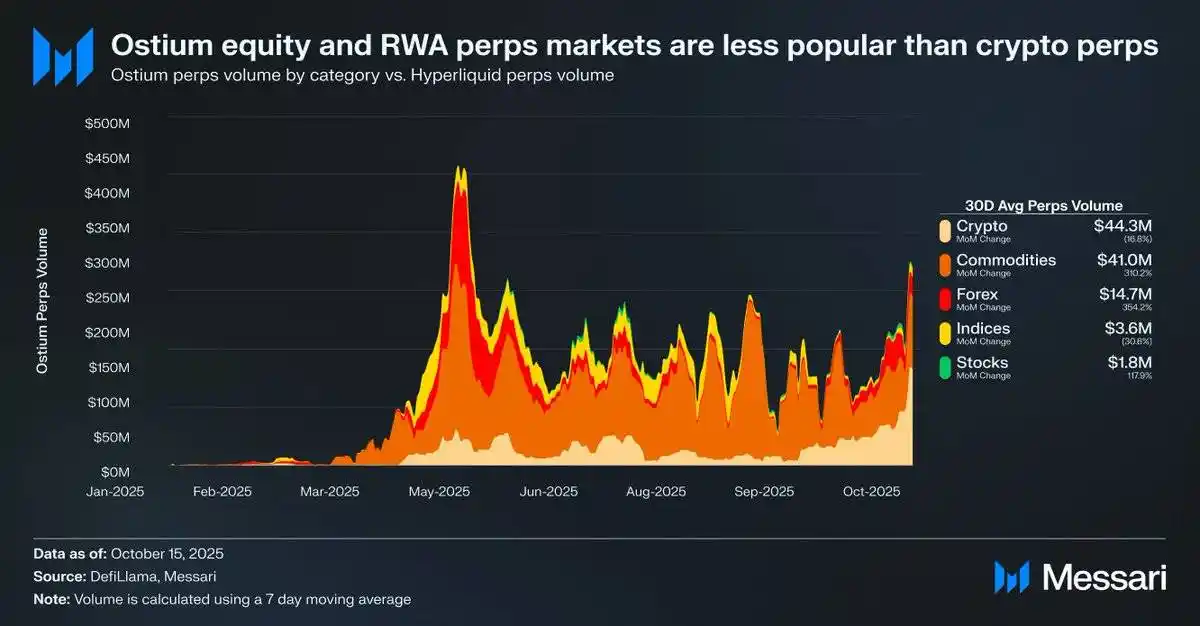
Place your first perp stock trade
Executing a trade on a DEX involves connecting your wallet, selecting the correct contract, and defining entry parameters. You are trading a perpetual contract, not the underlying stock, meaning your position tracks the asset's price but settles continuously through funding rates rather than at an expiration date.
1. Connect your wallet and fund the account
Connect a self-custody wallet (MetaMask, Rabby) to the DEX interface on the correct network (e.g., Ethereum, Arbitrum). Deposit required collateral, typically stablecoins (USDC) or native tokens (ETH, SOL). Ensure your balance covers initial margin and a buffer for potential liquidation. If trading on Ethereum mainnet, ensure you have enough gas tokens for transaction fees.
2. Select the perp stock contract
Search for the specific stock ticker (e.g., AAPL-PERP or TSLA-USD). Verify you are selecting the perpetual contract, not a spot tokenized version. Review contract details including current price, 24-hour volume, and funding rate. High funding rates significantly impact PnL for extended holds.
3. Choose your order type and leverage
Perp stocks typically offer Market and Limit orders:
- Market Order: Executes immediately at the best available price. Use during high volatility (e.g., earnings reports). Be aware of slippage if liquidity is thin.
- Limit Order: Sets a specific entry/exit price. Offers price certainty but no execution guarantee. Ideal for precise entries during normal hours.
4. Set leverage and risk parameters
Leverage amplifies gains and losses. BitMEX Equity Perps allow up to 20x leverage, but beginners should start with 2x-5x. Higher leverage increases liquidation risk if margin falls below the maintenance threshold. Set stop-loss and take-profit levels before opening the trade to limit downside and lock in gains.
5. Confirm and execute the trade
Review all parameters: entry price, quantity, leverage, and fees. Click "Open Position" and sign the transaction in your wallet. Once confirmed on-chain, your position appears in the dashboard. Monitor closely, as DEXs operate 24/7 and positions can be liquidated at any time.
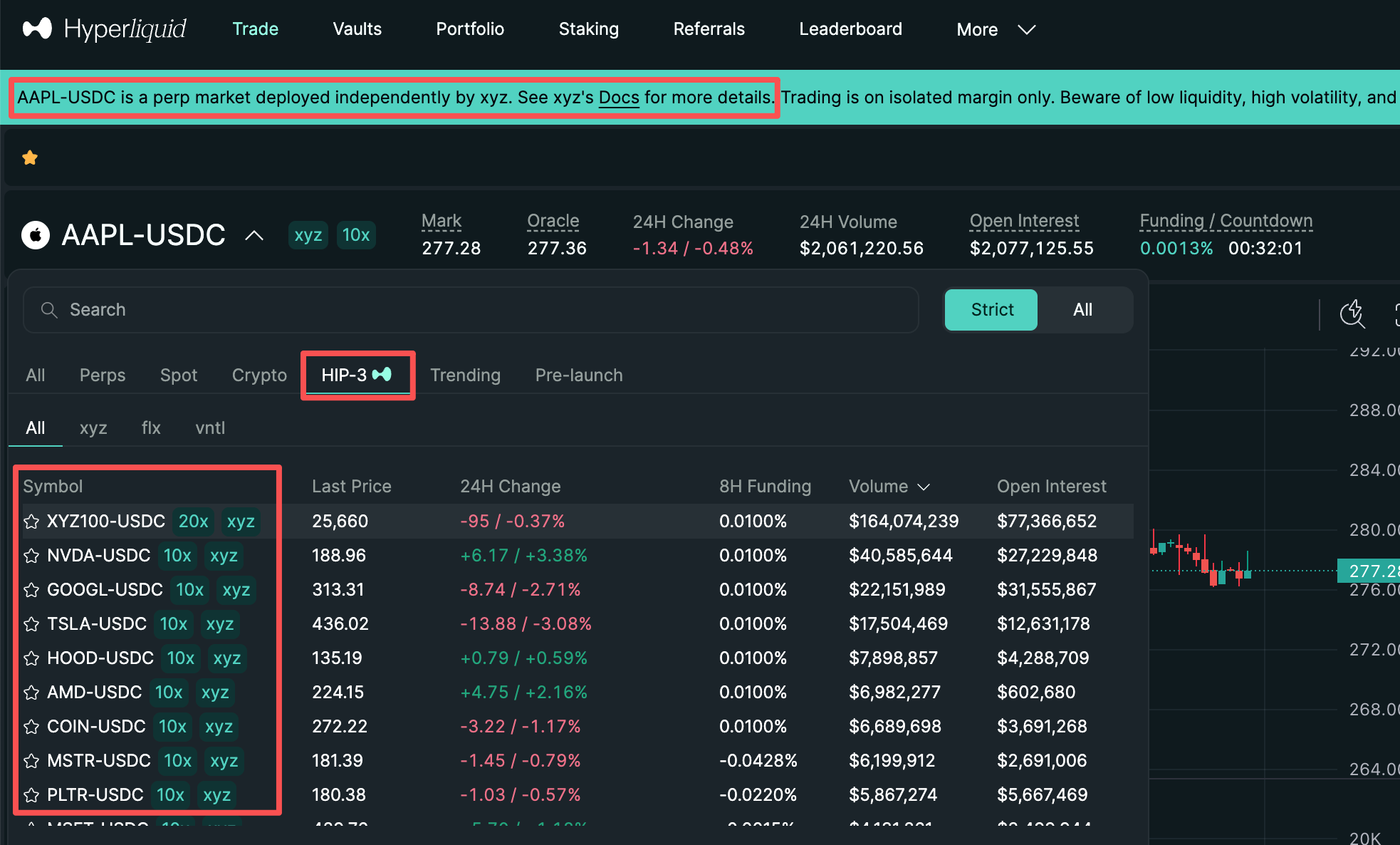
Link your Web3 wallet (MetaMask, Rabby) to the DEX interface. Ensure you are on the correct blockchain network and have sufficient collateral (USDC, ETH) to cover margin and gas fees.

Search for the desired equity perp (e.g., AAPL-PERP). Verify the contract details, including current price, 24h volume, and funding rate, to understand the trading environment.
Select Market for immediate execution or Limit for price-specific entry. Market orders are faster but may suffer slippage; limit orders offer price control but no execution guarantee.
Adjust leverage slider (start low, e.g., 2x-5x). Set stop-loss and take-profit levels to automate risk management and prevent liquidation during volatile price swings.

Sign the transaction in your wallet. Once confirmed, monitor the position dashboard. Use price alerts to track your trade, as perps trade 24/7 and can be liquidated at any time.
Manage liquidation risk carefully
Perpetual stock futures allow leverage, meaning you control a large position with small capital. This amplifies gains and losses. If the market moves against you, the protocol liquidates your collateral before your balance hits zero to protect the lending pool. On DEXs, this process is automated and instant.
Understand the Liquidation Price
Every position has a liquidation price based on your entry price, leverage ratio, and the protocol’s threshold. For example, a 10x long position triggers liquidation at a 10% price drop. DEX thresholds are often tighter than centralized exchanges due to varying insurance fund structures. Check the liquidation price before entering; if it is too close to the current market price, adjust your leverage or add collateral.
Use Stop-Loss Orders
Stop-loss orders automatically close your position at a specific level, limiting downside. While not all DEXs support native stop-losses, many allow limit orders as a safety net. Set your stop-loss at an acceptable loss level to prevent emotional decision-making. Account for slippage in fast-moving markets when setting these levels.
Monitor Open Interest and Funding Rates
Open interest (OI) represents total outstanding derivative contracts. A sudden OI spike can indicate increased volatility and potential liquidation cascades. Funding rates, paid between long and short traders to keep perp prices close to spot prices, signal market sentiment. Extremely positive funding rates suggest over-leveraged longs, potentially leading to sharp corrections. Highly negative rates suggest excessive shorting. Use these metrics to gauge market health.
Avoid Over-Leveraging
Using maximum leverage is a fast track to liquidation. Stick to low leverage (2x–5x) until consistently profitable. Higher leverage requires precise timing and tight risk management difficult to maintain in volatile stock markets. Use a position size calculator to determine necessary collateral, ensuring you don’t overextend your account. Preserving capital is more important than maximizing short-term gains.
No comments yet. Be the first to share your thoughts!