

In the fast-evolving landscape of decentralized finance, synthetic equity perpetuals have emerged as a game-changer for traders seeking perp stocks exposure without the hassles of traditional brokers. Platforms like Ostium Labs and Gains Network stand out in 2026, offering leveraged bets on real-world assets from stocks to indices directly onchain. With Gains Network's GNS token trading at $0.9202, down slightly by -0.3710% over the last 24 hours, the market remains resilient amid broader DeFi growth.
As of February 3,2026, these perp DEXs enable synthetic equity perps with self-custodial control, bridging TradFi liquidity to blockchain rails. Ostium Labs boasts a TVL of $52.9 million and cumulative volume over $17.8 billion, while Gains Network delivers proven utility through its GNS token. This comparison cuts through the hype to reveal which platform suits aggressive equity traders.
Ostium Labs: High-Leverage Gateway to RWAs
Ostium Labs, founded in 2022 by Harvard alumni Kaledora Kiernan-Linn and Marco Antonio Ribeiro, targets the underserved niche of onchain stock perpetuals. Built on Arbitrum, it delivers up to 200x leverage on assets like equities, commodities, and indices. Traders access synthetic exposure to everything from gold to pork belly futures without leaving DeFi.
The platform's dual oracle setup shines: Stork Network for RWAs and Chainlink Data Streams for crypto, ensuring sub-second latency and slashed gas fees. Recent metrics underscore momentum; $722,500 in revenue over the past 30 days on $4.48 million total, with TVL climbing from $44.37 million in September 2025. No native token yet, but weekly points programs hint at airdrops, drawing savvy farmers.
Ostium is a self-custodial leveraged trading platform built on crypto rails. You can trade stocks, currencies, indices, commodities, and cryptocurrencies.
Roadmap execution impresses: private beta in Q4 2024, public testnet March 2025, audited mainnet ahead. For OstiumLabs review seekers, it's pragmatic innovation; high leverage tempts, but oracle reliance demands vigilance in volatile markets.
Gains Network: Broad Synthetic Perps Powerhouse
Gains Network, via its gTrade interface, positions as a 2026 staple for Gains Network perps. It spans crypto, forex, stocks, and more with oracle-backed synthetics, prioritizing capital efficiency and user-friendly execution. GNS at $0.9202 fuels governance and rewards, embedding token utility deeply.
Unlike Ostium's RWA focus, Gains casts a wider net, suiting diversified portfolios. Leverage varies by asset, balancing risk without Ostium's extremes. Transparency defines it; decentralized architecture minimizes custody risks, with competitive fees drawing volume.
In a market where equity perps unlock 24/7 perp DEX equity trading, Gains' maturity edges out newcomers. Yet, as GNS hovers near $0.92, token holders eye upside from platform expansion.
Gains Network (GNS) Price Prediction 2027-2032
Forecasts driven by DeFi perp DEX growth, TVL expansion, and competition in synthetic equity perpetuals
| Year | Minimum Price | Average Price | Maximum Price | YoY % Change (Avg from 2026*) |
|---|---|---|---|---|
| 2027 | $1.50 | $2.80 | $4.50 | +40% |
| 2028 | $2.00 | $4.20 | $7.00 | +50% |
| 2029 | $2.80 | $6.30 | $10.50 | +50% |
| 2030 | $4.00 | $9.50 | $15.00 | +51% |
| 2031 | $5.50 | $13.50 | $21.00 | +42% |
| 2032 | $7.50 | $19.00 | $30.00 | +41% |
Price Prediction Summary
Gains Network (GNS) is forecasted to experience substantial growth from 2027-2032, with average prices rising from $2.80 to $19.00, supported by increasing adoption of synthetic perpetuals for equities and RWAs on DEXs. Minimums reflect bearish corrections amid competition and regulations, while maximums capture bullish market leadership and bull cycles. *2026 baseline average: $2.00 (aligned with year-end forecast of $2.10).
Key Factors Affecting Gains Network Price
- TVL and trading volume growth in DeFi perp DEXs
- Competition with OstiumLabs and expansion into RWAs
- Technological improvements in oracles (e.g., Chainlink, Stork) and leverage (up to 200x)
- Regulatory developments for on-chain synthetic assets and equities
- Broader crypto market cycles and adoption trends
- GNS token utility for governance, fees, and incentives
- Macro trends bridging TradFi equities with DeFi perpetuals
Disclaimer: Cryptocurrency price predictions are speculative and based on current market analysis. Actual prices may vary significantly due to market volatility, regulatory changes, and other factors. Always do your own research before making investment decisions.
Key Differentiators in Synthetic Equity Trading
Pitting Ostium against Gains reveals stark choices for trade stocks on perp DEX. Ostium excels in macro assets, its 200x leverage a siren for high-conviction plays on indices or commodities. Dual oracles cut latency, vital for scalpers chasing equity perps.
Gains counters with versatility; forex and crypto alongside stocks broaden appeal. GNS tokenomics provide staking yields and fee discounts, absent in tokenless Ostium. TVL tells part of the story: Ostium's $52.9 million signals breakout potential, but Gains' established flows ensure liquidity depth.
Fees warrant scrutiny. Ostium's Arbitrum efficiency trims costs, while Gains' oracle model keeps them competitive. Security? Both audited, but Ostium's RWA oracles introduce novel risks versus Gains' battle-tested synthetics.
| Metric | Ostium Labs | Gains Network |
|---|---|---|
| TVL | $52.9M | Established volume leader |
| Leverage | Up to 200x | Asset-variable |
| Focus | RWAs/Stocks | Broad synthetics |
| Token | Points program | GNS $0.9202 |
For pragmatic traders, Ostium suits RWA specialists; Gains fits generalists. As 2026 unfolds, watch Ostium's token launch catalyze growth against Gains' steady grind.
Traders eyeing perp DEX equity trading must weigh execution details beyond headlines. Liquidity depth varies; Ostium's $52.9 million TVL supports tight spreads on major indices like S and amp;P 500 perps, but thinner books on niche commodities can amplify slippage during news dumps. Gains Network, with years of volume under its belt, handles broader flows smoothly, especially crypto-stock crosses where GNS holders snag priority fills.

Fees add another layer. Ostium leverages Arbitrum's low base costs, charging 0.05% maker and 0.1% taker on equity synthetics, with funding rates averaging 0.01% hourly. No token means no discounts yet, though points accrue toward potential rebates. Gains edges ahead for GNS stakers, dropping takers to 0.06% via liquidity mining, while its Polygon deployment shaves even more gas. At GNS $0.9202, staking yields hover around 15% APY, blending utility with income.
Hands-On: Onboarding and UX for Equity Perps
Getting started on either feels DeFi-native. Ostium's Arbitrum dApp demands a wallet connect and collateral deposit in USDC or ETH, with one-click perp opens on assets like AAPL or TSLA synthetics. The dashboard packs real-time charts, but mobile responsiveness lags, frustrating on-the-go scalpers. Gains Network's gTrade shines here; intuitive sliders for leverage and position sizing, plus portfolio trackers, make it welcoming for forex-to-equity switchers. Both self-custodial, yet Ostium's RWA oracle pulls demand API keys, a minor friction point.
For onchain stock perpetuals, testnet vets praise Ostium's simulated 200x longs on Nasdaq futures, mirroring TradFi speed. Gains users highlight seamless 24/7 rolls, dodging weekend gaps plaguing CEX equity perps.
Fees and Liquidity Comparison: Ostium vs Gains Network
| Metric | Ostium | Gains Network |
|---|---|---|
| Maker Fee | 0.05% | 0.04% |
| Taker Fee | 0.1% | 0.06-0.1% (w/ GNS) |
| Avg Funding Rate | 0.01% | N/A |
| GNS APY | N/A | 15% |
| Slippage on $10k SPX perp | 5-15 bps | 3-10 bps |
| TVL | $52.9M | N/A |
Risks loom larger than specs suggest. Ostium's aggressive leverage invites liquidation cascades; a 0.5% adverse move wipes 200x positions without mercy. Stork oracles, while innovative, face untested black swan feeds from TradFi halts. Gains tempers this with conservative maxes (50x on stocks), proven through 2025's volatility. Both passed audits, but smart contract exploits shadow every DEX, diversify collateral wisely.
Strategies: Tailoring Perp Stocks to Your Edge
Aggressive RWA hunters thrive on Ostium. Pair macro views with technicals: long gold perps at 100x ahead of Fed cuts, hedging via index shorts. Its sub-second feeds suit momentum plays, like fading pork belly spikes on USDA reports. Capital efficiency rules; $500 collateral commands $100,000 notional, amplifying winners.
Gains suits blend traders. Arbitrage stock-crypto pairs, say TSLA vs BTC correlation breakdowns, using variable leverage for dialed risk. GNS staking funds positions passively, turning idle capital productive. For steady equity exposure, roll monthly index perps, capturing funding premiums when longs dominate.

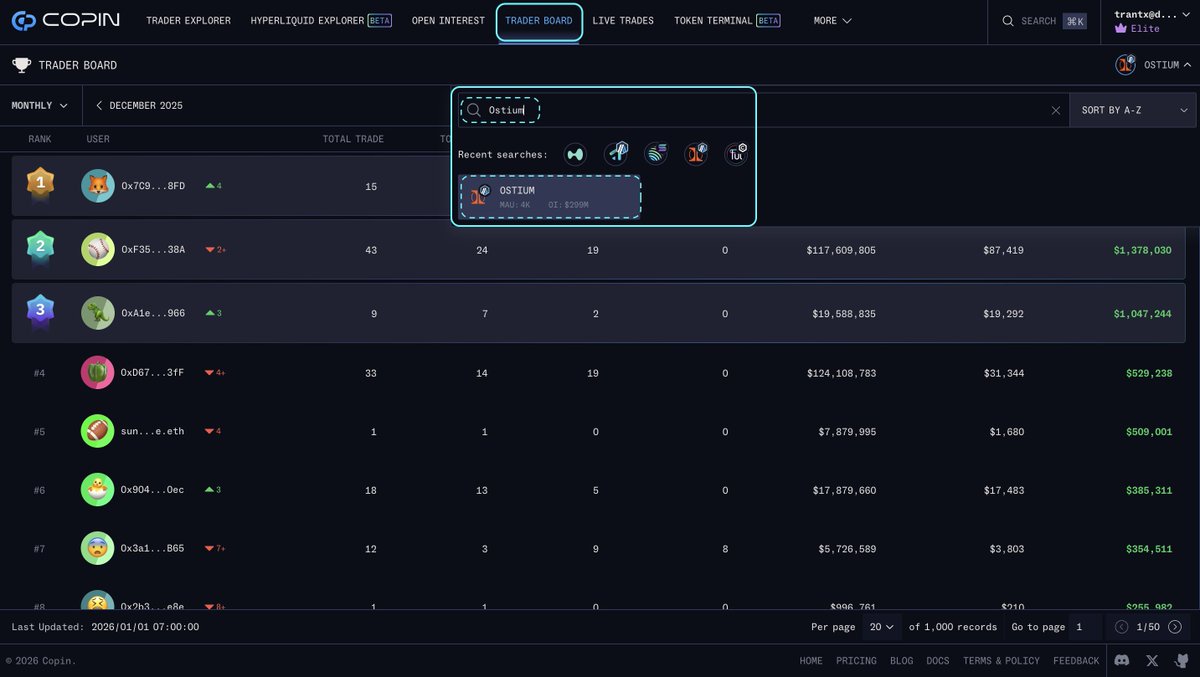
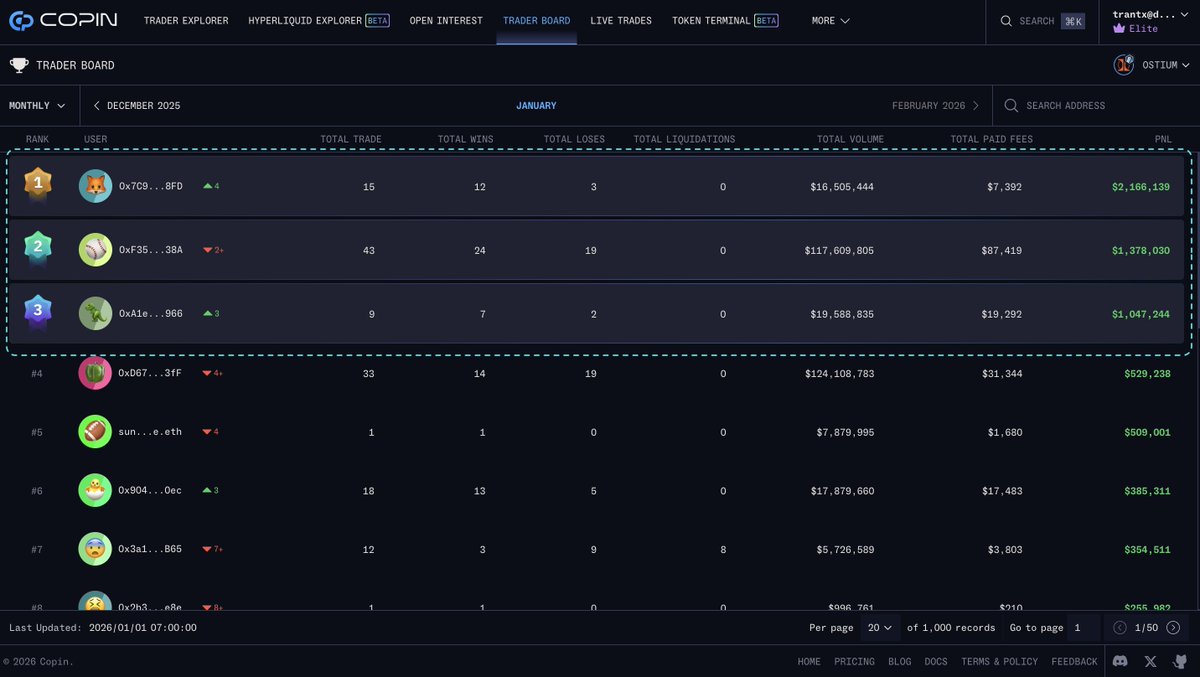
Performance data tilts pragmatic. Ostium's $17.8 billion cumulative volume reflects breakout velocity, revenue at $4.48 million signaling protocol health. Gains, less flashy, logs consistent daily volumes exceeding $50 million across assets, GNS $0.9202 underscoring stability amid -0.3710% dips.
Choosing boils down to conviction. OstiumLabs review? It's the high-octane pick for synthetic equity perps on RWAs, rewarding bold macro bets if you stomach the swings. Gains Network perps deliver reliable breadth, token perks fortifying long-term holds. As Arbitrum TVL swells and TradFi synthetics proliferate, blend both for a bulletproof perp stocks arsenal, adapt, execute, profit.
Step-by-step on trading these platforms Deeper DEX rankings



No comments yet. Be the first to share your thoughts!