
Set up your trading wallet
Perpetual DEX trading requires a non-custodial wallet that supports the specific Layer 1 or Layer 2 network where the exchange lives. Unlike centralized exchanges, you hold the private keys. This means you are your own bank, which offers full control but demands rigorous security practices.
1. Choose a Compatible Wallet
Select a wallet that integrates with your target DEX. MetaMask is the standard for Ethereum-based perpetual DEXs, while Phantom is the primary choice for Solana. Ensure the wallet supports the token standards (ERC-20 or SPL) required by the exchange.
2. Secure Your Seed Phrase
When you create the wallet, you will receive a 12 or 24-word recovery phrase. Write this down on paper and store it in a secure, offline location. Never store it digitally, in the cloud, or as a screenshot. Anyone with this phrase has full access to your funds.
3. Fund Your Wallet
Transfer the necessary cryptocurrency from an exchange or another wallet to your new address. Ensure you send the correct network token (e.g., ETH for Ethereum, SOL for Solana). Sending the wrong token to the wrong network can result in permanent loss.
4. Verify the Connection
Before trading, connect your wallet to the DEX interface. Verify the URL matches the official exchange domain to avoid phishing sites. Check that the network status in your wallet matches the DEX’s selected network. A mismatched network will prevent transactions from processing.
5. Test with a Small Amount
Execute a small test transaction to confirm everything works. This verifies that your wallet is correctly configured and that you understand the gas fees and slippage settings. Once confirmed, you are ready to trade on perpetual DEXs with confidence.
Choose the right platform for 2026
Selecting a perpetual DEX in 2026 requires prioritizing execution quality over marketing hype. The market has consolidated around a few high-throughput Layer 1 chains and specialized aggregators. For high-stakes trading, slippage and fee structures are the primary determinants of profitability.
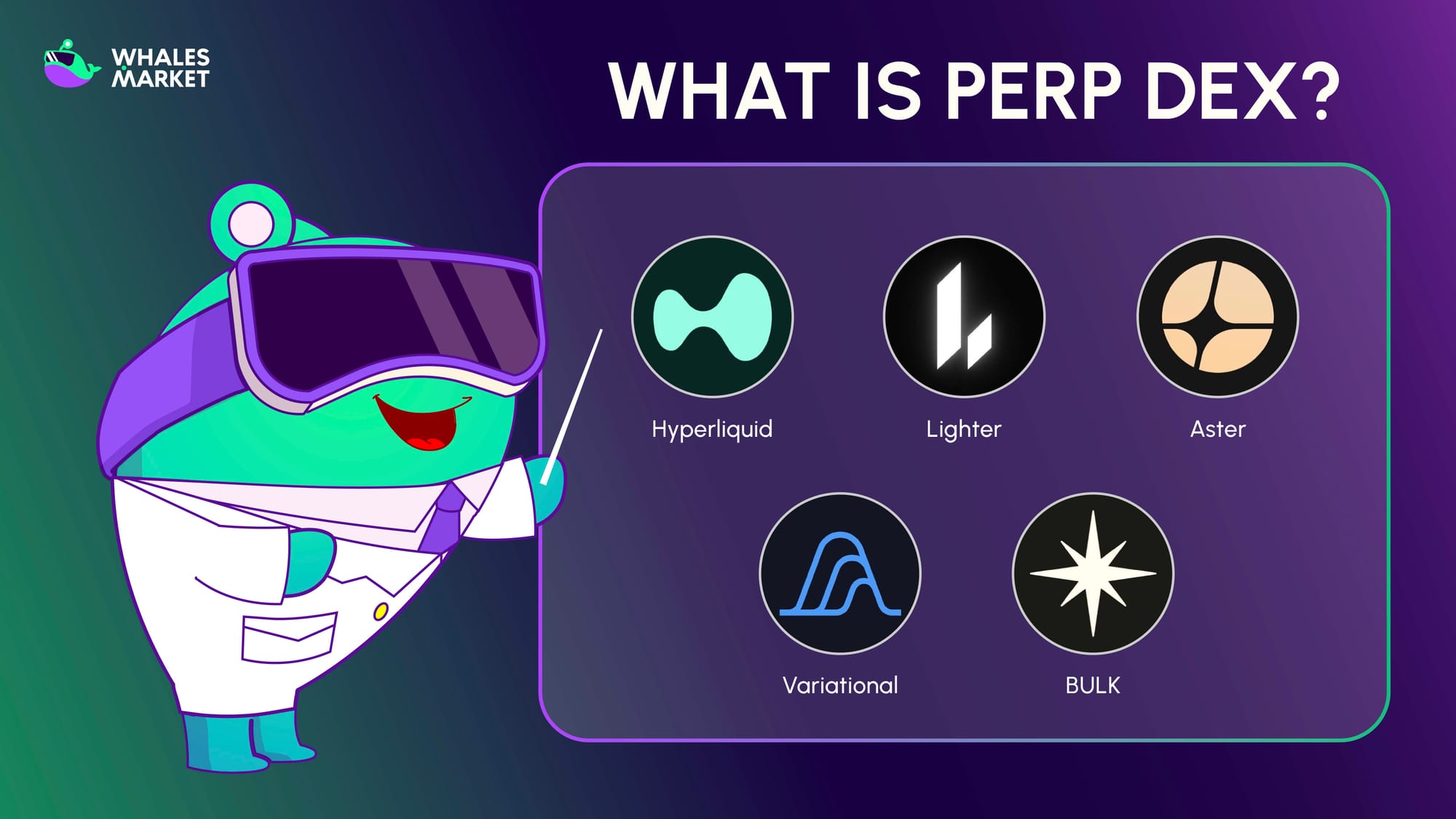
Hyperliquid remains the dominant force by a wide margin, operating its own L1 chain optimized for 200,000 transactions per second. This architecture allows for near-instant order matching, a critical advantage when trading volatile assets. Aster and Lighter have emerged as strong alternatives, particularly for traders seeking specific risk management features or lower entry barriers.
Use the comparison below to evaluate how these platforms stack up against each other. Focus on fees and leverage limits when sizing your positions.
| Platform | Maker/Taker Fees | Max Leverage | Base Chain |
|---|---|---|---|
| Hyperliquid | 0.00% / 0.05% | Up to 50x | Hyperspace (L1) |
| Aster | 0.02% / 0.05% | Up to 50x | Arbitrum |
| Lighter | 0.00% / 0.02% | Up to 50x | Optimism |
Execution speed often dictates which platform you choose. Hyperliquid’s proprietary chain minimizes the latency inherent in EVM-based solutions, making it the preferred choice for large-order execution. However, Aster and Lighter offer competitive fee structures that may benefit smaller, high-frequency traders who prioritize cost efficiency over raw throughput.
Always verify the current fee tiers and supported assets on the official platform before depositing funds. Market conditions can shift, and liquidity depth varies significantly between pairs.
Execute your first leveraged position
Placing a leveraged order on a perpetual DEX requires a different workflow than centralized exchanges (CEX). On a CEX, you deposit fiat or crypto into a custodial account and click "Buy." On a DEX, you connect a non-custodial wallet, approve the smart contract to spend your funds, and submit a transaction that gets executed on-chain or via an off-chain matching engine.
This process introduces specific steps for managing gas fees, slippage, and liquidity pool interactions. The following steps outline the standard procedure for opening a long or short position on a leading perpetual DEX like Hyperliquid or Aster.
Start by connecting your self-custody wallet (e.g., MetaMask, Rabby, or Phantom) to the DEX interface. Unlike CEXs, you do not transfer funds to an exchange address. Instead, you must hold the native asset of the DEX’s liquidity pool or the specific margin asset (e.g., USDC, ETH) in your connected wallet. Some DEXs require you to bridge assets from your native chain to the DEX’s specific chain or rollup (e.g., Arbitrum, Solana, or Hyperliquid’s L1) before you can begin trading.
Before placing a trade, you must grant the DEX’s margin account smart contract permission to access your funds. This is a one-time approval per token type. If you are trading with USDC, you will see a transaction prompt to "Approve USDC." Confirm this in your wallet. This step ensures the protocol can pull your margin to cover potential losses. Without this approval, your order will fail immediately.
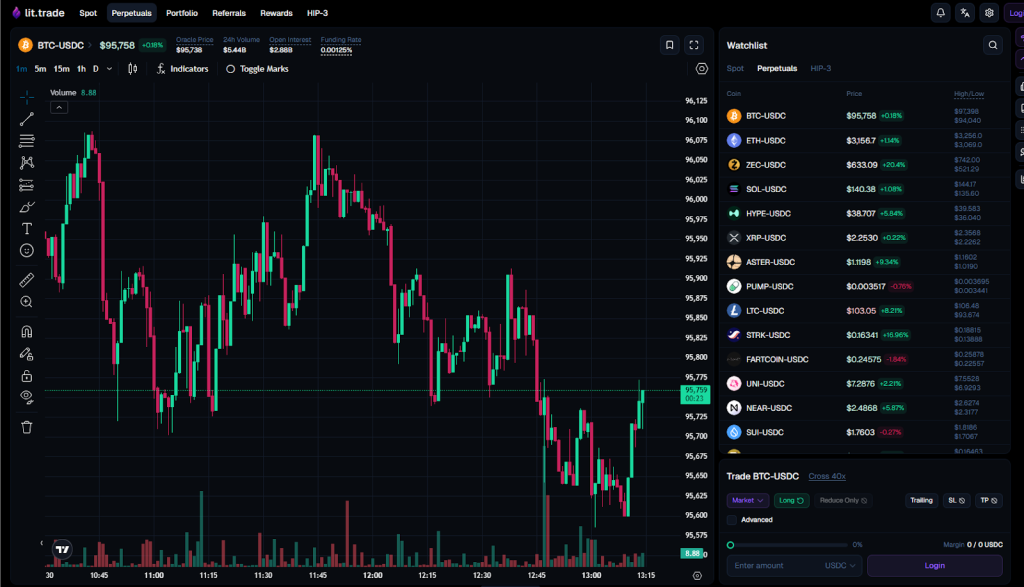
Navigate to the trading interface and select the desired perpetual contract (e.g., BTC-USD, ETH-USD). Unlike spot trading, you are trading a derivative contract that tracks the underlying asset’s price. Set your desired leverage ratio (e.g., 5x, 10x, 20x). Higher leverage amplifies both potential profits and liquidation risk. Most DEXs display the current maintenance margin requirement and liquidation price in real-time. Adjust the leverage slider carefully, as exceeding your account’s available equity will result in an immediate liquidation.
Choose between a market order (executes immediately at the best available price) or a limit order (executes only at your specified price). For market orders, set a slippage tolerance (e.g., 0.5% - 1%) to account for price movement during transaction confirmation. Enter the position size in USD or the underlying asset amount. Review the estimated fees, which typically include a small network gas fee and a trading fee (maker/taker). Click "Place Order" and confirm the transaction in your wallet.
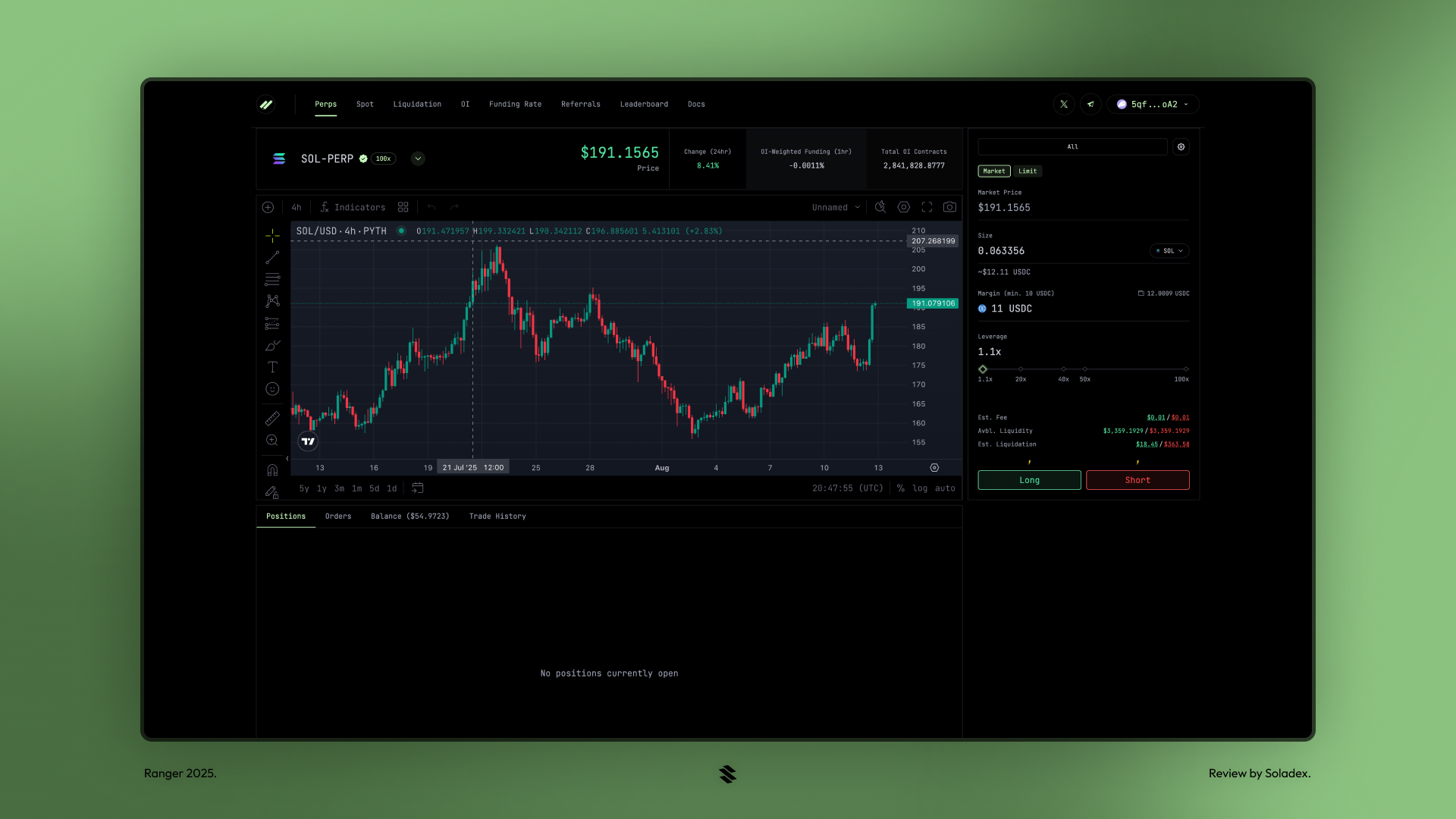
Once the transaction is confirmed, your position will appear in the "Open Positions" tab. Monitor the unrealized PnL and the liquidation price closely. Set stop-loss orders if the DEX supports them, or manually close the position if the market moves against you. Remember that perpetual DEXs do not have an expiry date, but they do charge funding rates periodically (every 8 hours on most chains). These rates can erode your capital if you hold a large position for an extended period.
Key Differences from CEX Trading
The primary distinction lies in custody and execution. On a CEX, the exchange holds your funds and matches orders internally. On a DEX, you retain custody of your assets until the moment of execution, and trades are often settled against a liquidity pool or a decentralized order book. This means you are exposed to smart contract risk rather than counterparty risk from a centralized entity. Additionally, DEX interfaces may feel less polished, and transaction confirmations can take longer depending on network congestion.
Common Pitfalls to Avoid
- Slippage: In volatile markets, market orders can fill at significantly worse prices than expected. Always use limit orders for large positions.
- Liquidity Gaps: Low-volume perpetual contracts may have wide bid-ask spreads, making it difficult to enter or exit positions efficiently.
- Funding Rates: Ignoring funding rates can lead to unexpected costs. Check the current funding rate before opening a long-term position.
- Gas Fees: On high-traffic networks, gas fees can spike. Consider trading during off-peak hours or using Layer 2 solutions with lower fees.
Pro Tip: Always start with a small position size to familiarize yourself with the DEX’s interface and transaction flow before committing significant capital.
Manage funding rates and liquidation risk
Perpetual contracts allow you to hold leveraged positions without an expiration date, but they come with two unique risks: funding rate drift and liquidation. Unlike spot trading, you are continuously exposed to market mechanics that can erode your capital or force a sale. Understanding how to monitor these forces is essential for high-stakes trading.
Monitor funding rates
Funding rates are periodic payments exchanged between long and short traders to keep the perpetual price tethered to the spot price. When the rate is positive, longs pay shorts; when negative, shorts pay longs. If you hold a position against the funding trend, these payments compound over time, silently eating into your margin.
You should check the current funding rate on your DEX interface before entering or holding a position. High positive rates often signal excessive long leverage, while negative rates suggest short squeezes. A
can help visualize price action, but you must rely on the DEX’s specific funding data for your trade.Avoid liquidation
Liquidation occurs when your margin balance falls below the maintenance requirement. In a non-custodial environment, this usually happens because your collateral is insufficient to cover losses. Unlike CEXs, where you might receive margin calls, DEX liquidations are often automated and immediate via smart contracts.
To avoid this, keep your leverage conservative and monitor your margin ratio. Use stop-loss orders if the DEX supports them, or set manual alerts for price levels that would trigger liquidation. Remember that volatility in perp DEXs can be extreme, as seen in the rapid volume shifts reported in 2025 and 2026 [[src-serp-3]]. Always ensure you have enough buffer to withstand sudden price swings.
Common mistakes in on-chain leverage
Trading perpetual DEXs introduces specific on-chain friction that centralized exchanges mask with internal matching engines. High-stakes traders often underestimate how blockchain mechanics amplify small errors into significant losses. The following pitfalls require active management to protect capital.
Slippage and price impact
Large orders on decentralized perpetuals can shift the oracle price or liquidity pool state, causing you to enter at a worse rate than quoted. This is especially true for concentrated liquidity models or smaller venues. Always check the expected slippage tolerance before confirming the transaction. A 1% slippage tolerance might seem small, but on a $100,000 position, that is $1,000 lost instantly.
Gas fees during congestion
Ethereum mainnet gas spikes can erase thin margins on leveraged trades. If the network is congested, your transaction might sit pending or cost more than the profit potential of the trade. Use layer-2 solutions like Arbitrum or Base for lower fees, or time your entries during off-peak hours. Never assume gas costs are static; they fluctuate with network demand.
Smart contract and oracle risks
Perpetual DEXs rely on smart contracts to execute trades and oracles to feed price data. Bugs in the code or delayed oracle updates can lead to failed executions or inaccurate liquidations. Audit reports from firms like CertiK or OpenZeppelin provide some assurance, but no contract is immune to exploits. Diversify your exposure across multiple reputable venues to mitigate single-point failure risks.
Verify your trade before closing
Closing a perpetual position on a decentralized exchange requires the same discipline as opening one. Slippage, funding fees, and protocol-specific withdrawal delays can erode profits if you rush the exit. Treat the final verification as a mandatory checkpoint, not an afterthought.
Before clicking close, review the estimated execution price against the current mark price. High leverage amplifies the impact of slippage. Ensure your slippage tolerance is set low enough to prevent unfavorable fills during volatile market movements, but high enough to guarantee the trade executes.

Perpetual contracts require periodic funding payments. Verify the current funding rate to understand if you are paying or receiving a premium. Additionally, calculate the total transaction fees, including network gas costs and protocol trading fees, to ensure they do not exceed your projected profit margin.
Double-check that the position size matches your original entry. Confirm the liquidation price has not moved closer to your entry due to market shifts. If the position is near liquidation, consider partial exits to reduce risk before fully closing the trade.
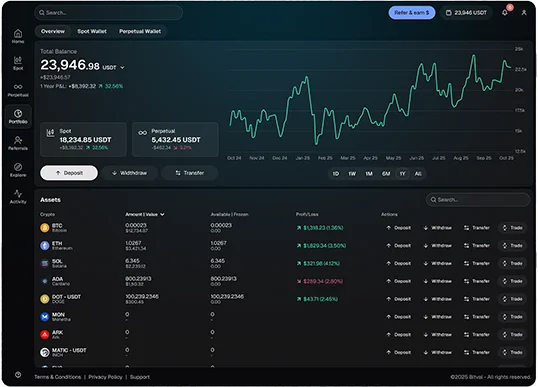
Submit the close transaction and monitor the blockchain for confirmation. Decentralized exchanges may have slower finality than centralized counterparts. Once confirmed, verify that the position shows as closed in your wallet and that the collateral has returned to your available balance.
Frequently asked questions about perp DEXs
How are perpetual DEXs regulated in 2026?
Regulatory scrutiny has intensified, with authorities like the CFTC and SEC focusing on whether decentralized protocols constitute unregistered exchanges. While some jurisdictions offer clear frameworks, others treat perp DEXs as high-risk entities. Always verify the legal status in your specific jurisdiction before trading.
Are perp DEXs safer than centralized exchanges?
Perp DEXs remove counterparty risk by keeping funds in your wallet, but they introduce smart contract risk. Code vulnerabilities can lead to total loss. Centralized exchanges (CEXs) offer insurance funds and customer support but require you to trust their custody. The trade-off is autonomy versus convenience.
Why is the perp DEX:CEX volume ratio shifting?
According to CoinGecko’s 2026 report, the ratio of perp DEX to CEX volume climbed from 3% to 13% in 2025 before dipping slightly. This shift reflects growing trader demand for non-custodial leverage and lower fees, though CEXs still dominate overall market share.
What are the main risks of trading on a perp DEX?
The primary risks include smart contract exploits, oracle manipulation, and high liquidation rates during volatile markets. Unlike CEXs, there is no customer service to reverse mistakes. Understanding the protocol’s liquidation mechanism and funding rate model is essential before placing a trade.
No comments yet. Be the first to share your thoughts!