
What are perpetual DEX stocks
Perpetual DEX stocks are synthetic derivatives traded on decentralized exchanges that track the price of underlying equity assets. Unlike buying shares through a traditional brokerage, these instruments do not confer ownership of the company, voting rights, or dividends. Instead, they provide a leveraged mechanism to speculate on price movements, functioning as perpetual futures contracts that never expire.
This structure allows traders to maintain positions indefinitely as long as they meet margin requirements. The "perpetual" aspect is maintained through a funding rate mechanism, which periodically exchanges payments between long and short position holders to keep the contract price tethered to the spot price of the underlying equity index or stock. This design bridges the gap between traditional equity exposure and the 24/7 liquidity of decentralized finance (DeFi).
The rise of this asset class has been driven by the need for continuous trading access. Traditional stock markets close at 4:00 PM ET, but crypto markets operate 24/7. Perpetual DEXs allow traders to react to global news, earnings reports, and macroeconomic events outside of standard market hours, creating a parallel financial layer for equity speculation.
| Feature | Traditional Equity | Perpetual DEX Stock |
|---|---|---|
| Ownership | Yes (shareholder) | No (derivative contract) |
| Trading Hours | Market hours only | 24/7/365 |
| Leverage | Limited (Reg T) | Up to 100x+ |
| Settlement | T+1 or T+2 | Instant on-chain |
Market Growth and Adoption Trends
The perpetual DEX market has accelerated into the fastest-growing segment of decentralized finance in 2026. What began as a niche alternative for leveraged trading has evolved into a primary infrastructure layer for crypto derivatives. Users are increasingly migrating to decentralized platforms to maintain custody of their funds while accessing complex financial instruments.
Current data indicates that perpetual DEXs now command approximately 26% of the total derivatives market share. This expansion is driven by a combination of improved user interfaces, deeper liquidity pools, and the persistent demand for non-custodial trading solutions. The sector is no longer just competing on features; it is competing on sheer volume and reliability.
To understand the momentum behind this shift, it is helpful to look at the performance of leading tokens and aggregate volume metrics in the space. The following chart illustrates the recent price action and trading activity associated with major perpetual DEX platforms, reflecting the heightened interest from both retail and institutional participants.
The shift toward decentralized perpetuals is not merely a trend but a structural change in how traders interact with leverage. As regulatory scrutiny on centralized exchanges intensifies, the appeal of on-chain trading continues to grow. This environment favors protocols that can offer speed, low costs, and true self-custody without sacrificing the sophisticated trading tools users expect.
Top platforms for trading perps
Trading synthetic stocks on decentralized exchanges requires balancing liquidity, asset variety, and user experience. The market has consolidated around a few key players that offer distinct advantages depending on your trading style. Drift Trade offers a unified platform with permissionless access to over 100 assets, while MetaMask Perps integrates directly into the wallet, offering up to 50x leverage for faster execution.
The following table compares the core features of leading perpetual DEX platforms to help you choose the right venue for synthetic stock trading.
| Platform | Max Leverage | Asset Variety | Fee Structure |
|---|---|---|---|
| Drift Trade | Up to 25x | 100+ (incl. synthetic stocks) | Maker: 0.01%, Taker: 0.05% |
| MetaMask Perps | Up to 50x | Limited (Crypto only) | Maker: 0.00%, Taker: 0.05% |
| Aster DEX | Up to 50x | Tokenized Stocks & Crypto | Maker: 0.02%, Taker: 0.06% |
| Hyperliquid | Up to 50x | Crypto & Synthetic Stocks | Maker: 0.01%, Taker: 0.04% |
Drift Trade stands out for its breadth of synthetic stock options, allowing traders to access a wide range of equity tokens without the restrictions of centralized exchanges. Its unified interface simplifies the process of managing positions across multiple assets. MetaMask Perps, on the other hand, prioritizes speed and accessibility. By embedding trading directly into the MetaMask wallet, it reduces the friction of connecting to external platforms, making it ideal for quick, high-leverage trades on crypto assets, though it currently lacks direct synthetic stock support.
Aster DEX and Hyperliquid offer a middle ground, providing access to both crypto and tokenized stocks with competitive fee structures. Aster DEX has gained traction for its robust support of tokenized equity derivatives, while Hyperliquid is known for its high-performance order book and low-latency execution. The choice between these platforms often comes down to whether you prioritize asset variety (Drift, Aster) or execution speed and wallet integration (MetaMask, Hyperliquid).

Key risks and regulatory landscape
Leveraged trading on decentralized exchanges introduces a distinct layer of complexity compared to traditional finance. The primary risk is not just market volatility, but the structural integrity of the protocol itself. Smart contract risk remains the most significant threat to capital. Even with audits, code vulnerabilities can lead to total loss of funds through exploits or oracle failures that misprice assets during high volatility.
Regulatory uncertainty further complicates the landscape. While some jurisdictions like the US offer pathways through regulated entities like Coinbase Advanced, most perpetual DEXs operate in legal gray areas. This lack of clear regulatory framework means traders have no recourse if a platform shuts down or freezes assets due to government pressure. The decentralized nature that offers privacy also shields operators from accountability.
Leveraged trading carries a high risk of liquidation. Ensure you understand funding rates and liquidation prices before trading.
The technical architecture of perpetual DEXs relies on complex mechanisms like funding rates to peg prices to spot markets. These rates can become extremely negative or positive during market stress, leading to unexpected costs for traders. Additionally, the lack of centralized clearinghouses means there is no backstop against extreme market moves that could otherwise be managed by traditional margin calls.
| Risk Category | Description | Impact Level |
|---|---|---|
| Smart Contract Vulnerability | Code exploits or oracle manipulation | Critical |
| Regulatory Action | Platform shutdown or asset freezing | High |
| Liquidation Risk | Forced closure due to margin calls | High |
| Funding Rate Volatility | Unexpected costs during market stress | Medium |
How to start trading safely
Entering the perpetual DEX stocks market requires strict risk management. These derivatives allow leveraged exposure without expiring, but the volatility is real. Follow this checklist to set up your wallet and execute your first trade with controlled exposure.
Use a hardware wallet or a reputable non-custodial browser extension like MetaMask. Never share your seed phrase. Enable two-factor authentication on all associated accounts to prevent unauthorized access to your funds.
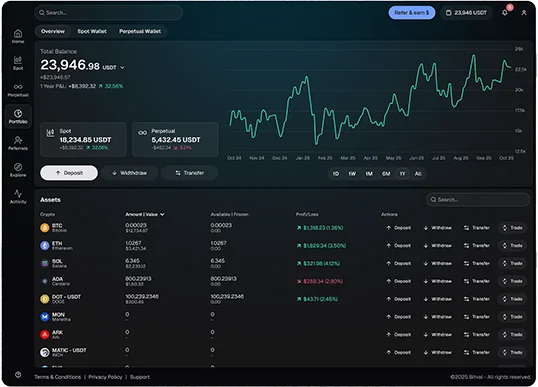
Deposit only what you can afford to lose. Start with a small amount to test the platform’s liquidity and slippage. Avoid using high leverage in your initial trades to understand how margin calls work in practice.
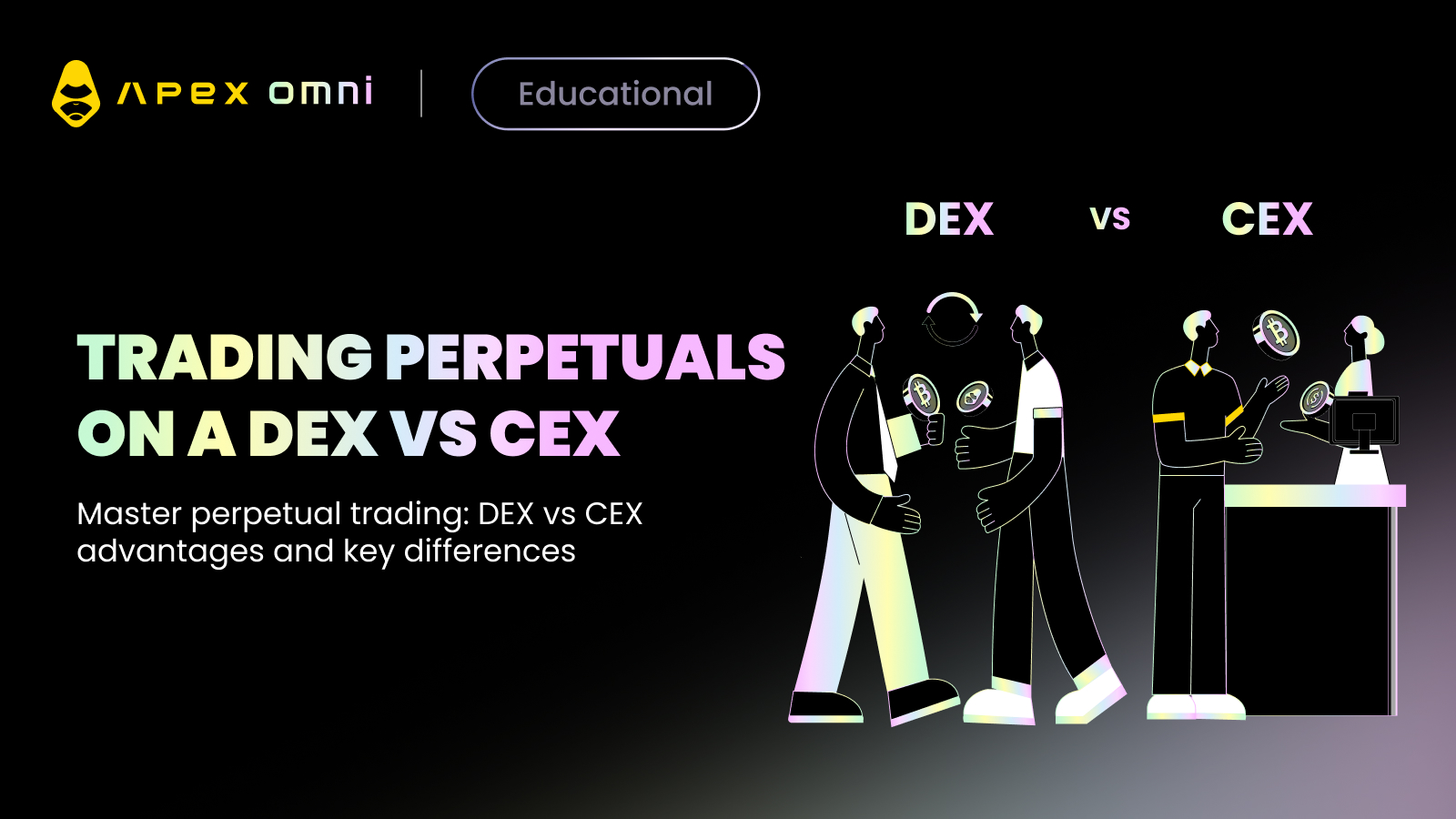
Before opening a position, define your exit point. Perpetual futures can liquidate positions rapidly if the market moves against you. Always set a stop-loss order to cap your downside risk and protect your capital.
| Feature | Benefit |
|---|---|
| Non-custodial | You retain control of your assets |
| Leverage | Amplified potential returns |
| Stop-losses | Automated risk mitigation |
Perpetual DEX FAQ
What is a perpetual DEX?
Perpetual DEXs are decentralized exchanges that allow traders to open leveraged positions on crypto prices with no expiry date. Unlike traditional futures, these contracts do not have a settlement date, meaning you can hold your position indefinitely as long as you meet margin requirements. Crucially, you maintain custody of your funds in your wallet throughout the trading process.
What is the best DEX to trade on?
"Best" depends on your priority: liquidity, fees, or asset variety. Major platforms like Drift offer permissionless trading for over 100 assets, while others may specialize in specific chains or lower fees. For a detailed breakdown of features and performance, refer to our comparison table below.
Where can I trade perpetuals in the US?
Regulatory constraints mean many offshore perpetual DEXs are inaccessible to US residents. For US-based traders, centralized exchanges like Coinbase Advanced are currently the primary legal avenue to trade perpetual futures alongside spot assets.
No comments yet. Be the first to share your thoughts!