
What makes a top perpetual DEX in 2026
A perpetual DEX lets you trade leveraged futures through smart contracts instead of centralized infrastructure. Unlike spot DEXs, which handle simple token swaps, perpetual platforms must manage complex margin requirements and funding rates. This requires deep liquidity pools to handle leveraged positions without excessive slippage, a distinction that separates functional trading venues from experimental protocols.
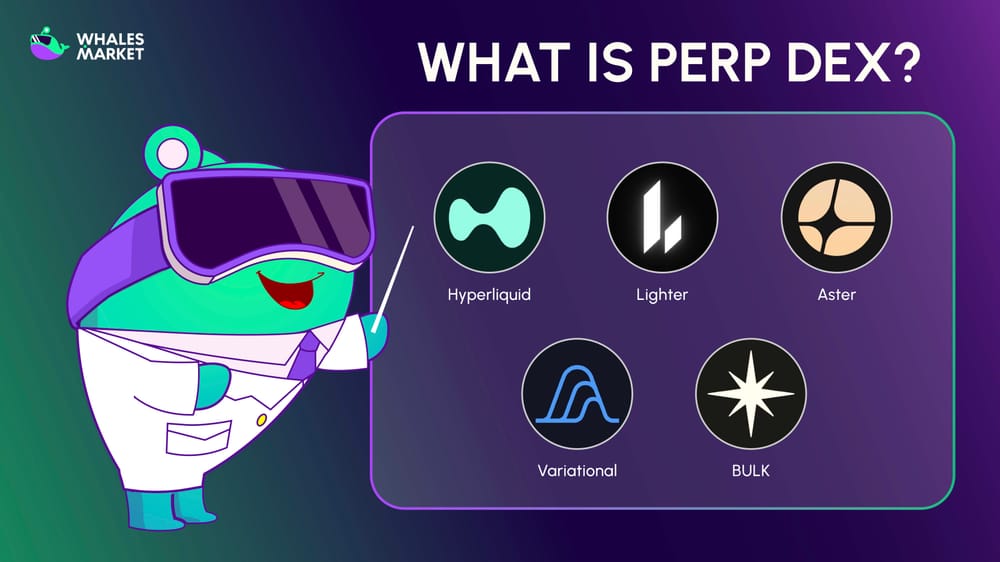
In 2026, the leading platforms are defined by three core metrics: liquidity depth, fee structure, and security architecture. Platforms like Hyperliquid and Aster have emerged as primary contenders by addressing the latency and capital efficiency issues that plagued earlier generations. Liquidity is the primary driver of success; without sufficient capital in the order book, traders face significant price impact when entering or exiting positions.
Fee structures also vary significantly. Some platforms offer zero-fee trading to attract volume, subsidizing costs through funding rate spreads or institutional partnerships. Others charge transparent maker-taker fees, appealing to high-frequency traders who prioritize cost predictability. Security remains the critical baseline, with top platforms utilizing audited smart contracts and decentralized oracle networks to prevent manipulation.
The market has shifted from a focus on novelty to performance. Traders now prioritize platforms that can execute trades with minimal delay and maintain stable pricing during high volatility. This has led to a consolidation where a few well-capitalized platforms dominate the volume, offering a more reliable experience for retail and institutional participants alike.
Hyperliquid: The liquidity leader
Hyperliquid dominates the perpetual DEX sector by maintaining the highest trading volume among decentralized platforms. In March 2026, the exchange processed more than $432 billion in perpetual-futures volume, a figure that underscores its position as the primary liquidity hub for on-chain derivatives. This scale allows it to offer deep order books that rival centralized exchanges, reducing slippage for large institutional and high-volume retail trades.
The platform’s infrastructure is built on a custom Layer 1 blockchain, which bypasses the congestion and high gas fees typical of general-purpose networks like Ethereum. This dedicated architecture enables sub-second trade execution and a seamless user experience that feels comparable to traditional centralized order books. By handling the heavy lifting of matching and settlement off-chain before batching proofs on-chain, Hyperliquid delivers the speed and reliability required for active leveraged trading.
While competitors like Aster and Lighter are gaining traction with niche features, Hyperliquid’s sheer market share and established liquidity moat keep it at the forefront of the 2026 perpetual DEX landscape. Traders seeking the most efficient execution and deepest capital pools still default to Hyperliquid as their primary venue for decentralized leverage.
Aster: The high-speed challenger
Aster has emerged as a significant competitor in the 2026 perpetual DEX landscape, positioning itself as a high-speed alternative to established players like Hyperliquid. While Hyperliquid dominates with its proprietary L1 infrastructure, Aster focuses on delivering institutional-grade latency and deep liquidity aggregation across multiple chains. This approach targets traders who require minimal slippage and rapid execution without being locked into a single ecosystem.
The platform’s user acquisition strategy relies heavily on aggressive incentive programs and partnerships with market makers to ensure tight spreads. By subsidizing trading fees and offering liquidity mining rewards, Aster has managed to capture a notable share of volume from competitors in a crowded market. This data-driven approach to growth prioritizes sustainable liquidity depth over short-term hype, aligning with the needs of serious derivatives traders.
Other notable platforms: Lighter, edgeX, and Paradex
While Hyperliquid and Aster dominate the volume charts, the perpetual DEX landscape is expanding with specialized platforms targeting specific trader needs. These three contenders—Lighter, edgeX, and Paradex—offer distinct architectural approaches and fee structures that appeal to different segments of the decentralized leverage market.
Lighter distinguishes itself by combining on-chain transparency with off-chain execution for speed. Built on the Arbitrum network, it utilizes a hybrid model where order matching occurs off-chain to minimize latency, while settlement remains on-chain for security. This structure allows for a gas-free trading experience for users, a significant advantage over traditional on-chain DEXs. Lighter’s focus on low-latency execution makes it particularly suitable for high-frequency traders who require precision without sacrificing the self-custody benefits of decentralized finance.
edgeX, developed by the core team behind dYdX, leverages its experience to offer a robust alternative for experienced traders. Operating on the Cosmos ecosystem, edgeX provides deep liquidity and a wide array of trading pairs. Its architecture prioritizes capital efficiency and rapid order processing, catering to users who have migrated from centralized exchanges but require the autonomy of a non-custodial platform. The platform’s integration with the Cosmos Inter-Blockchain Communication (IBC) protocol also allows for unique cross-chain asset interactions.
Paradex takes a different approach by offering a unified interface for both spot and perpetual trading. Built on the Polygon network, it aims to simplify the user experience while maintaining competitive fees. Paradex’s design focuses on accessibility, making it easier for newcomers to enter the perpetual futures market without navigating complex multi-chain bridges. Its consistent fee structure and straightforward interface provide a stable environment for traders who prioritize ease of use alongside leverage capabilities.
The following table compares key metrics for these platforms alongside the market leaders to provide a complete view of the current perpetual DEX offerings.
| Platform | Primary Chain | Max Leverage | Fee Model |
|---|---|---|---|
| Lighter | Arbitrum | Up to 50x | Zero gas for users |
| edgeX | Cosmos | Up to 50x | Maker/Taker tiers |
| Paradex | Polygon | Up to 50x | Competitive flat rates |
| Hyperliquid | Hyperspace (L1) | Up to 50x | Volume-based rebates |
| Aster | Aster DEX | Up to 50x | Dynamic fees |
How to choose the right perpetual DEX
Selecting a perpetual DEX requires matching the platform’s infrastructure to your specific trading strategy. A high-frequency trader prioritizes order book latency and fee structures, while a swing trader focuses on liquidity depth and funding rate stability. Evaluating these factors prevents slippage and unexpected costs during volatile market conditions.

High liquidity is essential for large positions. Platforms like Hyperliquid and Aster maintain deep order books, allowing traders to enter and exit significant positions without substantial price impact. Always check the current depth of the order book for your target asset before executing a trade.
Trading fees directly affect profitability, especially for active strategies. Compare maker and taker fees across platforms, and monitor funding rates, which can erode profits during prolonged trends. Platforms such as Orderly offer competitive fee models that may benefit high-volume traders.
Ensure the DEX operates on a blockchain that aligns with your existing portfolio and risk tolerance. Consider the platform’s security track record and whether it uses an off-chain order book with on-chain settlement, a common architecture in leading perpetual DEXs.


As an Amazon Associate, we may earn from qualifying purchases.
Risks and Security Considerations
Trading perpetuals on decentralized exchanges involves distinct risks that differ from traditional centralized platforms. Because these trades are executed via smart contracts rather than off-chain order books, users are directly exposed to code vulnerabilities. A single bug in the protocol can lead to total loss of deposited funds, making the security of the underlying code the most critical factor in platform selection.
Liquidation cascades present another significant threat, particularly during periods of high volatility. Unlike centralized venues that may use internal buffers, decentralized platforms like Hyperliquid rely on on-chain oracle data and automated liquidation engines. If market prices move too quickly for these systems to process, positions can be liquidated at unfavorable prices, amplifying losses for traders.
Reputation and track record matter more than marketing claims. Established platforms such as Hyperliquid have demonstrated resilience through multiple market cycles, while newer entrants like Aster are still building their security history. Users should prioritize platforms with transparent incident response records and active bug bounty programs to mitigate these inherent risks.
No comments yet. Be the first to share your thoughts!