
The 2026 Perp DEX Reality Check
The narrative that decentralized perpetual exchanges are merely experimental alternatives is no longer accurate. In 2025, the sector processed approximately $6.7 trillion in trading volume, a 346% increase from the previous year, according to data compiled by CoinGecko and Binance Square. This surge marks a transition from niche experimentation to a mature infrastructure capable of handling institutional-grade throughput.
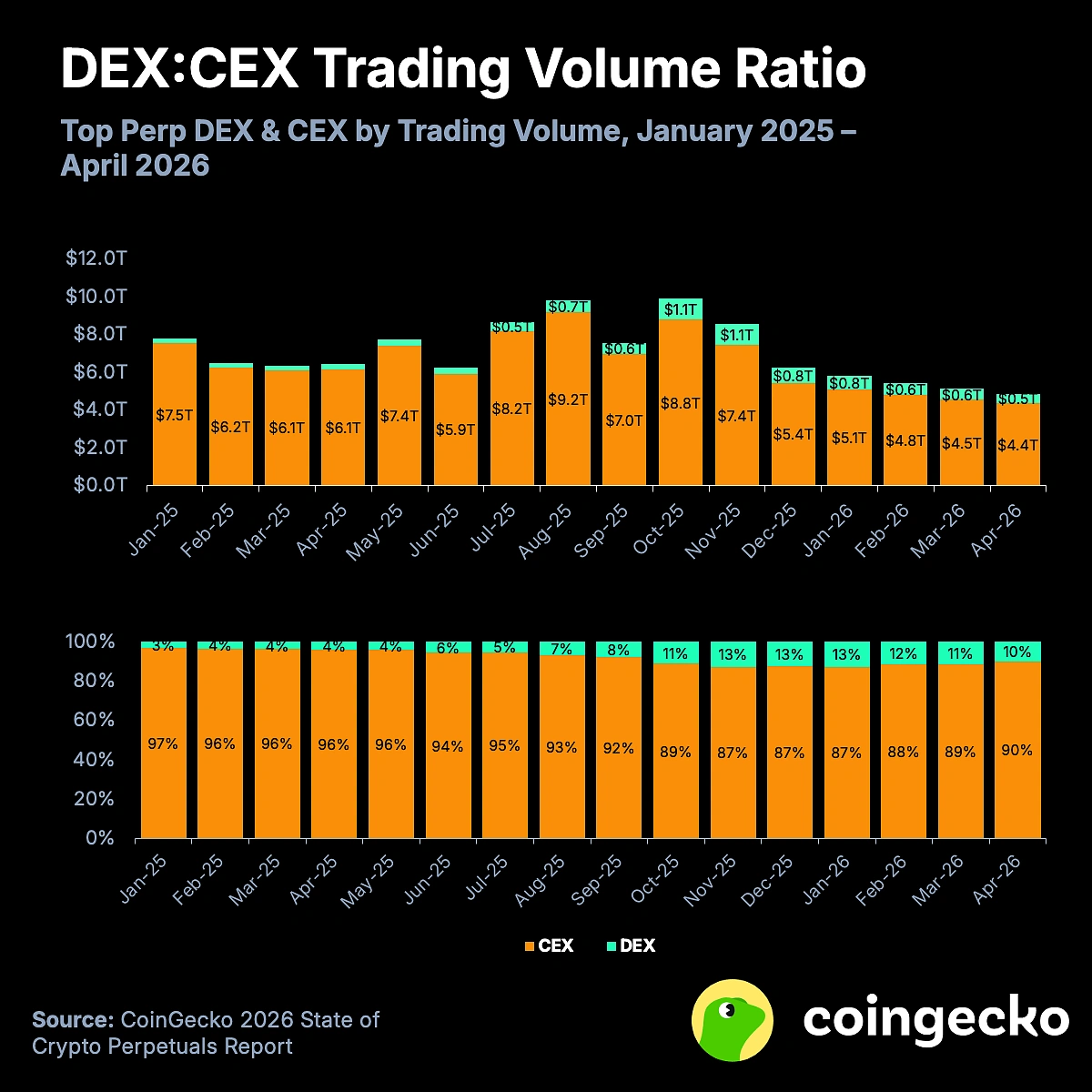
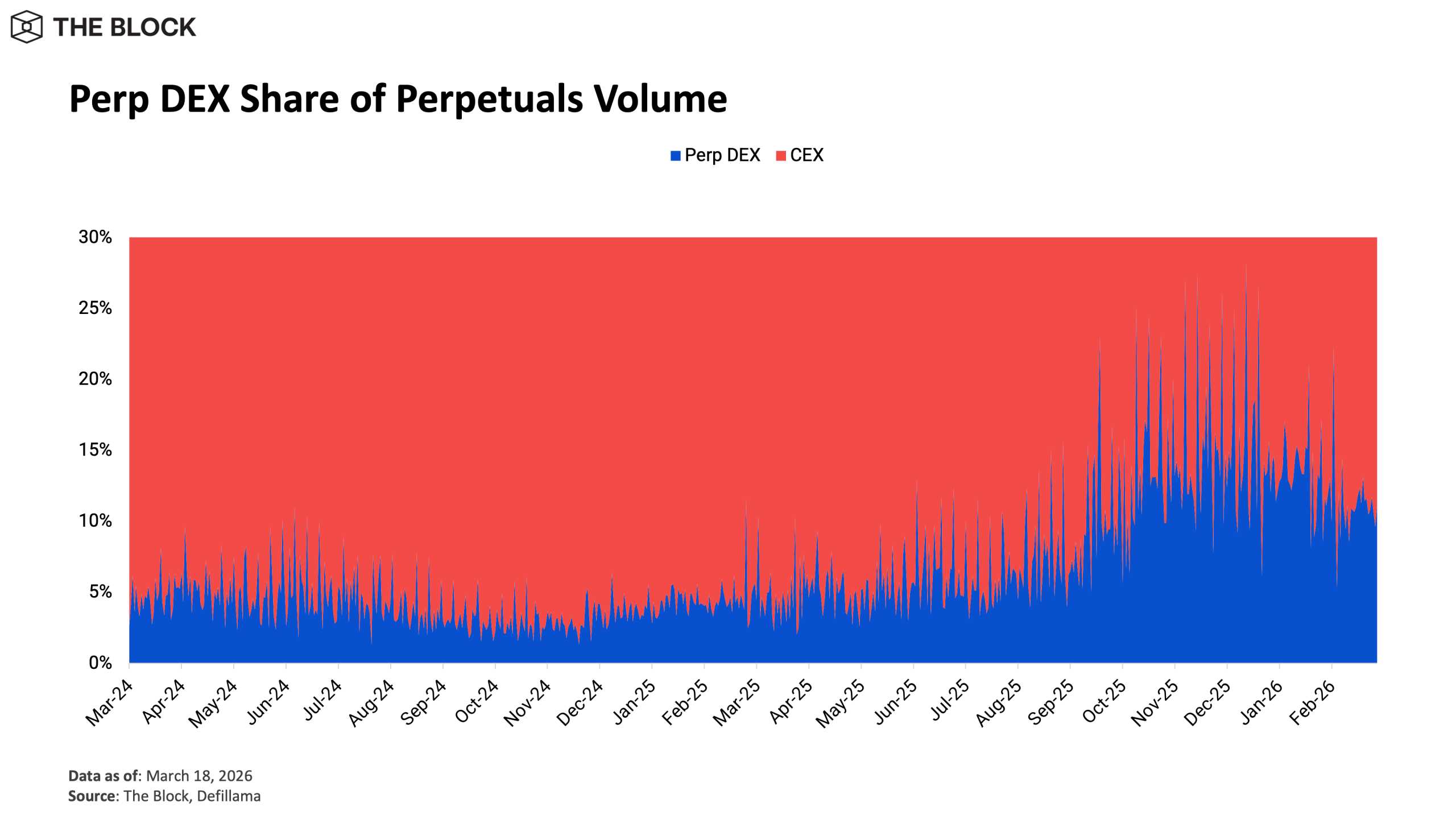
This growth was largely driven by the rise of platforms like Hyperliquid, which demonstrated that on-chain derivatives could compete with centralized exchanges on speed and cost. By November 2025, the ratio of perpetual DEX volume to centralized exchange (CEX) volume peaked at 13%, signaling that a significant portion of leveraged trading had migrated to decentralized protocols. While this ratio has dipped slightly since its peak, the baseline volume remains elevated, establishing perp DEXes as serious competitors in the equity derivatives space.
The shift is not just about volume; it is about structural reliability. Traders are increasingly moving capital into smart contract-based margin systems rather than keeping funds on company balance sheets. This migration sets the stage for a direct comparison with traditional stock platforms, where the trade-offs between decentralization, fees, and liquidity depth become the primary decision factors for 2026.
Fee Structures: Maker-Taker vs Flat Rates
Trading costs define the edge in perpetual markets. Traditional stock platforms rely on tiered maker-taker models, where liquidity providers receive rebates and takers pay higher fees. Perpetual DEXs often disrupt this with flat-rate pricing or zero-fee maker tiers, though they introduce hidden costs like funding rates and higher gas overhead.
How Maker-Taker Pricing Works
In traditional finance, exchanges like Interactive Brokers or Fidelity use maker-taker spreads. Makers provide liquidity and often pay lower fees (or receive rebates), while takers consume liquidity and pay more. This structure encourages market depth but can penalize high-frequency traders or those executing large orders that move the market.
The Perpetual DEX Fee Model
Perpetual DEXs like Hyperliquid or dYdX often use a different approach. Many offer zero maker fees to incentivize liquidity provision on-chain, while charging takers a small, flat fee. This simplifies cost calculation but shifts the burden to gas fees on the underlying blockchain (e.g., Ethereum L2s or Solana), which can spike during high volatility.
Hidden Costs: Funding Rates and Slippage
Beyond explicit trading fees, perpetual DEXs charge funding rates every 8 hours to keep contract prices anchored to spot prices. In bull markets, longs pay shorts; in bear markets, shorts pay longs. Traditional stock platforms do not have this mechanism, but they may charge higher commission fees or wider bid-ask spreads. Slippage on DEXs can also be significant for large positions due to thinner order books compared to institutional stock venues.
| Feature | Perp DEXs (e.g., Hyperliquid) | Traditional Stock Platforms |
|---|---|---|
| Maker Fees | Often 0% | Tiered (0.001%–0.005%) |
| Taker Fees | 0.01%–0.05% | 0.0025%–0.005% |
| Funding Rates | Every 8 hours (variable) | None (interest-based) |
| Gas/Network Fees | Variable (L2/Solana) | None |
| Withdrawal Costs | Network gas only | Flat fee or % (e.g., $75) |
The choice between these models depends on your trading frequency. High-frequency traders may prefer perp DEXs for lower taker fees, while long-term investors in traditional stocks benefit from no funding rate drag.
Liquidity depth and slippage
Liquidity depth determines the cost of executing large trades. In traditional stock exchanges, institutional market makers provide a continuous stream of bids and offers, creating a deep order book. This depth allows large orders to execute with minimal price movement. Perpetual DEXs operate differently. They rely on concentrated liquidity models or hybrid structures where capital is allocated to specific price ranges or pooled differently.
When trading volume increases, the impact on price depends on how much capital is available to absorb that order. On a DEX, if the liquidity pool is thin, a single large trade can push the price significantly against the trader. This is known as slippage. Stock platforms generally offer deeper pools for major assets, reducing slippage for institutional-sized orders. However, for niche crypto assets, DEX liquidity can sometimes be more accessible than fragmented stock CFD markets.
The ratio of DEX to CEX volume for perpetuals highlights the shifting landscape. According to the State of Crypto Perpetuals Report 2026 by CoinGecko, the perp DEX to CEX ratio peaked at 13% in November 2025. While this indicates growing adoption, it also shows that centralized exchanges still dominate the majority of volume. This dominance is largely due to the superior liquidity depth and lower slippage provided by traditional market makers on CEXs.
For traders executing large positions, understanding this depth difference is essential. A trade that slips 0.1% on a stock CFD platform might slip 1% or more on a less liquid DEX pool. This cost difference can erode profits, especially in high-frequency strategies. Traders must weigh the transparency and non-custodial nature of DEXs against the execution quality and depth provided by centralized liquidity providers.
How on-chain margin differs from traditional accounts
Perpetual DEXs handle collateral through auditable smart contracts rather than centralized balance sheets. When you deposit stablecoins like USDC or assets like ETH, your margin sits in an open-source protocol. Traditional stock platforms hold your cash and securities in internal ledgers, often commingling user funds with company assets. This structural difference means your collateral is always visible on-chain, whereas traditional margin accounts rely on opaque internal audits.
Speed and capital efficiency
Liquidations on perpetual DEXs happen in seconds, driven by automated price oracles. In traditional markets, margin calls often involve a lag between the broker’s notification and the actual liquidation, giving traders a window to add funds or wait for price recovery. On-chain, the code executes instantly when collateral falls below the maintenance threshold. This speed reduces the risk of negative balance debt for the platform but increases the risk of total loss for the trader.
Capital efficiency also differs. On-chain protocols often require higher initial margin ratios because they lack the cross-margin pooling power of traditional brokers. A traditional broker might offset losses in one position with gains in another across your entire account. Perpetual DEXs typically isolate risk per position or per pool, meaning you cannot easily use profits from one trade to cover losses in another without manually withdrawing and redepositing collateral. This isolation adds security against protocol insolvency but reduces the leverage flexibility you might be used to.
Choose a Platform by Priority
Your choice of a perpetual decentralized exchange (perp DEX) or a traditional stock platform hinges on what you value most: market access or institutional protection. These systems serve different risk profiles, and picking the wrong one can leave you exposed to regulatory gaps or excessive fees.
For 24/7 Access and Lower Fees
Perp DEXs operate on blockchain infrastructure, allowing you to trade perpetual futures contracts around the clock. Unlike traditional markets, these venues never close for weekends or holidays. You connect a crypto wallet, deposit collateral like USDC, and your margin sits in an auditable smart contract rather than a company's balance sheet.
The cost structure is often leaner than traditional brokers. You avoid overnight swap fees and complex tiered commissions, paying only network gas and a small protocol fee. This setup favors high-frequency traders or those who need to react to news outside standard market hours. However, you are responsible for your own security, including wallet management and private keys.
For Regulatory Protection and Fiat Ease
Traditional stock platforms offer a familiar, fiat-native experience. You deposit dollars directly and trade regulated derivatives like equity options or futures on established exchanges. The primary benefit is regulatory oversight; your account is insured by the SIPC up to $500,000, and the platform handles tax reporting and compliance.
This route is safer for capital preservation but lacks the 24/7 flexibility of crypto derivatives. Trading hours are restricted to market sessions, and accessing these markets often requires opening a margin account with stricter equity requirements. If you prioritize peace of mind and seamless fiat integration over continuous trading, a regulated stock platform is the logical choice.
Determine if you can manage self-custody risks or if you need SIPC insurance. High-risk tolerance favors DEXs; lower tolerance favors traditional brokers.

Do you need to trade during weekends or holidays? Perpetual DEXs offer 24/7 access, while stock platforms are limited to market sessions.
Analyze gas fees, maker/taker fees, and funding rates. DEXs often have lower overhead, but network congestion can spike costs.
Common Questions About Perp Trading
How does a perpetual DEX work?
A perpetual DEX lets you trade leveraged futures through smart contracts instead of centralized infrastructure. You connect a wallet, deposit collateral (typically USDC or ETH), and open long or short positions. Your margin sits in an auditable smart contract, not on a company's balance sheet. Positions never expire, removing the need to roll contracts before settlement. This structure keeps your funds in your control while exposing you to market risk.
What is the best perp dex?
The "best" platform depends on your specific needs for liquidity, fees, and supported assets. There is no single winner across all categories. Perpetual DEXs vary significantly in how they handle price feeds (oracles) and liquidity provision. Some excel in volume for major pairs like BTC, while others offer niche altcoin exposure. Check current rankings on CoinGecko to see which platforms have the highest open interest and trading volume for the assets you want to trade.
Do perpetual DEX positions expire?
No. Unlike traditional futures that have a set expiration date, perpetual swaps do not expire. This allows traders to hold positions indefinitely as long as they maintain sufficient margin. To keep the price of the perpetual contract close to the underlying asset, protocols use funding rates. Traders pay or receive these fees periodically based on whether the contract price is above or below the spot price.
Are perpetual DEXs safer than centralized exchanges?
Perpetual DEXs reduce counterparty risk because you retain custody of your funds in your own wallet. On centralized exchanges, your assets are held by the company, which can be subject to hacks, freezes, or insolvency. However, smart contract risk remains. If the protocol's code has a vulnerability, your funds are at risk. Always review the audit status of any DEX before depositing significant capital.
Helpful gear
Use these product recommendations as a starting point, then choose the size, material, and price point that fit how you actually use the gear.


As an Amazon Associate, we may earn from qualifying purchases.
No comments yet. Be the first to share your thoughts!