
How on-chain perps differ from stock perps
The fundamental difference between a perpetual DEX 2026 and traditional stock perpetuals lies in who holds your money. In the stock market, your broker acts as the middleman. They hold your collateral, execute your trades, and manage the settlement. You are trusting a centralized entity to honor your contract and keep your funds safe. If the broker fails, your money is at risk.
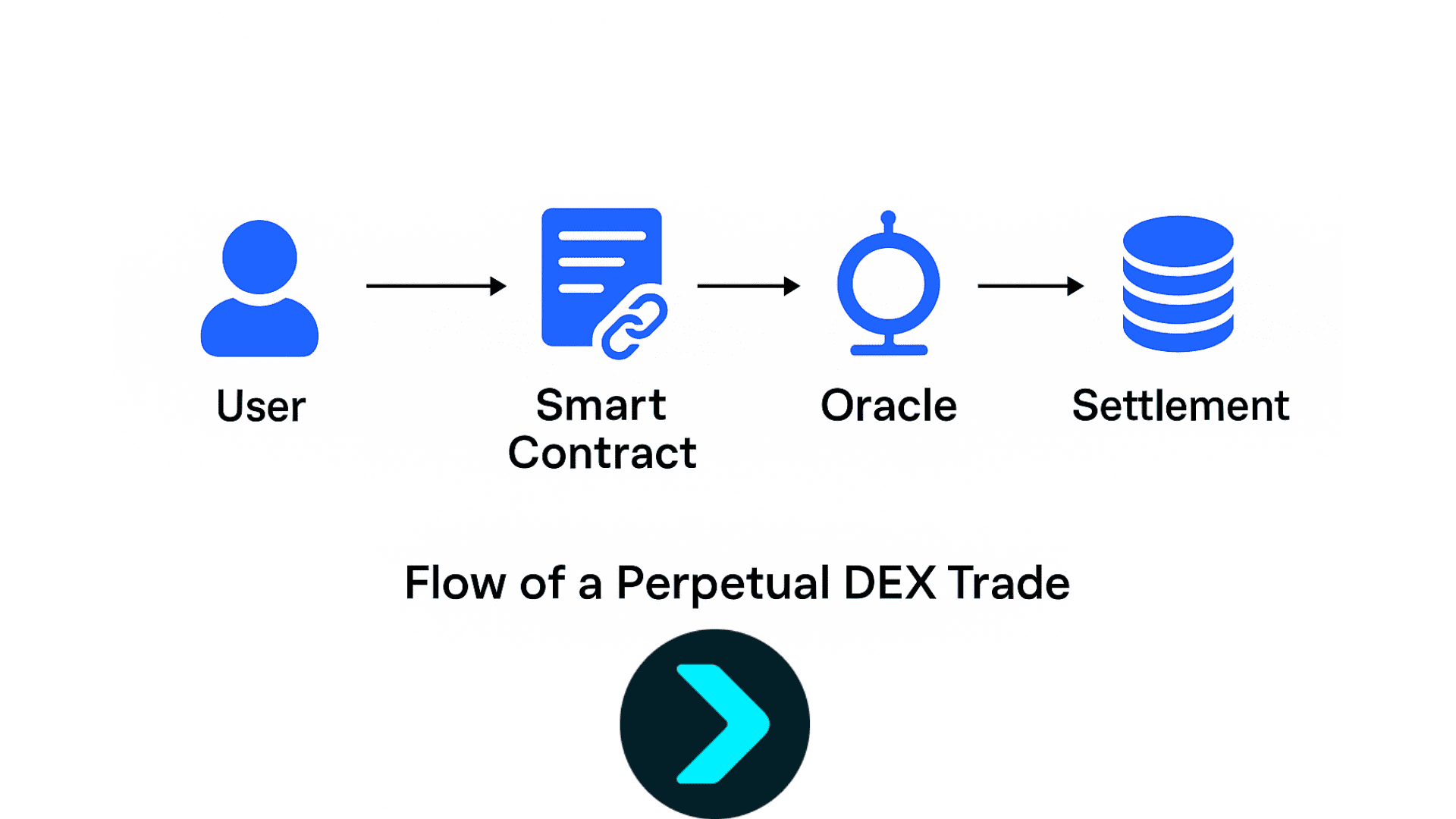
Perpetual DEXs remove this middleman entirely. These platforms run on smart contracts deployed on blockchains like Ethereum or Solana. When you trade, you connect your own wallet and deposit collateral directly into the protocol. You never give up custody of your assets. This non-custodial model means you retain full control over your funds at all times, reducing the risk of exchange insolvency.
Settlement also follows different mechanics. Stock perps are settled through clearinghouses that guarantee the trade, but this process is opaque and relies on the integrity of the financial system. On-chain perps settle directly on the blockchain. The smart contract automatically adjusts your position based on oracle prices, ensuring transparency. You can verify every transaction and position on the public ledger.
Counterparty risk shifts from institutional failure to code risk. In stock perps, your primary risk is the broker’s solvency. In a perpetual DEX 2026, your risk is the security of the smart contract and the reliability of the price oracles feeding data to the protocol. While code audits and decentralized governance aim to mitigate these risks, they introduce a different set of technical vulnerabilities that do not exist in traditional finance.
Liquidity and execution quality in 2026
The defining trade-off for traders choosing a perpetual DEX 2026 platform is transparency versus volume. Centralized stock perp providers still command deeper order books for traditional assets, but leading on-chain venues have closed the gap for crypto-native markets. In 2026, execution quality is no longer just about speed; it is about the reliability of price discovery across fragmented liquidity pools.
Hyperliquid has emerged as a primary benchmark for on-chain liquidity, offering order book depth that rivals centralized exchanges for major pairs like BTC and ETH. Its architecture allows for near-instant settlement without the custodial risks of traditional brokers. However, for smaller altcoin pairs, liquidity can remain thin, leading to higher slippage during volatile moves compared to the consolidated books of major stock perp providers.
| Metric | Hyperliquid (Crypto) | Stock Perp Brokers | Aster (Crypto) |
|---|---|---|---|
| Primary Liquidity | High (Top Crypto Pairs) | Very High (Broad Market) | Growing (Multi-Chain) |
| Average Spread | Tight | Tightest | Variable |
| Withdrawal Time | Seconds | Days (T+1/T+2) | Seconds |
| Transparency | Full On-Chain | Opaque Order Flow | Full On-Chain |
The table above highlights the structural differences. While stock perp brokers offer the tightest spreads due to massive institutional volume, they require days for settlement and offer opaque order flow. Perpetual DEXs like Hyperliquid and Aster provide instant withdrawals and full on-chain transparency, though spreads may widen slightly during high volatility. Traders must weigh the cost of speed against the cost of opacity.
For those prioritizing capital efficiency and self-custody, the perpetual DEX 2026 landscape offers compelling execution quality. The gap in liquidity is narrowing, particularly on high-performance chains, making on-chain venues a viable alternative to traditional stock perp providers for crypto-focused traders.
Fees, funding rates, and hidden costs
Trading perpetual DEX 2026 contracts involves a distinct cost structure that differs sharply from traditional stock perps. While stock perps rely on margin interest and brokerage commissions, on-chain leverage is priced through trading fees, network gas, and funding rate mechanisms. Understanding these components is essential for calculating true profitability.
Trading fees and gas
On-chain platforms charge a maker-taker fee model similar to centralized exchanges, but with an added layer of blockchain network costs. Every trade execution requires a transaction on the underlying blockchain, meaning you pay gas fees to validators or sequencers. During periods of high network congestion, these gas costs can significantly erode profits on smaller positions, a variable rarely present in traditional equity trading.
Funding rate mechanics
The funding rate is the primary tool perpetual DEXs use to keep contract prices aligned with the spot market. This mechanism involves periodic payments between long and short traders. If the funding rate is positive, long positions pay short positions; if negative, the flow reverses. Unlike stock margin interest, which is a steady cost for holding a leveraged position, funding rates can fluctuate wildly based on market sentiment.
In volatile crypto markets, funding rates can spike, sometimes exceeding 1% over an 8-hour period. This creates a high-cost environment for holding leveraged positions over extended periods, contrasting with the relatively stable APRs found in traditional margin accounts. Traders must monitor these rates closely to avoid unexpected drag on their portfolio.
Stock perp cost comparison
Traditional stock perps simplify the cost equation. You pay a commission per trade and an annualized interest rate on the borrowed capital. There are no gas fees, and funding rates do not exist. The cost is predictable and linear, making it easier to model break-even points. However, this simplicity comes with custodial risk and restricted access to certain asset classes.
Hidden costs to watch
Beyond the obvious fees, slippage and liquidation costs are hidden expenses that impact returns. On DEXs, lower liquidity in certain pairs can lead to higher slippage, meaning you receive a worse price than expected. Additionally, rapid price movements can trigger liquidations before you can adjust your position, resulting in the total loss of collateral. These risks are inherent to the non-custodial, automated nature of perpetual DEX 2026 platforms.
Regulatory standing and counterparty risk
The core distinction between trading on a perpetual DEX 2026 platform and a centralized stock perp broker comes down to who holds the liability. In traditional finance, your counterparty risk is managed through a web of regulatory protections. In crypto, the counterparty is the code itself.
Centralized protections
When you trade leveraged stock perps through a regulated broker, you are interacting with a centralized entity. These firms are typically members of the Securities Investor Protection Corporation (SIPC), which provides up to $500,000 in coverage for securities and cash if the broker fails. Additionally, many brokers subscribe to private excess insurance to cover amounts beyond the SIPC limit. The Financial Industry Regulatory Authority (FINRA) oversees these firms, enforcing capital requirements and conduct rules designed to protect investors from fraud or mismanagement.
However, these protections are not absolute. SIPC coverage does not extend to losses from market fluctuations, and it typically does not cover cryptocurrency assets held by brokers. If a broker engages in fraudulent activity, recovery can be slow and uncertain, but the regulatory framework provides a clear path for accountability that does not exist in decentralized finance.
Smart contract risk
Perpetual DEXs operate without a central intermediary. You connect your wallet, deposit collateral, and trade directly against a smart contract or a liquidity pool. This non-custodial model eliminates the risk of a centralized exchange freezing your funds or going bankrupt due to poor management. You retain full control of your assets at all times.
The trade-off is that you assume the risk of the protocol's security. If the smart contract contains a vulnerability, hackers can exploit it, and there is no customer service team to reverse the transaction or reimburse your losses. While many perpetual DEX 2026 protocols undergo rigorous audits by third-party security firms, code is complex and bugs can still exist. The "code is law" philosophy means that if the contract fails, the funds are gone. This is a fundamental shift from relying on institutional safeguards to relying on cryptographic verification and community-driven security.
Weighing the trade-offs
Choosing between these models depends on your tolerance for regulatory ambiguity versus technical risk. Regulated brokers offer a safety net for institutional failure but require you to trust a centralized entity with your private keys and data. Perpetual DEXs offer sovereignty and transparency but place the burden of security entirely on the protocol's code quality. As the decentralized derivatives market matures in 2026, insurance funds and decentralized governance mechanisms are emerging to mitigate some of these risks, but they do not yet match the comprehensive protection offered by SIPC and FINRA.
Choosing the right venue for your strategy
Selecting between a perpetual DEX 2026 platform and traditional stock perps depends on which constraints matter most to your trading setup. The decision usually comes down to three factors: asset access, tax jurisdiction, and self-custody requirements.
Stock perps offer regulated exposure to major equities like Tesla or Apple with familiar margin structures. Perpetual DEXs provide 24/7 access to crypto-native assets, including newer tokens and synthetic indices that centralized brokers may not support. If you need non-traditional assets, on-chain venues are often the only option.
Traditional stock perps are subject to clear regulatory frameworks and reporting standards in most jurisdictions. Perpetual DEXs operate in a evolving legal landscape; while they offer privacy, they may lack the same tax reporting clarity. Traders in strict jurisdictions should verify if on-chain trading aligns with local compliance rules before depositing funds.
With stock perps, your broker holds your collateral, introducing counterparty risk if the institution fails. Perpetual DEXs are non-custodial, meaning you retain control of your funds via your wallet. This self-custody model eliminates the risk of exchange insolvency but requires you to manage private keys and secure your own assets.
The right choice isn't about which is "better" overall, but which fits your specific risk tolerance and asset needs. For most crypto-native traders, the self-custody and 24/7 nature of a perpetual DEX 2026 is the primary draw. For those prioritizing regulatory clarity and equity exposure, traditional stock perps remain the standard.
No comments yet. Be the first to share your thoughts!