
Perp DEXs 2026 market snapshot
Perpetual DEXs have shifted from niche experiments to a dominant force in crypto derivatives. According to the State of Crypto Perpetuals Report 2026 by CoinGecko Research, the open interest share of perp DEXs hit 13.5% in late 2025, marking a significant milestone in their adoption cycle [1]. This surge was largely driven by platforms like Hyperliquid, which demonstrated that on-chain infrastructure could handle the throughput and liquidity depth previously reserved for centralized exchanges.
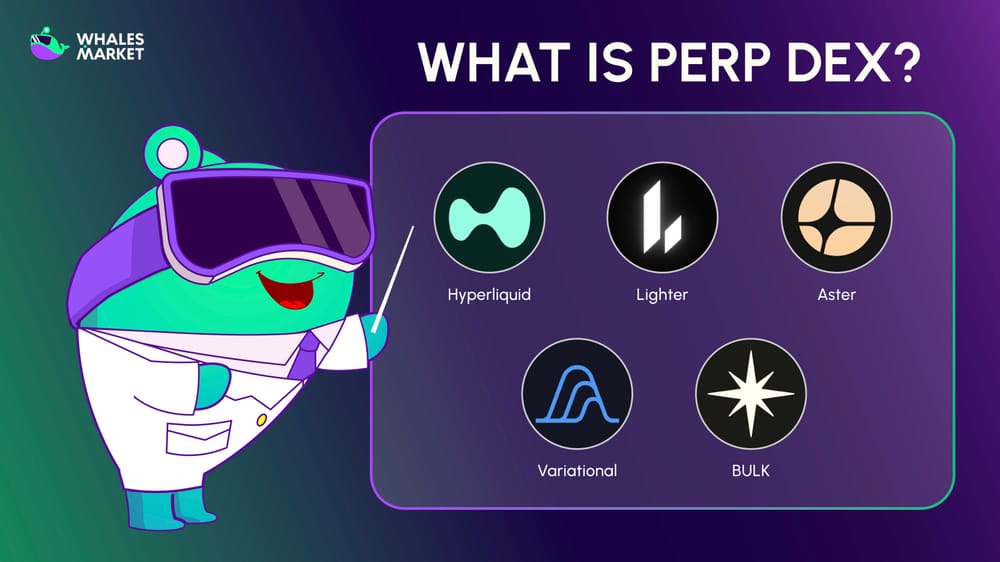
While the broader crypto market saw total open interest decline from $120.35 billion at the start of 2025 to $99.09 billion by April 2026, perp DEXs maintained their momentum. The ratio of perp DEX open interest to centralized exchange (CEX) open interest peaked at 13% in November 2025, indicating a structural shift in where retail and institutional traders prefer to leverage positions. This trend highlights the growing trust in transparent, on-chain execution models over traditional order books.
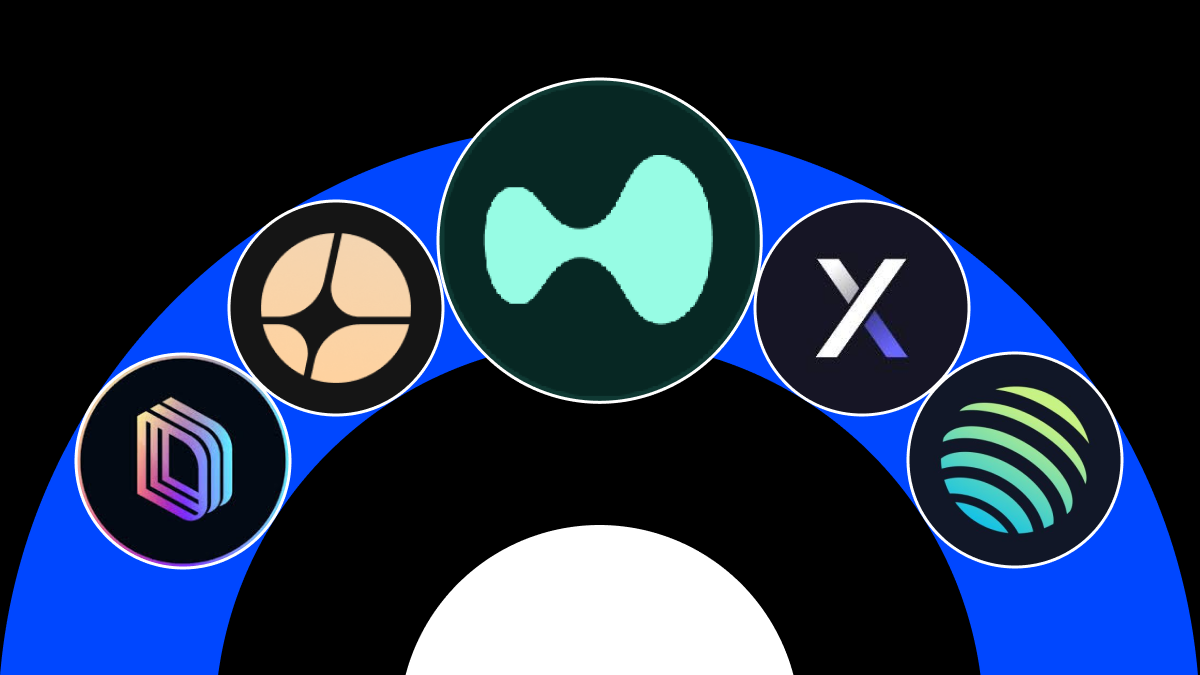
The 2026 landscape is defined by a diverse ecosystem of specialized platforms. Leading perp DEXs now include Hyperliquid, Aster, dYdX, GMX, Drift, Vertex, and Aevo, each excelling under specific trading conditions [2]. Rather than a single winner-take-all scenario, the market has fragmented into distinct use cases, allowing traders to choose venues based on fee structures, collateral types, and interface preferences. This competition has accelerated innovation, forcing all participants to improve speed, capital efficiency, and user experience.
[1] https://www.coingecko.com/research/publications/state-of-crypto-perpetuals-report-2026 [2] https://vooi.io/perpdexaggregator/best-perp-dexs-in-2026
How DEX and CEX perpetuals differ
Trading perpetual futures on a decentralized exchange (DEX) changes who holds your collateral and how the trade settles. In traditional finance and centralized crypto exchanges (CEX), you deposit funds into an account managed by the company. The exchange matches your order against other users or market makers internally, and your balance exists as a database entry. On a perp DEX, the exchange does not hold your funds. Instead, your collateral sits in a smart contract on the blockchain, and the counterparty risk shifts from a company to the protocol's code and liquidity pools.
This structural shift affects custody, settlement speed, and transparency. Centralized perps offer familiar user experiences with fiat on-ramps and customer support, but they carry counterparty risk. If the exchange fails or freezes withdrawals, you may lose access to your funds. Decentralized perps remove the middleman. Your assets remain in your wallet or a non-custodial contract until you close the position. Settlement happens on-chain, meaning the outcome is deterministic and visible to everyone, though this also means errors in code or oracle data can have immediate, irreversible consequences.
| Feature | Perp DEX | Centralized Exchange (CEX) / Stock Exchange |
|---|---|---|
| Custody | Non-custodial; funds in smart contracts | Custodial; funds held by the company |
| Settlement | On-chain, automated by code | Internal ledger, batched or instant |
| Counterparty Risk | Protocol risk (code/oracles) | Company insolvency or fraud |
| Transparency | Public ledger, verifiable logic | Closed source, audited reports |
| Fiat Access | Limited (crypto on-ramps only) | Direct bank transfers, cards |
The tradeoff is between control and convenience. Perp DEXs require you to manage your own security, such as securing your private keys and understanding gas fees. CEXs offer a smoother interface and often deeper liquidity for large orders, but you must trust the operator to honor withdrawals. As research from Delphi Digital suggests, perp DEXs are increasingly competitive on cost and speed, but they still lag in fiat integration and user support infrastructure [src-serp-8]. For retail traders, the choice often comes down to whether you prioritize self-custody and transparency or the ease of a traditional banking-like experience.
Top perp DEX platforms in 2026
The perpetual DEX landscape in 2026 has shifted from a single dominant chain to a multi-chain ecosystem. Hyperliquid leads in raw volume and speed, while dYdX remains the standard for institutional-grade liquidity. Newer entrants like Aster and GMX offer distinct trade-offs between fees and decentralization. Choosing the right platform depends on whether you prioritize execution speed, capital efficiency, or protocol transparency.
Hyperliquid continues to dominate open interest share, capturing a significant portion of the 13.5% on-chain OI market. Its custom L1 chain provides sub-second finality, making it the preferred choice for high-frequency traders who need minimal slippage. The platform supports a wide range of perpetual futures with deep liquidity, though it operates with a hybrid centralization model for order matching.
dYdX remains a cornerstone for traders seeking deep order books and robust liquidity. Its transition to Cosmos-based architecture has improved scalability while maintaining a familiar, centralized-exchange-like interface. It is particularly strong for large-cap assets and traders who value proven security over novel technology. The platform offers a comprehensive suite of trading tools and a high degree of reliability.
Aster has emerged as a significant player in 2026, leveraging advanced on-chain mechanics to offer competitive fees and high performance. It is part of a new wave of platforms that aim to balance decentralization with the speed typically found on centralized exchanges. Traders looking for innovative features and potentially lower costs are increasingly exploring Aster alongside established leaders.

GMX stands out for its fully decentralized, on-chain liquidity model. It uses a unique pool-based system rather than a traditional order book, which can result in different slippage characteristics. It is ideal for traders who prioritize transparency and want to interact directly with liquidity providers without relying on a centralized matching engine. The platform is known for its low fees and robust security record.


As an Amazon Associate, we may earn from qualifying purchases.
Costs and leverage limits compared
Perpetual DEXs and traditional stock exchanges calculate trading costs differently, creating distinct financial trade-offs for retail traders. On-chain perpetuals rely on funding rates to keep contract prices anchored to spot markets, while stock exchanges use fixed commission structures and regulatory fees. Understanding these mechanics is essential for managing risk in both environments.
Funding rates and trading fees
In the crypto perpetual market, funding rates are paid between long and short positions every hour or eight hours, depending on the protocol. When the funding rate is positive, longs pay shorts; when negative, the flow reverses. This mechanism aligns the perpetual price with the underlying asset but can add significant cost during high volatility. Traditional stock exchanges do not use funding rates for standard leveraged products like margin trading or CFDs. Instead, they charge interest on borrowed capital and fixed per-trade commissions. Delphi Digital notes that perp DEXs are poised to continue taking market share from traditional finance due to these structural cost differences [[src-serp-8]].
Maximum leverage available
Leverage limits vary sharply between the two systems. Perpetual DEXs often offer leverage up to 50x or 100x for major assets like Bitcoin and Ethereum, though this can vary by protocol and market conditions. Traditional stock exchanges typically cap leverage much lower, often at 2x to 4x for margin accounts, due to stricter regulatory requirements. Higher leverage on DEXs amplifies both potential gains and the risk of liquidation, requiring more active risk management. The rapid growth of perp DEX open interest, which reached 13.5% of the total crypto market in 2025, highlights the retail demand for these higher leverage options [[src-serp-1]].
Smart Contract Bugs and Oracle Manipulation
Perpetual DEXs replace centralized custodians with open-source code, shifting security responsibility from the platform to the user. This architecture introduces unique risks like smart contract vulnerabilities and oracle manipulation that do not exist in traditional stock exchanges. Unlike centralized exchanges where the company manages security, a bug in a perp DEX’s smart contract can lead to immediate and irreversible loss of funds.
Oracle manipulation is a primary threat vector. Since perp DEXs rely on external price feeds to determine liquidations, attackers can manipulate these data sources during periods of low liquidity or high volatility. If an oracle provides an inaccurate price, the protocol may trigger false liquidations or allow traders to extract value from the insurance fund. This risk is amplified by the transparent nature of on-chain data, which allows sophisticated actors to monitor and exploit pricing anomalies in real time.
Smart contract bugs remain another critical exposure. Even audited contracts can contain hidden vulnerabilities that emerge only under specific market conditions. Centralized exchanges mitigate custodial risk through insurance funds and internal controls, but perp DEXs depend on the integrity of their code. Users must verify audit reports and insurance fund health before depositing capital, as there is no customer support to reverse unauthorized transactions.
How to choose between perp DEXs and stock exchanges
Selecting the right venue for leveraged trading depends on matching the platform's structure to your specific risk tolerance, capital size, and trading style. There is no single best exchange; instead, each offers distinct trade-offs between speed, cost, and control.
Evaluate capital and leverage needs
Traditional stock exchanges typically limit retail leverage to 2x-4x, requiring significant capital to amplify positions. Perp DEXs, however, often support 50x to 100x leverage with minimal entry barriers. If you are trading with small accounts and need high leverage, a DEX like Hyperliquid or dYdX is more suitable. For larger accounts seeking lower leverage and regulatory protection, a centralized exchange (CEX) or stock broker is safer.
Assess risk tolerance and security
On a perp DEX, you hold your own keys, meaning you are responsible for wallet security. One mistake can lead to total loss. CEXs offer custodial safety and insurance funds but carry counterparty risk. If you prioritize self-custody and transparency, a DEX is the better fit. If you prefer a familiar interface and customer support, a CEX is preferable.
Compare trading style and execution
DEXs excel in fast, permissionless markets with 24/7 access. They often have lower fees for high-frequency traders but can suffer from slippage during high volatility. CEXs offer deeper liquidity for large orders and advanced order types. If you trade frequently or need precise execution, a DEX may offer better performance. For long-term leveraged positions, a CEX might be more stable.
| Feature | Perp DEX | Stock Exchange |
|---|---|---|
| Leverage | Up to 100x | 2x-4x |
| Custody | Self-custody | Custodial |
| Access | 24/7 | Market hours |
| Fees | Low gas + trading | Commissions + spread |
No comments yet. Be the first to share your thoughts!