
Perpetual DEX 2026 market snapshot
The perpetual DEX market has graduated from a speculative fringe to a dominant liquidity pool. According to CoinGecko’s 2026 State of Crypto Perpetuals Report, the asset class captured 13.5% of the total crypto derivatives open interest (OI). This milestone signals that decentralized perpetuals are no longer just an alternative—they are a primary venue for leveraged trading.
Trading activity has accelerated alongside this dominance. Monthly trading volume surged to $611.57 billion in 2026, a significant jump from $531.65 billion in 2025. While the average annual trading volume settled at $4.7 trillion, the monthly spikes reveal a market that is increasingly active and capital-intensive. This growth is largely led by platforms like Hyperliquid, which have attracted institutional-grade volume by offering speed and capital efficiency that traditional exchanges struggle to match.
The scale of this market shift is best understood through direct comparison. Below, we break down how perpetual DEXs stack up against regulated stock contracts in terms of volume and accessibility.
| Metric | Perpetual DEXs (2026) | Regulated Stock Futures |
|---|---|---|
| Monthly Volume | $611.57B | ~$1.1T (CME Group data) |
| Market Share | 13.5% of crypto OI | ~85% of equity derivatives |
| Trading Hours | 24/7 | Limited (pre/post-market) |
| Leverage Cap | Up to 100x+ | Typically 2x-4x (Reg T) |
How perpetual DEXs differ from stock contracts
Perpetual DEXs and regulated stock contracts both allow traders to leverage positions, but they operate on fundamentally different mechanical architectures. The distinction lies in where the trade lives: on a public blockchain ledger versus a centralized exchange’s internal database. This structural difference dictates custody, settlement timing, and regulatory oversight.
In a regulated stock perpetual contract, the exchange acts as the counterparty and custodian. Your funds sit in segregated accounts, and the exchange manages the matching engine. Settlement occurs through traditional clearinghouses, often at the end of the trading day or according to specific margin call schedules. This structure provides legal recourse but introduces counterparty risk if the exchange fails or faces regulatory action.
Conversely, a perpetual DEX runs on smart contracts. You connect a Web3 wallet and deposit crypto directly into the protocol. There is no central intermediary holding your funds; instead, code enforces the rules of the trade. These contracts typically run 24/7, allowing for continuous trading without market hours. Settlement is automated and immediate, relying on oracle prices to trigger liquidations or payouts.
The table below compares the core mechanical differences between these two environments.
| Feature | Perpetual DEX | Regulated Stock Contract |
|---|---|---|
| Custody | User self-custody via wallet | Exchange holds funds |
| Trading Hours | 24/7 continuous | Market hours only |
| Settlement | Automated via smart contract | Centralized clearinghouse |
| Regulation | Code-based, limited oversight | Legal recourse, SEC/CFTC rules |
Understanding these differences is critical for risk management. In a DEX, a smart contract bug or oracle failure can lead to losses with no legal remedy. In regulated markets, while counterparty risk exists, regulatory frameworks provide some protection against fraud and insolvency. Traders must choose between the autonomy and speed of on-chain trading and the stability and oversight of traditional finance.
Top perpetual DEX platforms in 2026
The decentralized perpetual futures market in 2026 has moved beyond experimental prototypes. Leading platforms now offer execution speeds and liquidity depths that rival centralized exchanges, while maintaining on-chain transparency. For traders, the choice of platform directly impacts slippage, funding rates, and the ability to exit positions during high volatility.
The current landscape is dominated by a few key contenders, each optimized for different trading styles. Hyperliquid remains the volume leader for high-frequency strategies, while emerging challengers like Aster offer distinct advantages in asset variety and user experience. Choosing the right perpetual DEX requires matching your specific trading needs—whether that is raw speed, low fees, or access to niche altcoin pairs—to the platform's infrastructure.
Hyperliquid
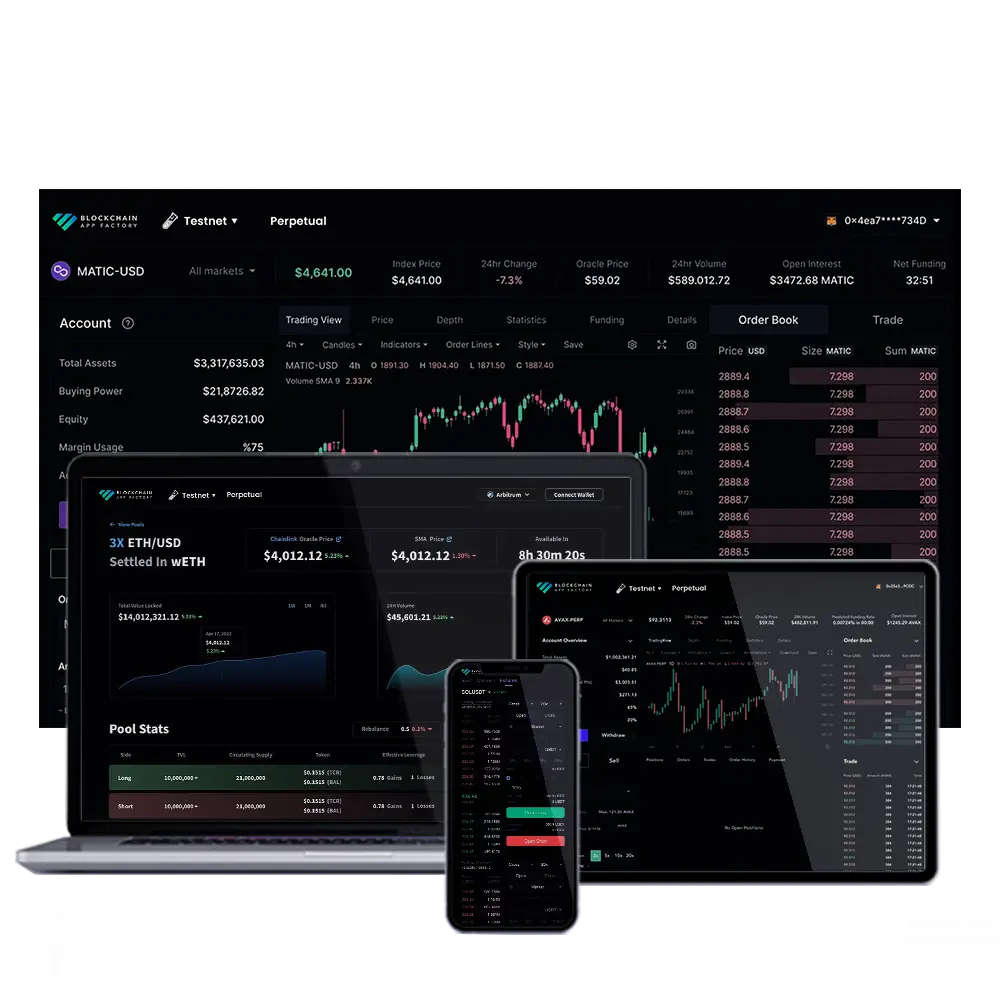
Hyperliquid continues to lead the market in total trading volume and open interest, primarily due to its high-performance order book architecture. Unlike many competitors that rely on optimistic rollups or hybrid models, Hyperliquid operates on its own dedicated L1 chain, allowing for sub-second finality and minimal gas fees for traders. This infrastructure makes it the preferred choice for active traders who require precise entry and exit points without the latency issues common in other decentralized environments.
The platform supports a wide range of perpetual contracts, including major pairs like BTC and ETH, as well as a growing selection of altcoins. Its liquidity is concentrated and deep, which reduces slippage for large orders. However, the platform's focus on speed and efficiency means it may lack some of the broader ecosystem features found in more generalized DeFi platforms, such as native lending or yield farming integrations.
Aster
Aster has emerged as a strong challenger, focusing on a seamless user experience and competitive fee structures. It leverages advanced rollup technology to achieve fast transaction speeds while maintaining compatibility with existing Ethereum tooling, making it accessible to users already familiar with the Ethereum ecosystem. This approach has attracted a significant number of retail traders who prioritize ease of use and low barriers to entry.
The platform offers a diverse range of perpetual contracts with competitive funding rates, often undercutting competitors to attract liquidity. Its interface is designed to be intuitive, reducing the learning curve for new users. While its total volume may not yet match Hyperliquid's, Aster's growth trajectory and focus on user experience make it a notable platform to watch for traders seeking a balance between performance and accessibility.
Other Notable Platforms
Beyond the top two, several other perpetual DEXs are gaining traction by targeting specific niches. Platforms like dYdX continue to hold significant market share, particularly among users who prioritize security and a long track record of operation. Newer entrants are experimenting with hybrid models that combine centralized order matching with decentralized settlement, aiming to offer the best of both worlds. Traders should evaluate these platforms based on their specific needs, such as asset variety, fee tiers, and regulatory compliance in their jurisdiction.
Risk profile: On-chain vs regulated equity
Trading perpetual decentralized exchanges (DEXs) offers leverage but strips away the safety nets found in traditional finance. When you trade a stock ETF or regulated contract, your position is backed by institutional infrastructure and insurance funds. In contrast, perpetual DEXs rely entirely on code and liquidity pools, shifting the burden of security from a regulated entity to the smart contract itself.
The most immediate difference is counterparty risk. In regulated markets, the Securities Investor Protection Corporation (SIPC) protects investors against broker-dealer failure up to $500,000. This institutional backstop ensures that even if a brokerage collapses, your assets are recoverable. On-chain perpetuals have no such protection. If the protocol is hacked, exploited, or if the liquidity pool is drained, your funds are gone. There is no central authority to reverse transactions or restore lost capital.
Smart contract risk is the defining hazard of on-chain leverage. While regulated entities must pass audits and maintain capital reserves, DEXs are vulnerable to bugs in their code. A single vulnerability in the oracle mechanism or liquidation engine can lead to total loss. This is not a matter of market volatility; it is a matter of technical failure.
Warning: Unlike stock accounts, DEX positions lack insurance. A smart contract exploit or oracle manipulation can wipe out your entire deposit instantly. Always treat on-chain leverage as high-risk capital that you can afford to lose completely.
Understanding this distinction is critical for any trader considering leveraged positions. Regulated equity trading offers structural security, while perpetual DEXs offer autonomy at the cost of significant, uncompensated risk.
Choosing the right leverage vehicle
Perpetual DEXs and regulated stock contracts serve different risk profiles. The choice depends on your tolerance for regulatory uncertainty versus execution speed. DEXs offer 24/7 access to altcoin leverage, while regulated contracts provide legal recourse for major indices.
1. Assess regulatory exposure
Regulated stock contracts operate under established frameworks like the CFTC and SEC. These venues offer investor protection mechanisms, including segregation of assets and clear dispute resolution. However, they often restrict trading hours and limit access to specific assets. If you prioritize legal clarity and compliance, regulated venues are the safer default.
2. Evaluate market access and hours
Perpetual DEXs operate continuously, allowing traders to react to news at any hour. This is critical for volatile altcoin markets where price swings occur outside traditional business hours. Decentralized exchanges also provide access to a broader range of assets, including emerging tokens not listed on traditional exchanges. For traders seeking flexibility and 24/7 liquidity, DEXs are superior.
3. Compare execution and fees
Execution quality on DEXs varies by liquidity pool and market conditions. Large orders may suffer from slippage or fragmented liquidity across aggregators. Regulated markets typically offer deeper liquidity for major pairs, ensuring tighter spreads. Always compare funding rates on DEXs against margin interest rates in regulated markets to determine the true cost of carry.


As an Amazon Associate, we may earn from qualifying purchases.
4. Check liquidity and slippage
Before placing a trade, verify the depth of the order book. Low liquidity on DEXs can lead to significant price impact. Use aggregators to find the best execution path across multiple protocols. For regulated markets, check the volume of the underlying asset to ensure sufficient liquidity for your position size.
5. Verify security measures
DEX users are responsible for their own security. Use reputable wallets and enable multi-signature approvals for large transactions. Never share private keys. Regulated markets hold assets in custody, reducing the risk of smart contract exploits or phishing attacks. Choose the venue that aligns with your security comfort level.
Common questions about perp trading
Perpetual futures contracts operate differently than traditional stock options or fixed-term futures. Understanding the mechanics, legality, and risk profile is essential before deploying capital.
No comments yet. Be the first to share your thoughts!