
The 2026 perp dex limits to account for
Perpetual DEXs have moved from niche experiments to a significant share of crypto derivatives volume. In 2025, the ratio of perp DEX to CEX trading volume rose from 3% in January to 13% in December, signaling strong adoption. By early 2026, open interest across major perp DEXs surpassed $20 billion, reaching a new yearly high and demonstrating sustained liquidity (source: State of Crypto Perpetuals Report 2026).
However, the market is not without friction. Recent data suggests that the DEX volume share has begun to dip slightly after its peak, indicating a maturing market where traders are becoming more selective. This constraint highlights the tradeoffs between the self-custody benefits of DEXs and the execution speed offered by centralized exchanges.
For traders, the key decision is no longer just about access, but about choosing the right venue for specific market conditions. While DEXs offer transparency and control, CEXs still dominate in terms of raw liquidity and depth for large orders. Understanding this dynamic is essential for navigating the current landscape.
Perp dex 2026 choices that change the plan
Choosing a perpetual DEX in 2026 requires balancing speed, cost, and liquidity. The market has matured past early experimentation, with open interest across platforms now exceeding $20 billion. However, the landscape is fragmented. A platform that offers low fees for one asset may have wide spreads or high slippage for another.
The most critical factors to evaluate are maker/taker fees, available leverage, and the depth of the order book. Hyperliquid, for example, cleared over $432 billion in volume in March 2026 alone, demonstrating the scale some platforms have achieved. Yet, high volume does not always guarantee the best execution for every trader. You must look at the specific mechanics of each exchange to see where your strategy fits.
Fees and Costs
Trading costs directly impact long-term profitability. Most DEXs use a tiered fee structure based on your 30-day trading volume. Maker fees are often zero or negative (rebates) to encourage liquidity provision, while taker fees can range from 0.02% to 0.05%. Look for platforms that offer fee discounts for holding their native governance token or staking assets. Additionally, consider the cost of funding rates, which can become expensive during high volatility.
Leverage and Margin
Perp DEXs offer varying levels of leverage, typically ranging from 10x to 100x. Higher leverage increases potential returns but also amplifies risk. Some platforms use isolated margin, where only the position collateral is at risk, while others use cross margin, pooling all account assets. For risk management, isolated margin is generally safer. Always check the liquidation price calculation method, as some DEXs use mark price while others use last price, which can trigger unexpected liquidations.
Liquidity and Slippage
Liquidity determines how easily you can enter or exit a position without affecting the price. High-volume platforms like Hyperliquid offer deep order books, reducing slippage for large orders. Lower-volume DEXs may have wider spreads, especially for altcoins. Check the 24-hour volume and open interest for the specific assets you trade. A DEX with high total volume may still have poor liquidity for niche markets.
Comparison of Leading Perp DEXs
The table below compares key metrics for leading perpetual DEXs in 2026. Data reflects typical conditions; fees and liquidity can vary by asset.
| Platform | Taker Fee | Max Leverage | 30D Volume |
|---|---|---|---|
| Hyperliquid | 0.02% | 50x | $12.5B |
| GMX | 0.1% | 50x | $3.2B |
| dYdX | 0.04% | 20x | $2.8B |
| Aerodrome Perp | 0.05% | 10x | $1.1B |
Decision Framework
For high-frequency traders, Hyperliquid offers the lowest fees and deepest liquidity. For those prioritizing security and decentralization, GMX provides a robust, audited model with lower leverage. dYdX strikes a balance with moderate fees and a user-friendly interface. Evaluate your trading style, risk tolerance, and the specific assets you trade before committing capital.
Choose the next step
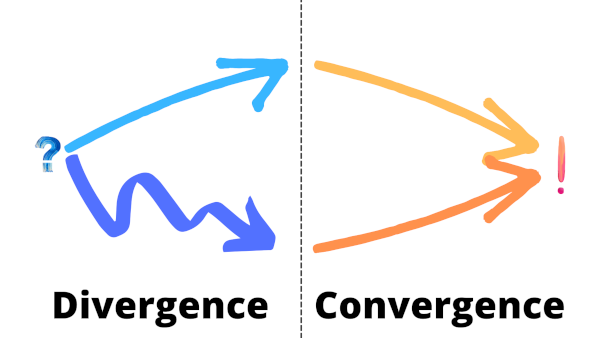
The Convergence works best as a clear sequence: define the constraint, compare the realistic options, test the tradeoff, and choose the path with the fewest hidden costs. That order keeps the advice usable instead of decorative. After each step, pause long enough to check whether the recommendation still fits the reader's actual situation. If it depends on perfect timing, unusual access, or a best-case budget, include a simpler fallback.


Avoid the weak options
Use this section to make the The Convergence decision easier to compare in real life, not just on paper. Start with the reader's actual constraint, then separate must-have requirements from details that are merely nice to have. A practical choice should survive normal use, maintenance, timing, and budget. If a recommendation only works in an ideal situation, call that out plainly and give the reader a fallback path.
The simplest way to use this section is to write down the must-have criteria first, then compare each option against those criteria before weighing nice-to-have features.
Perp dex 2026: what to check next
Perpetual decentralized exchanges (perp DEXs) allow traders to open leveraged long or short positions on crypto assets without a central intermediary holding funds. Unlike traditional futures, these contracts have no expiration date. Traders hold positions indefinitely, paying or receiving funding rates to keep the contract price aligned with the spot market. This structure offers 24/7 trading and non-custodial security, though it often comes with higher fees and complex mechanics compared to centralized exchanges (CEXs).
Which DEX is the best for perpetuals?
Hyperliquid leads the market in 2026 due to its hybrid architecture, which combines the speed of a centralized order book with the security of on-chain settlement. It consistently ranks highest for volume and liquidity. For traders prioritizing regulatory compliance and simplicity, dYdX remains a strong alternative, offering a familiar interface and established risk management protocols. The "best" choice depends on whether you value raw execution speed (Hyperliquid) or a more traditional, compliant trading environment (dYdX).
Which Perp DEX has the highest volume?
Hyperliquid currently holds the highest trading volume among perp DEXs. In March 2026 alone, it processed over $432 billion in perpetual futures volume, significantly outpacing competitors like dYdX and GMX. This volume dominance reflects its ability to attract institutional and high-frequency retail traders seeking deep liquidity and minimal slippage. Other platforms like Aster and Lighter are gaining ground but remain secondary in total volume.
Is 2026 a good year to buy bitcoin?
While perp DEXs are primarily designed for short-term trading rather than long-term holding, 2026 has seen a surge in bitcoin open interest on these platforms. Open interest across perp DEXs has climbed above $20 billion, reaching a 2026 high. This suggests strong market participation and liquidity. However, leverage carries significant risk. Traders should use technical analysis and risk management tools rather than relying solely on DEX volume metrics to time their entries.
No comments yet. Be the first to share your thoughts!