
What perp dexs offer for stock exposure
Perpetual decentralized exchanges, or perp dexs, allow traders to gain exposure to asset prices without owning the underlying security. Unlike traditional futures contracts that expire on a set date, perpetual futures have no expiry. This structure lets traders hold positions indefinitely, provided they maintain sufficient collateral to cover funding rates and margin requirements.
For traders seeking stock market exposure, perp dexs present a distinct alternative to regulated brokerages. They offer 24/7 market access, bypassing the constraints of traditional trading hours. More importantly, they operate on-chain, enabling self-custody of funds. You interact directly with smart contracts rather than depositing assets into a centralized entity. This eliminates counterparty risk associated with traditional clearinghouses, though it introduces smart contract risk that requires careful due diligence.
The mechanics rely on oracle feeds to determine the fair market price of the underlying asset, such as a tokenized stock or a synthetic representation. Traders lock stablecoins as collateral to open leveraged positions. If the market moves against you, the protocol may liquidate your position to protect the pool’s solvency. Understanding this risk-reward dynamic is essential before engaging with these platforms.
Perp dexs are complex derivative products, and trading involves significant risk. The leverage available can amplify both gains and losses rapidly. Before trading, ensure you understand the liquidation mechanics and funding rate structures specific to the platform you choose.
Top perp dexs for trading stocks
The decentralized exchange landscape for perpetual futures has consolidated around a few high-performance platforms. These perp dexs for trading stocks (or stock-proxy derivatives) prioritize low latency and deep liquidity to compete with centralized venues. When selecting a platform, traders should look beyond marketing claims and examine on-chain volume, open interest, and fee structures.
The following comparison highlights the leading protocols based on current market data. Hyperliquid remains the dominant force in terms of raw volume, while competitors like Aster and Lighter focus on specialized execution environments. Understanding these differences is essential for navigating the high-stakes environment of decentralized leverage trading.
| Platform | 24h Volume | Key Feature | Chain |
|---|---|---|---|
| Hyperliquid | $2.5B+ | Native L1 for speed | Hyperspace |
| Aster | $800M+ | Institutional liquidity | Arbitrum |
| Lighter | $150M+ | Order book depth | Arbitrum |
| Gains Network | $50M+ | Stock/Forex perps | Arbitrum/Gnosis |
Volume is the primary indicator of liquidity health. Higher volume typically correlates with tighter spreads and better slippage protection, which is critical when trading leveraged positions. Data from DefiLlama and CoinGecko shows that the top three platforms account for the majority of total perpetual DEX volume, creating a network effect that attracts more traders and liquidity providers.
While Hyperliquid leads in overall activity, Gains Network offers a unique value proposition by providing direct exposure to traditional assets like stocks and forex. This makes it a distinct option for traders seeking non-crypto exposure without leaving the decentralized ecosystem. Other platforms generally offer stock-proxy derivatives, which track the price of traditional equities using oracle data.
The choice between these platforms often comes down to execution speed versus asset variety. Hyperliquid’s native chain offers sub-second finality, making it ideal for high-frequency trading. In contrast, platforms built on Arbitrum may offer slightly higher latency but provide access to a broader ecosystem of DeFi integrations. Traders should test execution on a small scale before committing significant capital.
Current Market State of Perp DEX Tokens
The decentralized exchange landscape for perpetual futures is shifting rapidly. Liquidity is consolidating around high-volume protocols, while newer entrants compete on fee structures and specific asset offerings. Understanding the current price action of leading perp DEX tokens is essential for gauging platform health and trader sentiment.
Perpetual futures allow traders to speculate on asset prices without expiry dates, a mechanism that has driven significant volume in the crypto derivatives market. However, this leverage introduces complex risks, particularly when referencing volatile underlying assets. Traders must monitor token performance not just as an investment, but as a barometer for the broader perp DEX ecosystem's stability and adoption trends.
Managing risks in perp trading
Perpetual futures are complex derivative products that amplify both gains and losses. Trading involves significant risk, particularly for perpetuals referencing potentially volatile crypto assets [1]. Unlike traditional futures, these contracts never expire, meaning you must actively manage your position or face liquidation. This guide breaks down the three primary risks of perp trading and how to mitigate them.
Liquidation risk
Liquidation is the most immediate danger in leveraged trading. When the market moves against your position and your collateral falls below the maintenance margin, the protocol automatically closes your trade. This happens instantly, often at a price worse than your stop-loss, resulting in the total loss of your posted collateral.
To mitigate this, never max out your leverage. Lower leverage ratios (e.g., 2x–5x) provide a wider buffer against volatility. Additionally, use isolated margin mode rather than cross-margin mode to limit the amount of capital at risk to only the funds allocated to that specific trade.
Smart contract vulnerabilities
Perp DEXs run on immutable code. If a smart contract has a bug or is exploited, funds can be drained permanently. While major protocols undergo rigorous audits, no code is 100% secure. The risk is highest on newer or less-tested platforms.
Mitigate this by sticking to established protocols with proven track records and large total value locked (TVL). Diversify your exposure across multiple platforms if possible, and never store more capital in a DEX than you are willing to lose entirely.
Market volatility and slippage
Crypto markets can move violently in seconds. During high volatility, liquidity can dry up, causing "slippage" where your order fills at a significantly worse price than expected. This can turn a small loss into a catastrophic one.
Use limit orders instead of market orders to control your entry and exit prices. Avoid trading during major news events or when market depth is thin. Always check the current spread before executing a trade.
Choosing the right perp dex for your strategy
Selecting a perp DEX requires matching the platform's architecture to your specific trading style. The ecosystem is split between high-performance L1s like Solana and specialized L2s like Hyperliquid. Your choice dictates your execution speed, capital efficiency, and available asset classes.
High-frequency traders and scalpers need sub-second latency. Platforms built on Solana or dedicated L2s like Hyperliquid offer the throughput required for tight spreads. If you trade larger positions with lower frequency, standard Ethereum L2s provide sufficient speed with deeper liquidity.
Perpetual futures use funding rates to peg prices. Some DEXs offer lower maker fees to attract liquidity, while others charge taker fees that impact day traders. Compare the fee structures on DefiLlama to understand the long-term cost of your trading volume. Lower fees compound significantly over time.

Not all DEXs support the same tokens. Some platforms specialize in major pairs like BTC and ETH, while others list niche altcoins. If you trade specific volatile assets, ensure the DEX has sufficient liquidity for those pairs to avoid high slippage during execution.
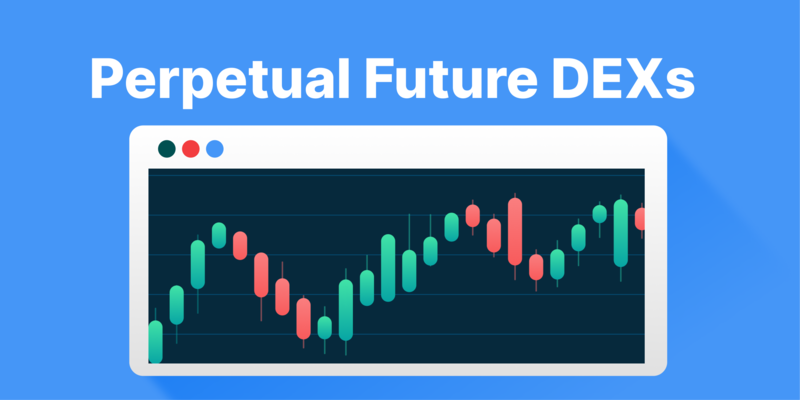
Advanced traders need features like conditional orders, trailing stops, and portfolio margin. Evaluate whether the interface allows for precise risk control. Simple DEXs may lack these tools, forcing you to manage risk manually, which increases the chance of error during volatile market moves.
| Feature | Solana Perp DEX | L2 Perp DEX |
|---|---|---|
| Speed | Very High | High |
| Liquidity | Deep on majors | Variable |
| Fees | Low gas | Moderate gas |
| Assets | Wide variety | Focused |
Use a perp aggregator to route trades across these platforms. Aggregators find the best execution prices by splitting orders, ensuring you get optimal fills regardless of your primary DEX choice. This is essential for maintaining efficiency when liquidity is fragmented across multiple chains.
Common questions about perp DEXs
What is a perp DEX in crypto?
A perp DEX is a decentralized exchange that offers perpetual futures contracts. Unlike traditional futures, these contracts never expire, allowing traders to hold leveraged positions indefinitely. While the mechanics vary, most platforms require traders to lock stablecoins as collateral to open positions on crypto assets.
What does perps mean in crypto?
Perps are perpetual futures, a derivative product that lets traders speculate on price movements without owning the underlying asset. If you believe a token’s value will rise, you can go long; if you expect it to fall, you can go short. This structure mirrors traditional futures but operates on-chain without a settlement date.
Is perp trading risky?
Yes, perpetual futures are complex derivatives that involve significant risk, especially when referencing volatile crypto assets. Leverage amplifies both gains and losses, meaning traders can lose their entire collateral quickly. Always understand the liquidation mechanisms before trading.
No comments yet. Be the first to share your thoughts!