
Defining the 2026 perp DEX landscape
A perpetual decentralized exchange (perp DEX) is a platform that allows traders to open leveraged positions on crypto assets without an expiration date, all while retaining custody of their funds. Unlike centralized exchanges where users deposit assets into a corporate wallet, or traditional stock futures markets that rely on clearinghouses and strict regulatory oversight, perp DEXs operate entirely on blockchain smart contracts. This structural difference shifts the counterparty risk from a centralized entity to the code and liquidity pools governing the protocol.
The core appeal of a perp DEX lies in non-custodial trading. Users connect their own wallets rather than transferring assets to an exchange, reducing the risk of exchange insolvency or seizure. However, this autonomy comes with distinct trade-offs. While traditional stock futures offer deep liquidity and regulatory protections like investor compensation schemes, perp DEXs often suffer from lower liquidity in altcoin pairs and higher vulnerability to smart contract exploits. The reliance on price oracles to determine mark prices introduces a layer of technical complexity and potential manipulation risk not present in regulated equity markets.
On-chain volume trends and institutional flow
The migration of volume from centralized exchanges to decentralized platforms (perp DEXs) has established a new baseline for market share, even as raw numbers fluctuate. By mid-2025, decentralized perps had captured approximately 20% to 26% of global perpetual futures volume, a significant leap from the low single digits recorded just two years prior. This structural shift indicates that the infrastructure is no longer a niche experiment but a permanent fixture in the derivatives landscape.
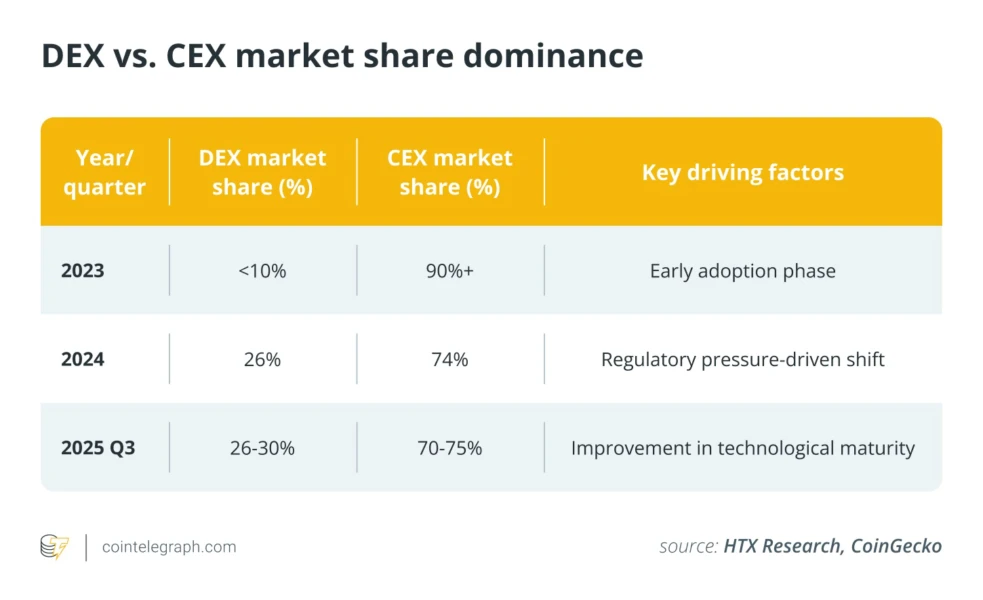
Recent data from DefiLlama shows that on-chain perp DEX volumes fell to $699 billion in March 2026, down from a peak of $1.36 trillion in October 2025. This five-month decline reflects a broader market correction and reduced retail speculation rather than a failure of the underlying model. The key distinction is that the baseline volume has stabilized at a level far higher than previous cycles, suggesting that the institutional and sophisticated retail capital that migrated during the peak has remained on-chain.
The appeal for these participants lies in the removal of counterparty risk inherent in centralized exchanges. In a centralized environment, a platform failure can result in total loss of funds; on a perp DEX, the smart contract is the only point of failure, and funds remain in the user’s wallet until execution. This structural difference has encouraged larger, more stable flows, even if the total volume is lower than the speculative highs of late 2025.
On-Chain Leverage vs. Traditional Stock Futures
Choosing between on-chain perpetual DEXs and traditional centralized stock futures requires evaluating structural differences in custody, leverage, asset variety, and regulatory oversight. These distinctions define the risk profile and operational mechanics for each market.
Custody and Security
In traditional stock futures, your assets are held by a regulated clearinghouse and custodian. This centralization provides a layer of protection against platform insolvency, as seen in the FDIC-insured nature of many US-based brokers. However, it also introduces counterparty risk tied to the financial health of the institution.
Perpetual DEXs operate on a non-custodial model. You retain control of your private keys, and trades are executed via smart contracts on the blockchain. While this eliminates the risk of a central entity seizing funds, it shifts security responsibility to the code. If a smart contract has a vulnerability, funds can be exploited with no recourse. This "be your own bank" approach demands a higher level of technical diligence.
Leverage Limits
Traditional stock futures markets, such as those regulated by the CFTC in the US, enforce strict leverage caps. For example, Regulation T typically limits initial margin requirements to 50%, meaning maximum leverage is generally capped at 2:1 for equities. This structure is designed to prevent excessive speculation and protect market stability.
On-chain perp DEXs often offer significantly higher leverage, frequently ranging from 10x to 100x or more. This accessibility allows for greater capital efficiency but exponentially increases the risk of liquidation. A small adverse price movement can wipe out a position entirely, a risk profile that is largely absent in regulated equity futures markets.
Asset Variety and Accessibility
Traditional futures markets are limited to approved underlying assets, primarily major stock indices (like the S&P 500), individual equities, and commodities. Access is restricted by jurisdiction, account approval, and minimum capital requirements. Trading hours are also fixed, typically aligning with standard market sessions.
Perp DEXs provide access to a wide array of crypto assets, including major coins, altcoins, and even synthetic assets. Trading is available 24/7, reflecting the continuous nature of blockchain markets. This variety offers opportunities for diversification but also exposes traders to the higher volatility inherent in the crypto ecosystem.
Regulatory Oversight
Traditional stock futures are subject to comprehensive regulatory frameworks, including regular audits, reporting requirements, and investor protection laws. This oversight provides transparency and legal recourse in case of misconduct.
Perpetual DEXs largely operate in a regulatory gray area. While some jurisdictions are beginning to clarify rules, many platforms operate without explicit licensing. This lack of oversight means there is often no insurance fund or legal avenue for recovering lost funds due to hacks, errors, or platform failure. Traders must assume full responsibility for their security and compliance.
| Feature | Perp DEX | Stock Futures |
|---|---|---|
| Custody | Non-custodial (self-custody) | Custodial (clearinghouse) |
| Leverage | High (10x–100x+) | Low (1:1–2:1) |
| Asset Variety | High (Crypto, Synths) | Limited (Indices, Equities) |
| Trading Hours | 24/7 | Market Hours |
| Regulation | Minimal/Gray Area | Comprehensive |
Regulatory risks and compliance gaps
Perpetual DEXs operate in a regulatory gray zone that traditional stock exchanges do not. While regulated futures markets are bound by strict capital requirements and surveillance protocols, on-chain leverage platforms often function without clear legal oversight. This ambiguity creates significant structural risks for traders who assume the same protections exist as they would on a traditional exchange.
A critical difference lies in investor protection. In the United States, the Securities Investor Protection Corporation (SIPC) insures cash and securities in brokerage accounts up to $500,000 if the firm fails. Perpetual DEXs offer no such insurance. If a protocol is hacked, exploited, or experiences a liquidity crisis, funds are typically lost entirely. There is no central authority to reverse transactions or compensate victims.
Enforcement actions against DeFi entities are increasing, though legal clarity remains elusive. The U.S. Securities and Exchange Commission (SEC) and the Commodity Futures Trading Commission (CFTC) have signaled that many tokenized derivatives fall under their jurisdiction. However, because these platforms are often governed by decentralized autonomous organizations (DAOs) or anonymous developers, holding anyone accountable is difficult. This lack of clear liability means traders bear the full burden of regulatory uncertainty.
The technical infrastructure of perp DEXs introduces unique risks. These platforms rely on "oracles"—third-party data feeds—to determine asset prices. If an oracle is manipulated or fails, the entire system can collapse, triggering unfair liquidations. Traditional exchanges have redundant, heavily audited price feeds and circuit breakers to prevent such cascading failures. On-chain, these safeguards are often absent or easily gamed, making the trading environment inherently more volatile and less secure.
Choosing a venue for 2026 trading
Selecting a trading venue requires matching your operational needs with structural realities. The choice between perp DEXs and traditional stock futures hinges on three factors: regulatory compliance, asset scope, and technical risk tolerance.
Traditional futures offer regulatory protection but require identity verification. Perp DEXs provide anonymity and permissionless access but lack investor safeguards. If you operate in a jurisdiction with strict derivative laws, a regulated venue is mandatory.
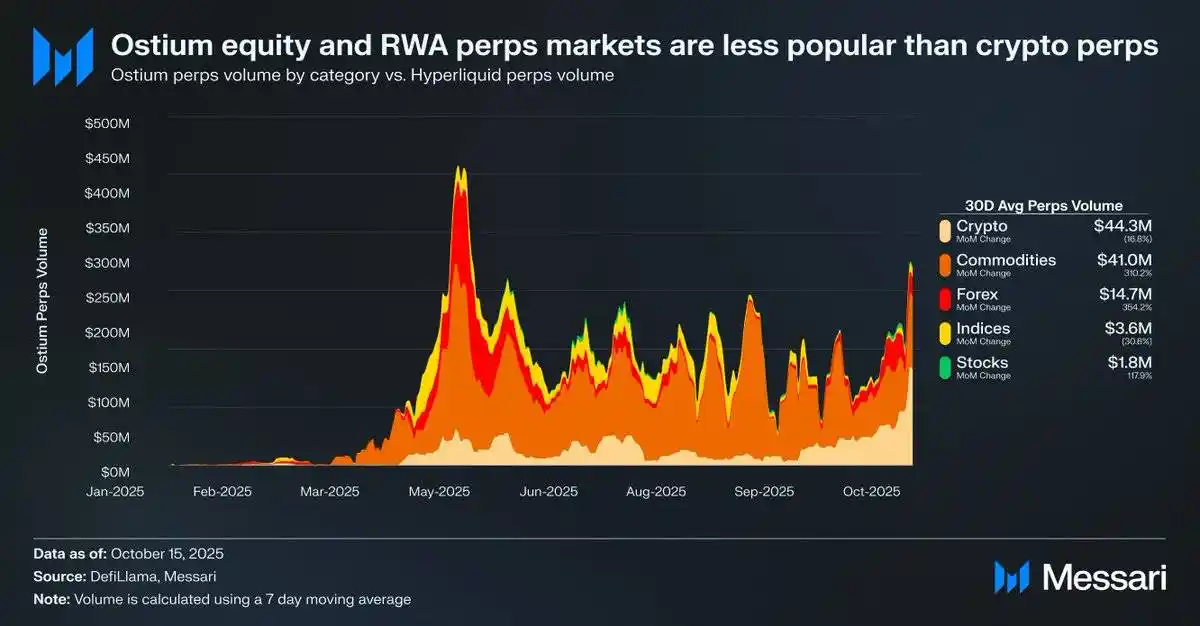
Stock futures are limited to equities and indices. Perp DEXs offer broad crypto coverage, including altcoins unavailable on traditional exchanges. If your strategy relies on non-traditional assets, a DEX is the only viable option.
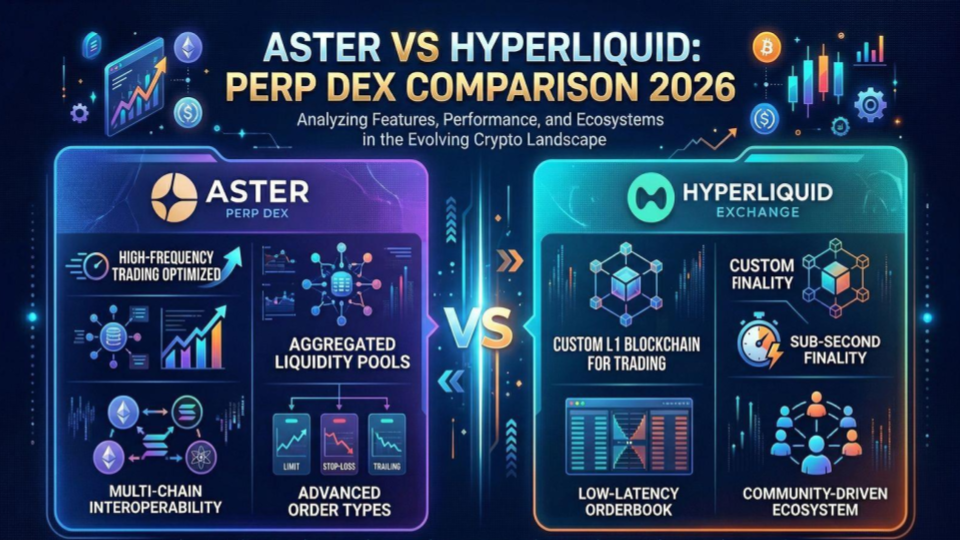
DEXs rely on smart contracts and oracles. Smart contract risk involves potential code exploits, while oracle reliance means price feeds can be manipulated during low liquidity. Traditional venues have centralized counterparty risk but robust insurance funds.
The decision ultimately balances control against security. DEXs offer speed and access; traditional venues offer structure and recourse.
No comments yet. Be the first to share your thoughts!