
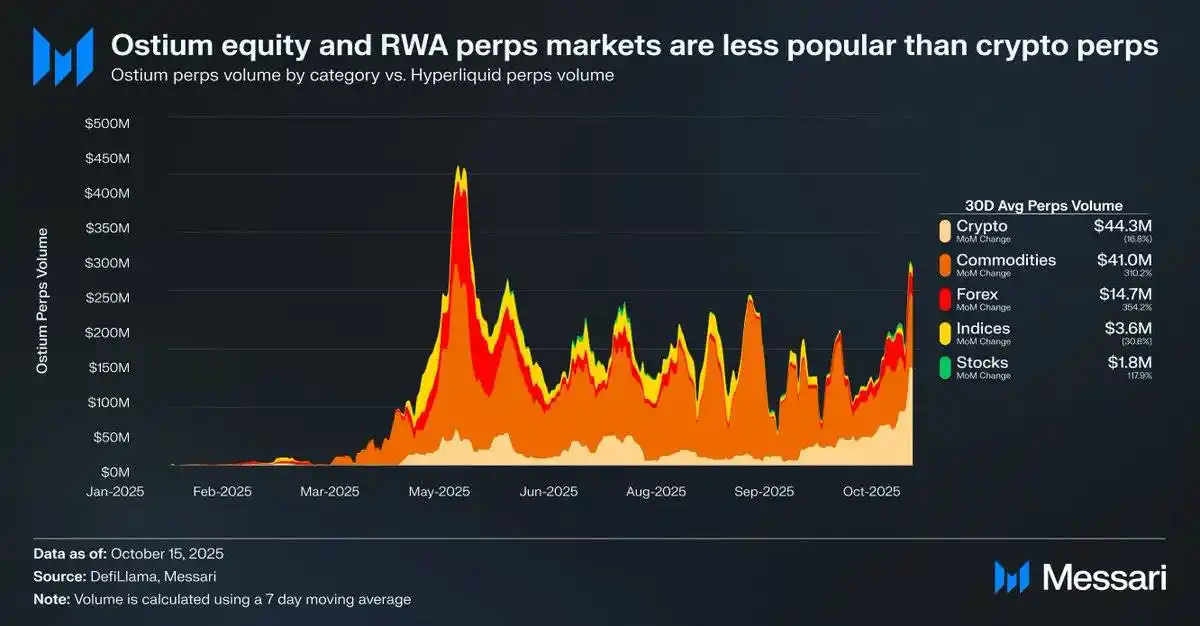
What traders compare in 2026
In 2026, the debate over perpetual futures centers on two distinct models: decentralized exchanges (perp DEXs) and centralized brokerages offering equity-based perpetuals. Both instruments provide leveraged exposure to an asset without an expiration date, allowing traders to hold positions indefinitely as long as they maintain sufficient margin. However, the mechanisms that make them work differ radically in custody, regulation, and liquidity sourcing.
Perpetual DEXs operate on public blockchains, enabling users to trade directly from their wallets without depositing funds into a central entity. This non-custodial approach removes counterparty risk associated with exchange insolvencies but introduces smart contract risk and requires users to manage their own private keys. Liquidity is typically aggregated from automated market makers and decentralized limit order books, often resulting in deeper pools for major crypto assets but potentially wider spreads for niche positions.
Centralized brokerages, conversely, act as intermediaries that hold customer funds and execute trades against their own books or internal liquidity pools. This model offers familiar user experiences, fiat on-ramps, and robust customer support, but it requires trusting a single entity with your assets. These platforms are subject to traditional financial regulations, which can provide investor protections but also restrict access in certain jurisdictions or impose stricter KYC/AML requirements.
The core comparison hinges on who holds the risk. In perp DEXs, the protocol and the trader bear the brunt of technical and market failures. In centralized brokerage models, the institution bears operational risk, but the trader faces regulatory and custodial exposure. Understanding these structural differences is essential for selecting the right vehicle for leveraged trading in 2026.
Liquidity and execution differences
Liquidity in perpetual stocks and perpetual DEXs follows fundamentally different mechanics, creating distinct execution environments for traders. Traditional perp stocks rely on deep, institutional order books backed by centralized market makers and clearinghouses. This structure typically yields tight spreads and high fill rates for standard position sizes. In contrast, perp DEXs aggregate liquidity from various sources, including automated market makers (AMMs) and hybrid order books like those used by Hyperliquid or GMX. While top-tier perp DEXs have seen massive volume spikes—with Hyperliquid clearing over $432 billion in a single month in early 2026—the underlying liquidity is often thinner and more fragmented than the institutional grade found in traditional finance.
The disparity is most visible in slippage and spread during volatile periods. Perp stocks benefit from standardized clearing and deep capital reserves, allowing large orders to execute with minimal price impact. Perp DEXs, however, can experience significant slippage as liquidity is pulled from concentrated pools or when oracle feeds lag behind spot market movements. This makes perp DEXs more sensitive to market shocks, where execution prices can deviate sharply from the intended entry.
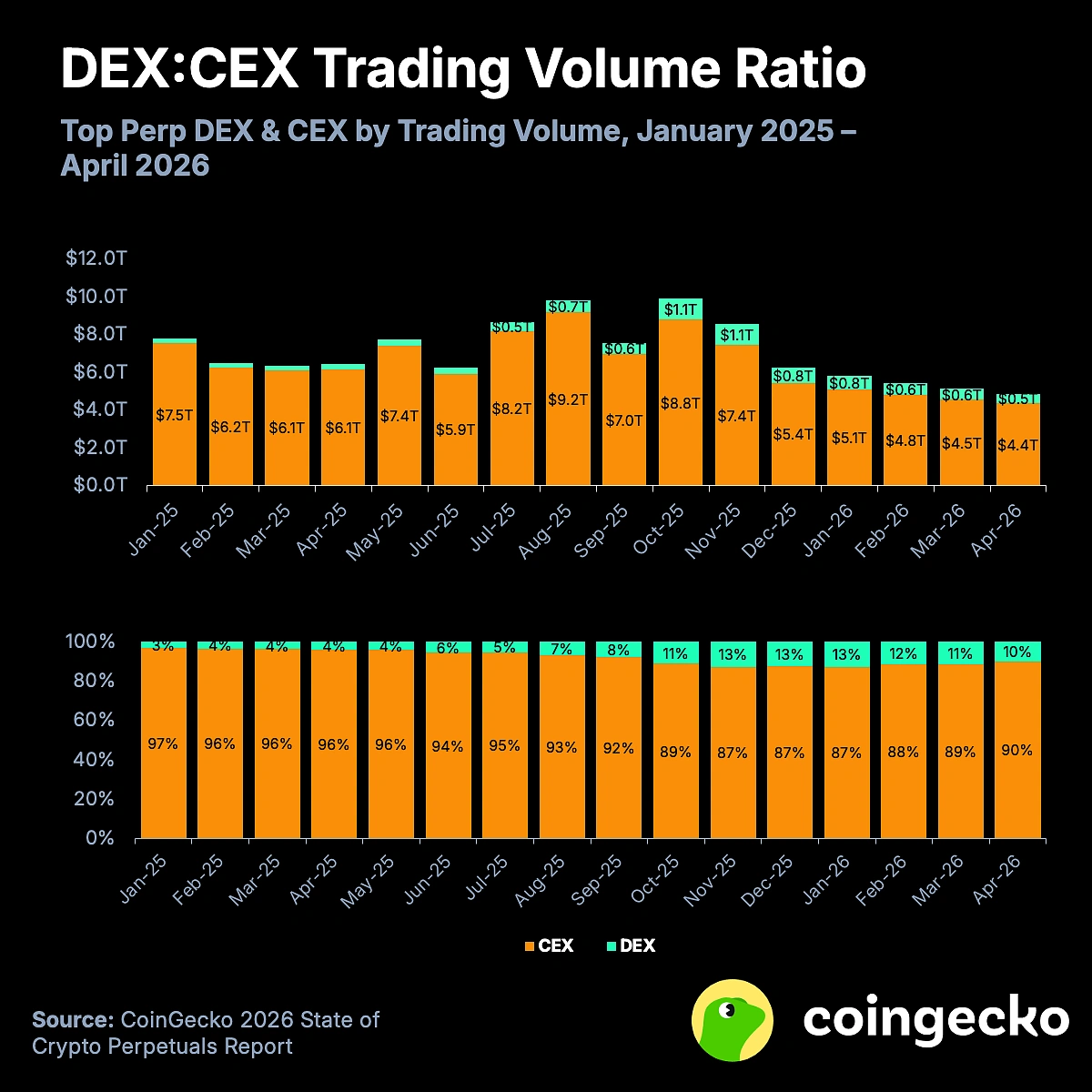
The table below summarizes the structural differences in liquidity and execution.
| Feature | Perp Stocks | Perp DEXs |
|---|---|---|
| Liquidity Source | Institutional market makers, centralized exchanges | AMM pools, hybrid order books, on-chain liquidity |
| Typical Spread | Tight (often sub-penny for major pairs) | Wider, varies by pool depth and volatility |
| Settlement Speed | T+1 or T+2 (depending on broker) | Near-instant on-chain settlement |
| Minimum Capital | Varies by broker (often $0 for CFDs) | Gas fees plus margin requirements |
Regulatory landscape and custody risk
Use this section to make the Perpetual DEXs vs. Perp Stocks decision easier to compare in real life, not just on paper. Start with the reader's actual constraint, then separate must-have requirements from details that are merely nice to have. A practical choice should survive normal use, maintenance, timing, and budget. If a recommendation only works in an ideal situation, call that out plainly and give the reader a fallback path.
The simplest way to use this section is to write down the must-have criteria first, then compare each option against those criteria before weighing nice-to-have features.
The Rise of Hybrid Models
The boundary between on-chain exchanges and traditional finance is dissolving. We are seeing a structural convergence where regulated entities offer crypto-perpetual products that settle on-chain, blending the transparency of decentralized finance with the compliance frameworks of traditional markets. This hybrid model addresses the two biggest friction points for institutional capital: regulatory uncertainty and liquidity fragmentation.
Regulated entities are increasingly acting as gateways to on-chain liquidity. Instead of forcing clients to manage private keys or navigate complex wallet interfaces, these platforms provide a familiar, compliant user experience while routing orders through decentralized protocols. This structure allows institutions to trade perpetuals without exposing themselves to the counterparty risks of a centralized exchange, while still adhering to KYC/AML requirements.
This evolution creates a more resilient market structure. By separating execution (on-chain) from compliance (off-chain), hybrids mitigate the risk of single-point failures common in purely centralized models. It also standardizes access to deep liquidity pools, which were previously siloed within specific DeFi ecosystems.
The result is a hybrid ecosystem that prioritizes both security and accessibility. As regulatory clarity improves in 2026, we expect more licensed entities to adopt this model, effectively bringing the efficiency of perpetual DEXs into the mainstream financial infrastructure.
Choosing the right venue for leverage
Perpetual futures DEXs and perp stocks offer fundamentally different risk profiles. The choice depends on your jurisdiction, asset preferences, and tolerance for regulatory uncertainty.
1. Assess regulatory exposure
Perp stocks operate within traditional financial frameworks. They are regulated by bodies like the SEC and CFTC in the United States, providing investor protections such as segregated accounts and dispute resolution mechanisms. This structure suits traders who prioritize regulatory safety and fiat on-ramps.
Perp DEXs, by contrast, are decentralized and often unregulated. You trade from your own wallet, and no central entity holds your funds. This offers anonymity and 24/7 access but removes regulatory safeguards. If you reside in a jurisdiction with strict crypto laws, using a perp DEX may carry legal risks.
2. Evaluate asset access
Perp stocks are limited to publicly traded equities and ETFs. You cannot trade crypto perpetuals through traditional brokerages. This venue is ideal for traders focused on blue-chip assets like Apple, Tesla, or S&P 500 ETFs.
Perp DEXs support a wide range of crypto assets, including altcoins and emerging tokens. This access is the primary advantage for traders seeking exposure to digital assets. However, altcoin liquidity can be thinner, increasing slippage risk during volatile markets.
3. Understand custody and counterparty risk
In perp stocks, the broker acts as the counterparty. Your funds are held in custody by the brokerage, introducing counterparty risk if the firm becomes insolvent. Regulatory capital requirements help mitigate this, but it remains a factor.
Perp DEXs use smart contracts for custody. You retain control of your private keys, eliminating counterparty risk from a central entity. However, this introduces smart contract risk. Bugs or exploits in the protocol code can lead to total loss of funds. Always verify the audit status of any perp DEX you use.
4. Compare liquidity and costs
Perp stocks often benefit from deep liquidity on established exchanges, resulting in tight spreads. Funding rates are typically fixed or less volatile. Transaction costs include commissions and financing fees.
Perp DEX liquidity varies significantly by protocol. Major platforms like Hyperliquid or dYdX offer deep pools, but smaller venues may have thin order books. Funding rates on perp DEXs can be highly volatile, reflecting real-time supply and demand imbalances. Always check current funding rates before opening a position.
5. Final risk assessment checklist
Before choosing a venue, verify the following:
- Jurisdiction: Confirm that using the chosen venue is legal in your country.
- Liquidity: Check order book depth for your specific asset pair.
- Funding Rates: Understand how funding fees are calculated and paid.
- Custody: Determine who controls your private keys and funds.
- Regulation: Verify if the platform is licensed in your jurisdiction.
Are perpetual futures illegal in the US?
Perpetual futures are heavily regulated in the US. Traditional perp stocks are legal through regulated brokers. Crypto perp DEXs often operate in a legal gray area, with the SEC and CFTC actively enforcing against unregistered platforms.
Which Perp DEX has the highest volume?
Hyperliquid and dYdX consistently rank among the highest-volume perp DEXs in 2026. Always verify current volume data, as rankings shift frequently.
What is a perpetual futures DEX?
A perpetual futures DEX is a decentralized exchange where users trade perpetual contracts directly from their wallets without a central intermediary holding funds.
How long can you hold perpetual futures?
Perpetual futures have no expiration date. You can hold positions indefinitely as long as you maintain sufficient margin to cover funding rates and avoid liquidation.
No comments yet. Be the first to share your thoughts!